
Geopolitical Backfire: How Export Controls Commoditized Frontier AI

Our read
Washington tried to lock down frontier AI with export controls, but the plan backfired. By restricting access, US regulators forced global rivals to subsidize elite open-weight models as a defensive hedge, destroying the economic moats of proprietary US labs and shifting the real profits to the application layer.


What happened
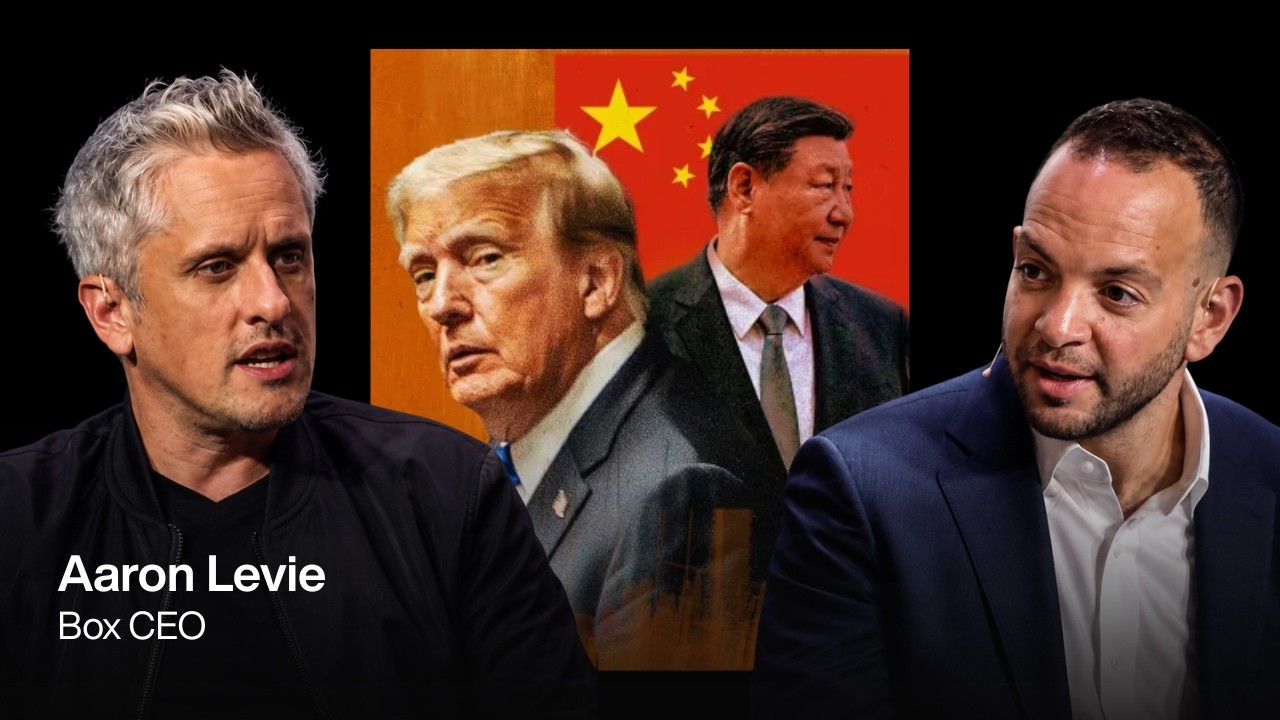
At the Big Technology AI Summit 2026, Box CEO Aaron Levie laid out how Washington's export controls are dismantling the business models of Silicon Valley's elite labs. Blocked from American APIs, foreign states are funding high-performing open-weight models to bypass US gatekeepers, accelerating the commoditization of raw intelligence and handing structural power back to applied software companies.
The brief
The national security state wanted a digital fortress; instead, they built a launchpad for their competitors. By trying to gatekeep raw intelligence, the US government turned open-source AI into a geopolitical weapon that is rapidly turning proprietary models into a cheap commodity.
Key findings
Foreign rivals are systematically funding and releasing elite open-weight models to destroy the commercial premium and pricing power of proprietary US frontier labs.
US export controls act as a de facto blockade on global distribution, as API providers cannot realistically police downstream compliance or verify user citizenship in perpetuity.
The financial center of gravity is shifting from foundation labs to the applied orchestration layer, where enterprise software routes tasks dynamically to capture customer relationships.
The sides
- Export Control Friction 00:13
National security export controls act as a structural barrier that halts global AI distribution faster than safety treaties.
Evidence: Regulatory liability forces API providers to preemptively pull access to frontier models in international hubs like Hong Kong because they cannot guarantee non-US nationals are excluded downstream.
- Open-Weight Geopolitical Weaponization 05:28
Foreign states use open-weight model releases as an economic weapon to level the playing field against US tech monopolies.
Evidence: Spending a few hundred billion dollars to release open-weight models directly erodes the commercial moat of proprietary US models, making it a highly logical strategic play for competitors.
- Value Shift to the Applied Layer 06:05
The 'thin wrapper' critique is dead as value shifts from foundation labs to applied orchestration software.
Evidence: As open-weight models draw within three to six months of frontier capabilities, application providers can route tasks dynamically to capture customer relationships and software margins.
Quotes
“We haven't gotten any gains as better intelligence for the rest of the world, but what we have lost is our economic superiority in this technology category because what we've caused is a catalyst for all the other countries to have to build out their own stack.”
Aaron Levie · 02:23
“Everybody wonders why are they doing this open weight stuff... you're just reducing US's dominance in a field, and it might be worth a couple hundred billion dollars to do that.”
Aaron Levie · 05:41
“You have super high cost inference in one part of the workload, super low cost, still pretty good inference in another part of the workload, but who has the incentive to do that? It's the applied layer of AI.”
Aaron Levie · 07:07
Why now
The fantasy that a handful of proprietary model labs will monopolize the AI value chain is dead, killed by the very export controls meant to protect it. In trying to lock down frontier models, US regulators gave the rest of the world a massive incentive to bypass them entirely.
Foreign rivals, locked out of American APIs, are pouring capital into open-weight alternatives to neutralize the US lead.
This defensive spending has shrunk the capability gap between closed and open-source systems to a mere three to six months. For enterprise software providers, raw intelligence is no longer a premium asset; it is a cheap utility.
The real margin is migrating to the applied layer, where orchestration engines route workloads across a barbell architecture, using expensive frontier models for high-level checks while offloading bulk execution to cheap, self-hosted open-weight models.
Receipts
Lexicon from this episode
Visual-only receipts
- 08:28: Presentation screen displays 'Image A' featuring an AI-generated giant, chubby striped cat (Le Chaton Fat) standing with paws raised, flanked by tech leaders Sundar Pichai, Sam Altman, Yann LeCun, and Satya Nadella on a stage with an 'AI IMPACT SUMMIT' banner.
- 08:48: Presentation screen displays 'Image B' showing a tweet from GLIF (@heyglif) with a massive CGI balloon of the same fat orange cat floating through the streets of Paris near the Eiffel Tower.