
Hormozi's Brutal Truths: Outcomes Over Intentions in the Pursuit of Potential
Alex Hormozi and Chris Williamson dismantle performative self-improvement, arguing that true growth demands embracing domain-specific hardship, making courageous commitments, leveraging loss as feedback, and prioritizing tangible outcomes over subjective intentions.
Key findings
Physical 'hard things' (e.g., marathons, ice baths) don't automatically generalize to mental/emotional resilience; true cross-domain grit requires intentional identity development.
The desire to 'never settle' often leads to 'option maximization paralysis,' preventing the courageous commitments and irreversible tradeoffs necessary to realize potential.
Losing is essential feedback, not failure; effective growth hinges on distinguishing when to 'push' (improve execution) versus 'pivot' (change fundamental assumptions).
Outcomes, not intentions, define real-world impact; beware of 'well-intentioned harm' and recognize 'malicious benefit' in the attention economy.
Why it matters
This conversation cuts through the noise of modern self-improvement, revealing how the relentless pursuit of optionality and a focus on 'easy wins' can lead to paralysis and unrealized potential. Hormozi and Williamson compel listeners to move beyond superficial 'hard things' like ice baths to the uncomfortable decisions and identity work that truly forge resilience. They provide frameworks for distinguishing when to 'push' through a challenge versus when to 'pivot' entirely, all by grounding decision-making in observable behaviors and prioritizing actual impact over mere good intentions. The discussion culminates in a stark reminder that 'reality is undefeated' and that meaningful transformation stems from confronting difficult truths and making irreversible tradeoffs.
Argument map
- Hard things are domain-specific; identity generalizes capacity. 0:27, 1:48, 4:34
The ability to do hard things in one domain (e.g., physical) does not automatically transfer to others (e.g., emotional, decisive); true generalization comes from building an identity label (e.g., 'I am tough') that acts as a global reinforcer.
Evidence: Hormozi's analogy of marathon runners struggling with hard conversations; Chris's observation of people doing physical but not decisive hard things; conceptual explanation of identity as a global reinforcer.
- Realizing potential requires courageous commitment, not option maximization. 12:35, 13:47, 21:09
Progress demands making irreversible tradeoffs and accepting known short-term costs for uncertain, delayed benefits, rather than being paralyzed by the desire to keep all options open.
Evidence: 'Options are only valuable when taken'; analogy of having a child ('no refunds'); definition of courage as action with large short-term cost, uncertain delayed benefit.
- Loss is a signal for change; 'push or pivot' based on fundamental assumptions. 24:00, 27:19
Feeling bad about losing is a necessary signal for adaptation; the strategic choice to 'push' (improve execution) or 'pivot' (change course) depends on whether a fundamental assumption has been disproven by reality.
Evidence: 'Losing is good, and feeling bad about losing is good'; conceptual framework distinguishing fundamental assumptions from execution issues.
- Outcomes, not intentions, define impact; reality is undefeated. 37:10, 38:30, 41:35
When evaluating people and situations, focus on tangible results and consequences, as reality is indifferent to subjective expectations, and 'well-intentioned harm' can be more detrimental than 'malicious benefit.'
Evidence: 'Reality is undefeated. A million TKO's'; conceptual framework of 'well-intentioned harm' and 'malicious benefit'; Chris's quote: 'I'm not prepared to be the collateral damage of your good intentioned errors.'
Visual-only receipts
- 'Modern Wisdom' and 'ACQUISITION.COM' logos visible throughout.
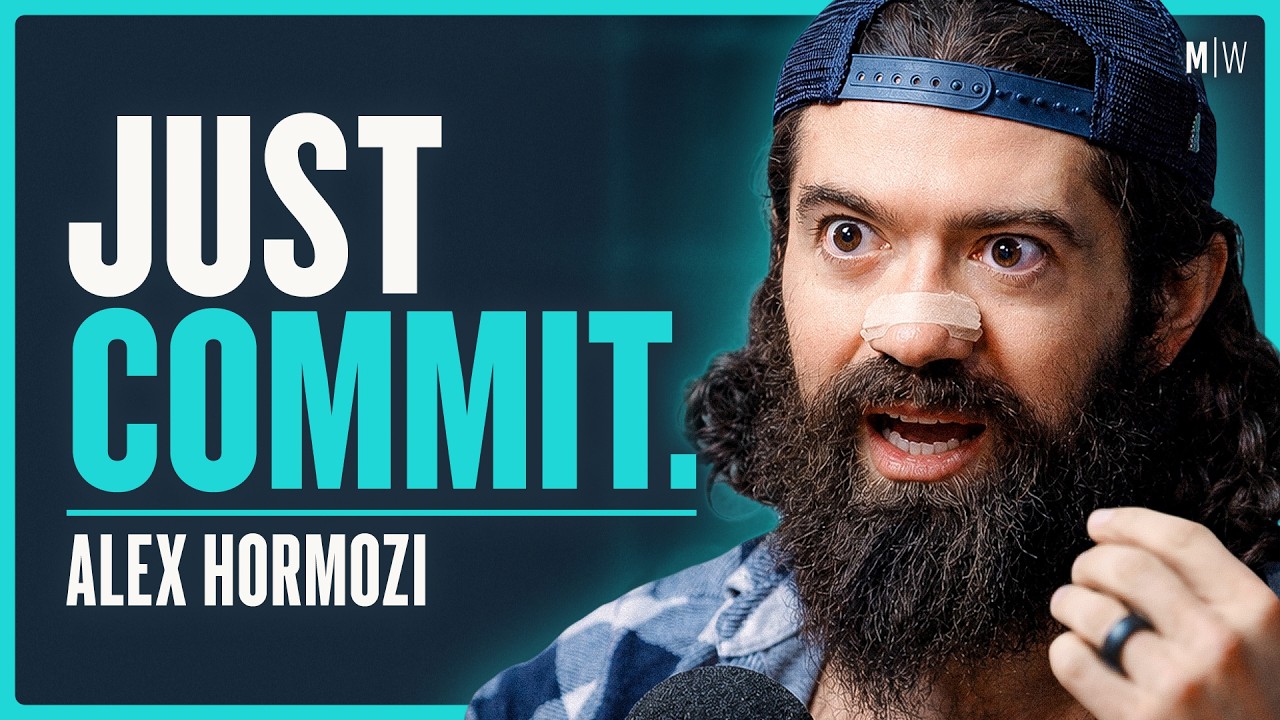
- Alex Hormozi often has a small bandage on his nose.
- Various energy drink/supplement cans (Lumi, Outwork, MVMT) on the table.
- Occasional on-screen advertisements for sponsors (Momentous, Timeline).
Quotes
“Do more hard things every day is a great mantra, but it should be less about ice baths and more about making that decision you've been putting off for three months.”
Chris Williamson · 0:07 - 0:15
“It absolutely might not be your fault, but it is still your problem.”
Alex Hormozi · 17:28
“If one of the fundamental assumptions that you began your quest with has been proven untrue based on the feedback, then that is where pivoting makes sense.”
Alex Hormozi · 28:05 - 28:13
“I'm not prepared to be the collateral damage of your good intentioned errors.”
Chris Williamson · 41:35
The brief
The modern self-improvement landscape is littered with performative grit and the illusion of endless optionality. Alex Hormozi and Chris Williamson ruthlessly cut through this noise, delivering a series of 'brutal truths' designed to stop you from wasting your potential. This isn't about feeling good; it's about getting real.
First, forget the universal grit myth. Running a marathon doesn't automatically equip you for a difficult conversation with your spouse. Hormozi argues that 'hard things' are often domain-specific. True resilience across life's varied challenges isn't built through a single physical feat, but by intentionally forging an identity, a 'global reinforcer', that dictates behavior across all domains. You don't just do hard things; you become the type of person who does them.
Next, the seductive trap of 'never settle' often leads to 'option maximization paralysis.' In a world overflowing with choice, the fear of closing doors can prevent you from ever walking through one. Hormozi insists that 'options are only valuable when taken,' and realizing your potential demands 'courageous commitment', the willingness to incur a known, large short-term cost for an uncertain, delayed benefit. Standing still is not neutral; it's a decision with consequences, and 'it's so much more preferable to be a failure than a coward.'
When setbacks inevitably hit, the conversation provides a critical framework: 'push or pivot.' Losing isn't failure; it's feedback. The discomfort of loss is a necessary signal for change. The key is discerning when to 'push' through by improving execution (if your fundamental assumption is still valid) versus when to 'pivot' entirely (if that core assumption has been proven false by reality). This behavioral lens cuts through confusion, allowing for clear, effective action.
Finally, Hormozi and Williamson deliver the most brutal truth: outcomes trump intentions. 'Reality is undefeated,' indifferent to your subjective map of how things should be. This means recognizing 'well-intentioned harm', when caring but incompetent people consistently produce negative outcomes in your life, and even 'malicious benefit,' where adversaries inadvertently amplify your reach. 'I'm not prepared to be the collateral damage of your good intentioned errors,' Chris Williamson sharply states. True growth and meaningful achievement aren't found in easy, risk-free shortcuts, but in the 'hard shit' that demands struggle and sacrifice, forging a story worth telling.
Lexicon from this episode
- Well-Intentioned HarmWell-Intentioned Harm describes the damage caused by actions rooted in good motives but poor execution or foresight, a hidden cost that forces you to prioritize actual outcomes over subjective motives.
- Push vs. PivotPush Vs. Pivot defines the critical decision point where feedback tells you to either double down on an existing path or change direction entirely, because misreading this signal is a trap that costs time, money, and momentum.