Nvidia's open-source pivot exposes the closed-source cartel

Our read
Nvidia's sudden embrace of open-source weights isn't altruism; it is a calculated chess move to commoditize the software layer and ensure their GPU monopoly remains the ultimate tollbooth of the AI era.


What happened
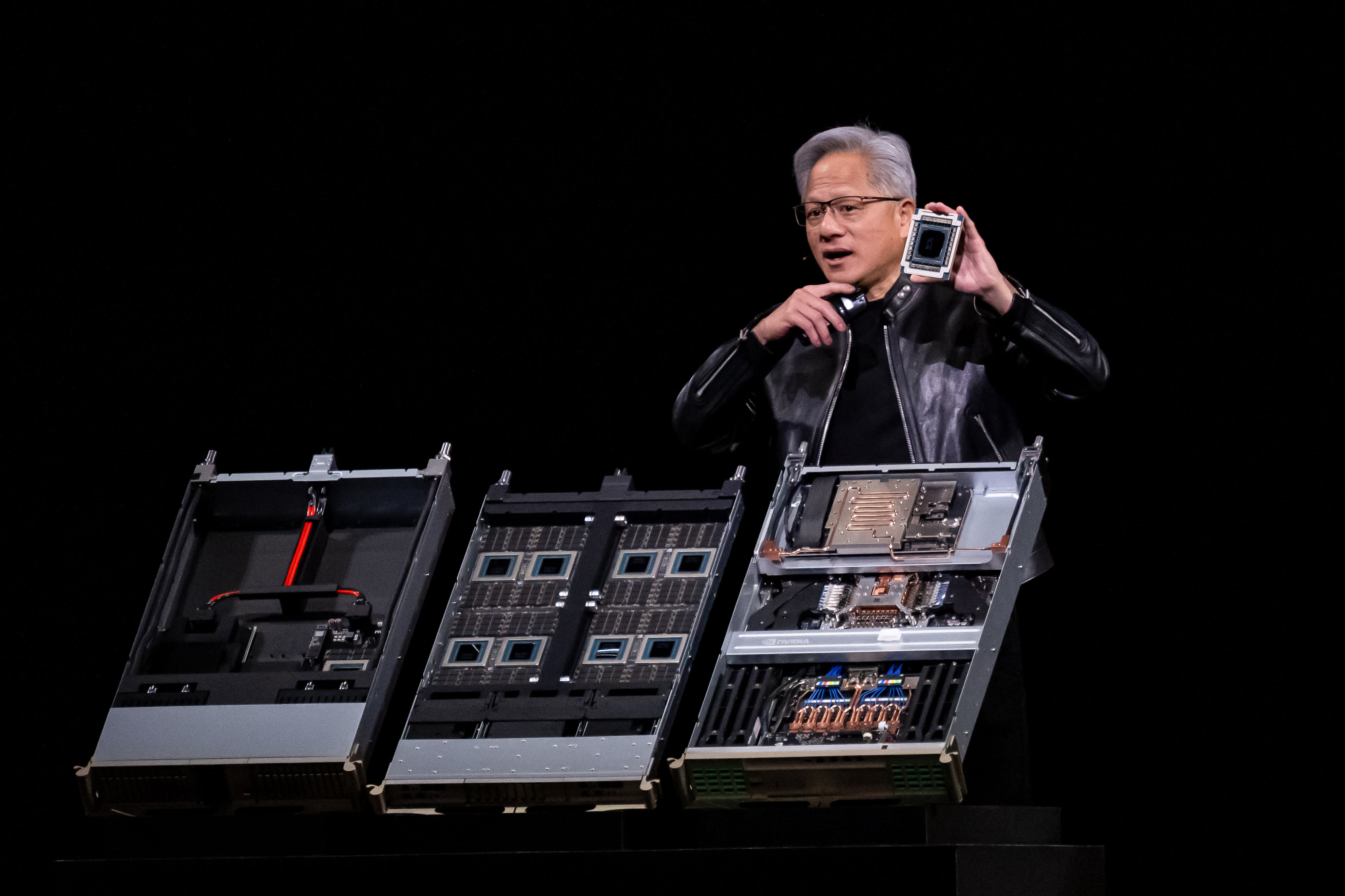
Nvidia released its Nemotron-3.5-Lightning model under an open-source license, marking a major shift in the chipmaker's software strategy to directly challenge closed-source AI dominance.
The brief
By giving away highly capable models for free, Nvidia is actively deflating the software margins of closed-source competitors who hoped to lock developers into proprietary APIs.
The sides
- Closed Source Cartel
Proprietary frontier models are the only safe way to deploy AI without risking systemic societal collapse.
- Open Source Innovators
Compute and weights must be democratized to prevent a few centralized tech giants from controlling the future of intelligence.
Why now
5-Lightning forces a brutal realization on the developer ecosystem, proving builders no longer need to pay the OpenAI tax for enterprise-grade performance.
This pivot alters the high-stakes battle over model weights, shifting the power dynamic from software gatekeepers back to the hardware and infrastructure layer.
Questions
Why is Nvidia suddenly releasing high-performing open-source AI models?
Nvidia is open-sourcing models to commoditize the software layer and protect its lucrative hardware monopoly. By giving away enterprise-grade models like Nemotron-3.5-Lightning for free, Nvidia destroys the pricing power of closed-source software competitors. This strategy ensures that every developer remains dependent on Nvidia's proprietary CUDA ecosystem and H100 or Blackwell GPUs, turning the software layer into a free utility while keeping the hardware as the ultimate tollbooth.
How does Nvidia's open-source strategy impact OpenAI and Google?
This pivot directly threatens the subscription-and-API business models of closed-source giants like OpenAI and Google. When developers can run highly optimized, open-weights models locally or on private clouds for a fraction of the cost, the premium for proprietary APIs vanishes. Nvidia is effectively subsidizing the competition to strip these software gatekeepers of their pricing power, forcing them to compete on raw compute efficiency where Nvidia always wins.
What is the catch for developers using Nvidia's free models?
The catch is total hardware lock-in. While the model weights for Nemotron are free, running them at scale requires massive amounts of compute that is highly optimized specifically for Nvidia hardware. Developers trade a recurring software subscription to OpenAI for a permanent hardware tax paid to Nvidia, as these models are engineered to run best within Nvidia's proprietary CUDA software ecosystem.
Does this open-source move help Nvidia bypass regulatory scrutiny?
Yes, championing open-source software serves as an effective public relations shield against mounting antitrust investigations. By positioning itself as a democratizing force that breaks up the closed-source AI cartel, Nvidia can deflect regulatory pressure regarding its 90 percent market share in AI chips. It allows the company to frame its monopoly not as a gatekeeper, but as the benevolent infrastructure provider for the entire open-source ecosystem.
What happens to the AI startup ecosystem if model weights become free?
The venture capital thesis for wrapper startups and mid-tier model builders collapses. Startups that raised billions simply to fine-tune basic LLMs are rendered obsolete when hardware giants deliver superior, optimized models for free. Capital will inevitably shift away from generic software applications and toward proprietary data pipelines, specialized robotics, and custom silicon alternatives that attempt to break Nvidia's stranglehold.
How does this shift affect the geopolitical race for AI dominance?
It accelerates global AI proliferation by lowering the barrier to entry for sovereign nations. Countries that want to avoid dependency on US-based cloud gatekeepers like Microsoft or Google can use Nvidia's open-weights models to build localized, self-hosted AI infrastructure. This shifts the geopolitical bottleneck entirely to physical supply chains and silicon fabrication, making ASML's lithography machines and TSMC's factories the ultimate leverage points.
Receipts
Related dispatches
- The Open-Weight AI Shield Against Chinese DominanceThe closed-source safety cartel wanted to lock down AI development under the guise of national security, but their hoarding only created a vacuum for Chinese labs to fill. Open-weight models are not a security risk; they are the West's only viable defense strategy to mobilize millions of developers before Beijing sets the global standards.
- The Open-Source CapitulationWestern software cartels spent years trying to build a toll booth at the entrance of frontier AI, but cheap Chinese open-weights models have permanently broken the gate, forcing US tech giants into a defensive open-source alliance.
- China's Underground AI Chip HustleWashington's export controls are operating on a 20th-century map of physical borders, completely ignoring that silicon is liquid and compute can be rented through a shell company with a credit card.
- OpenAI's National Security PanicOpenAI is using the national security bogeyman to lobby for regulatory capture because they can no longer out-innovate a million developers working for free. If you can't beat the open-source community on merit, you get the state to make their distribution illegal.
- The Death of Lazy GPU Scaling: Inside the Multi-GPU Bottleneck and the Rise of AI Code CheatsMulti-GPU clusters hit the power wall before the math wall, and the networking bill is now the real moat.
- Anthropic's Safety-Wash Is Running Out of CoverAnthropic's 'safety-first' posture has officially curdled into a convenient corporate shield. While competitors like Meta and Mistral prove that open-weights models don't trigger immediate societal collapse, Anthropic is using existential dread to protect its subscription margins and keep developers locked into its proprietary garden.