
Russia Codifies the Crypto Sanction-Shield

Our read
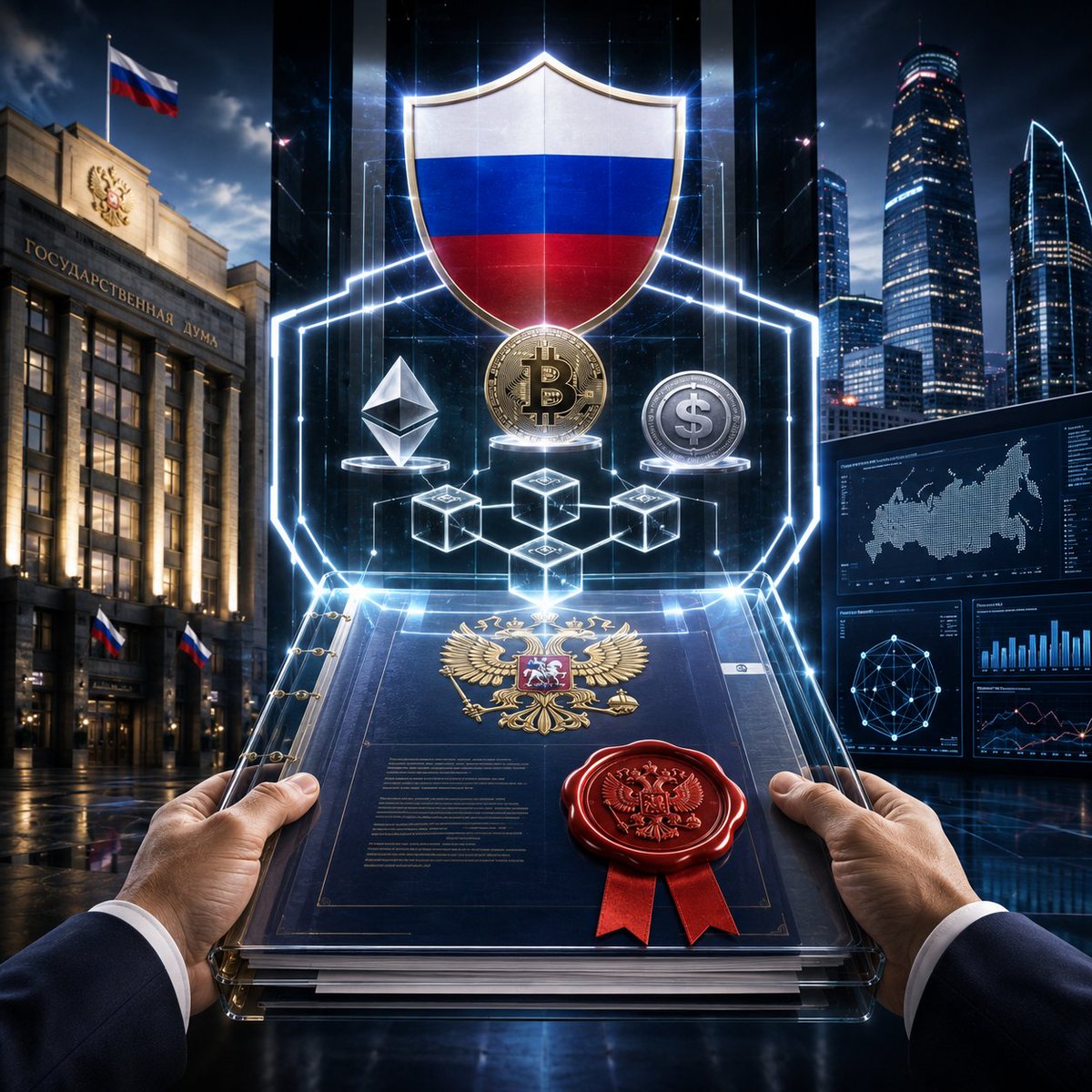
The state that once threatened to ban Bitcoin has officially designated it as its financial life raft, proving that when the legacy banking system is weaponized, math wins over geopolitical consensus.

What happened
Russia's parliament has passed a historic regulatory framework for cryptocurrencies, legalizing digital assets for international trade settlement while tightening state control over domestic exchanges.
The brief
This isn't a pivot to libertarian ideals; it is raw pragmatism showing that censorship-resistant tech is the ultimate neutral tool for survival when you are locked out of the global ledger.
The sides
- Kremlin Strategists
Cryptocurrency is a sovereign tool to bypass Western banking blocks and secure international trade.
- Western Sanctions Enforcers
Global crypto exchanges must blacklist Russian entities to prevent the evasion of international financial controls.
Why now
The story is driving high search volume across crypto-finance desks as traders analyze how state-sanctioned liquidity pools will impact global exchange compliance.
Questions
Why did Russia legalize cryptocurrency for international trade after years of trying to ban it?
Russia legalized cryptocurrency because Western sanctions cut its major banks off from the SWIFT network, crippling its ability to settle cross-border trade. The Kremlin realized that ideological opposition to decentralized currency was a luxury it could no longer afford. By codifying crypto as a legal settlement tool, Russia is using math to bypass the US dollar-dominated financial system, turning Bitcoin into a state-sanctioned financial life raft.
How does Russia's new crypto framework affect domestic retail investors?
The new framework tightens the state's grip on domestic retail investors while opening the floodgates for state-approved international trade. The Russian government is establishing strict oversight of local exchanges and mining operations to prevent capital flight. While state-backed enterprises get a green light to use digital assets for global commerce, ordinary citizens face heavier surveillance and restricted access to unmonitored foreign platforms.
Who benefits most from Russia's state-sanctioned crypto mining regulations?
Industrial crypto miners with close ties to the Kremlin benefit the most from the new regulations. Russia has abundant, cheap energy in regions like Siberia, which the state is now leveraging to mine Bitcoin directly for government coffers. By regulating and taxing these massive mining farms, the Russian state secures a steady stream of newly minted, censorship-resistant digital currency to fund its global imports.
Can the US Treasury block Russia's state-sanctioned crypto transactions?
The US Treasury cannot block peer-to-peer cryptocurrency transactions on decentralized networks, but it can heavily penalize the global exchanges that facilitate them. OFAC will target the digital wallets, liquidity pools, and foreign intermediaries that interact with Russian entities. This sets up a high-stakes game of cat-and-mouse, forcing Russia to rely on non-compliant, over-the-counter desks and decentralized protocols to move its capital.
What is the strongest counter-argument to Russia's crypto sanction-shield strategy?
The strongest counter-argument is that public blockchains are completely transparent, making large-scale sanction evasion highly visible and difficult to sustain. Every transaction is recorded on an immutable ledger, allowing Western intelligence agencies and blockchain analytics firms to track and blacklist Russian state wallets in real time. This transparency makes global counterparties highly reluctant to accept tainted coins, severely limiting the liquidity of Russia's digital trade routes.
How does this move compare to Venezuela's failed Petro cryptocurrency experiment?
Unlike Venezuela's failed Petro, which was a centralized, state-issued token backed by unmined oil reserves that nobody trusted, Russia is utilizing established, highly liquid global assets like Bitcoin and Tether. Russia is not trying to invent a new currency; it is hijacking existing decentralized networks that already possess deep global liquidity. This pragmatic approach makes Russia's sanction-shield far more viable than Venezuela's top-down economic theater.
Receipts
Related dispatches
- Nigeria's Digital Economy Rules Expose the Futility of Crypto BansState regulators continue to write rules for a centralized financial system that doesn't exist in the crypto wild. By trying to force decentralized peer-to-peer networks into legacy licensing boxes, governments only succeed in blinding themselves to the actual volume moving across their borders.
- Dollar Stablecoins Quietly Colonize Global PaymentsPoliticians are fighting yesterday's war by targeting local state-run payment networks. The real shift is bottom-up: citizens in emerging markets are voluntarily dollarizing their own lives via stablecoins. You can't sanction a payment system when the street has already decided that ERC-20 dollars are the only currency worth holding.
- SEC cancels its last-minute crypto squeeze as the old guard loses its gripThe sudden cancellation of this vote shows the administrative state's anti-crypto crusade is running out of steam. With the SEC under new leadership, the bureaucratic holdouts who spent years trying to regulate digital assets out of existence are realizing their clock has run out.
- The New Plan to Make Ethereum WinEthereum split its growth shops into separate labs so regulators chase paperwork while builders keep shipping.
- The CLARITY Act Ethics CompromiseThe political class spent years pretending crypto regulation was a high-minded debate over consumer protection and systemic risk. In reality, the entire legislative logjam was broken the second politicians traded away their right to pump personal memecoins from the Oval Office.
- The AI Trade Got Margin Called: Crypto Didn't BlinkHedge funds ate each other AI books at fifty cents on the dollar while crypto kept trading like the margin call was scheduled theater.