Shark Vacuum Vulnerability Exposes Corporate Security Apathy

Our read
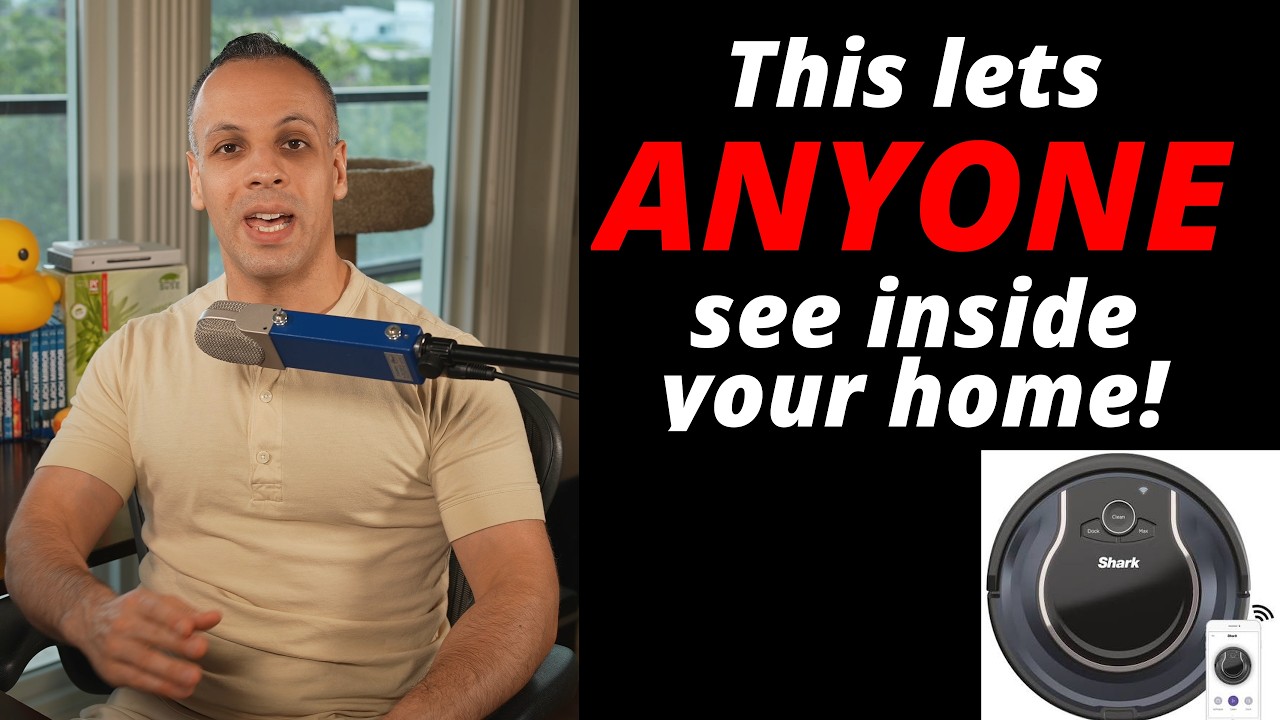
A critical security flaw in Shark robot vacuums allows remote access to live cameras and home maps because a single master digital certificate extracted from one device acts as a universal key for the entire cloud region.


What happened
Consumer rights advocate Louis Rossmann breaks down a catastrophic IoT security failure where SharkNinja ignored a researcher's warnings for over three months. The incident highlights how anti-circumvention laws like DMCA Section 1201 shield negligent manufacturers from accountability, while independent investigative channels struggle to fund their work under broken ad-supported platform economics.
Key findings
A single master digital certificate extracted from a physical Shark vacuum board via UART pins acts as a universal key to access live cameras, maps, and plaintext Wi-Fi credentials across any other vacuum on that cloud region.
IoT manufacturers use legal barriers like DMCA Section 1201 to shield themselves from the embarrassment of security flaws rather than fixing them, offloading the privacy risks of live cameras and microphones directly onto the consumer.
Ad-blocker adoption among tech-literate audiences has depressed ad-based creator revenue to pennies, forcing independent investigators to choose between selling garbage sponsorships or adopting voluntary membership models to fund deep-dive reporting.
Quotes
“If you get remote control of the device, you're really talking about getting access to a camera and a microphone that is inside somebody else's home.”
Louis Rossmann · 02:27
“When you actually do the security research for them and you let them know exactly what is wrong with their device, they don't care.”
Louis Rossmann · 03:25
“My CPM is essentially like 50 cents. So if I do a video that gets 200,000 views, I make about a hundred bucks.”
Louis Rossmann · 05:30
The brief
In this broadcast, Louis Rossmann uses a catastrophic smart-vacuum vulnerability to illustrate a broader structural decay: the legal systems designed to protect IP are routinely weaponized to conceal consumer threats, while the ad-based economics meant to support independent scrutiny have completely collapsed.
To survive, advocacy must bypass both corporate gatekeepers and broken platform algorithms, turning directly to viewer-backed micro-patronage.
Receipts
Visual-only receipts
- Blog post detailing the timeline of the vulnerability disclosure, showing specific dates of contact with SharkNinja and MITRE.
- Screenshot of the circuit board highlighting physical UART debug pins (3.3V, GND, TX, RX) and breadboard setups using a UART adapter to gain root access.