
Silicon Valley's distillation paranoia

Our read
Silicon Valley spent hundreds of billions burning coal to train massive models, only to realize that intelligence can be distilled into smaller, cheaper weights almost instantly. The proprietary moat is made of sand, and no amount of export controls can stop a math problem from being solved.
What happened
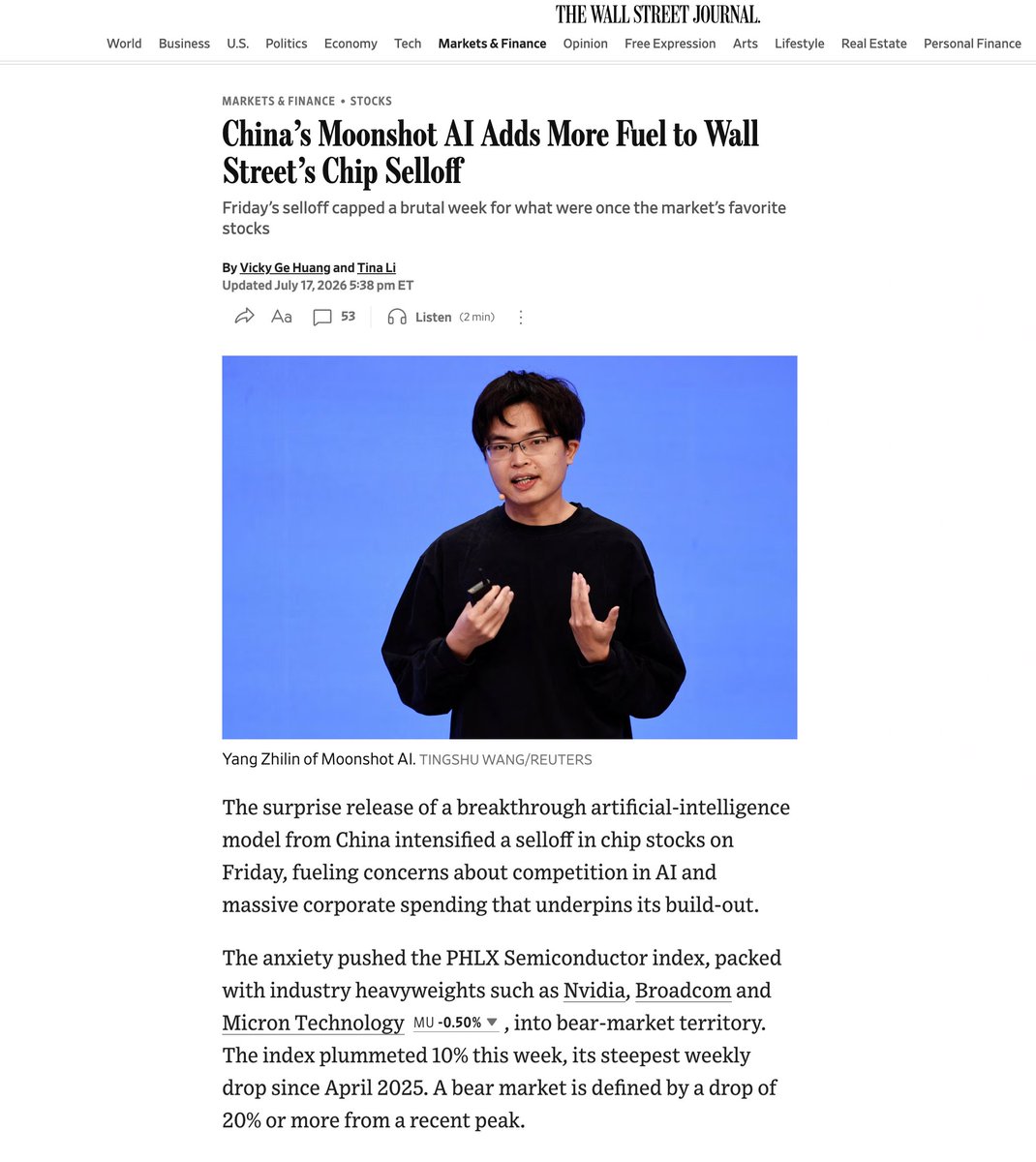
US tech giants are growing increasingly anxious as Chinese firms rapidly close the AI capability gap by using 'distillation', training smaller, hyper-efficient models on the outputs of expensive American frontier models.
The brief
The panic over Chinese distillation proves that the 'AI safety' lobbying push was always about protecting domestic corporate margins rather than saving humanity.
Key findings
You cannot win a global tech race when your primary engineering goal is making sure your chatbot doesn't say anything offensive, while your competitor's goal is raw performance.
You cannot build a proprietary digital fortress when your business model requires streaming your intellectual property directly into your competitor's training loop.
The panic over Chinese distillation proves that the 'AI safety' lobbying push was always about protecting domestic corporate margins rather than saving humanity.
Their pitch: Open-source models are a national security risk because they allow adversaries to copy our progress for free.
The fight
Named sides below. The brief above already picked.
- US Tech Lobby
Open-source models are a national security risk because they allow adversaries to copy our progress for free.
- Open Source Advocates
Restricting open weights is a protectionist play that stifles global innovation.
- Update 2026-07-21
Silicon Valley spent billions building a moat only to realize that if your product is a public API, your competitors can just use your own smart outputs to train their cheap models for a fraction of the cost. The R&D moat is an illusion.
Evidence: Silicon Valley looks over its shoulder at China
- Update 2026-07-21
Silicon Valley's sudden panic over Chinese AI models catching up is the ultimate self-own. For years, US tech giants lobbied for heavy safety regulations, licensing moats, and compliance hurdles to keep domestic startups down. They spent so much time trying to build a regulatory wall around their own backyard that they forgot the rest of the world doesn't play by California's HR rules.
Evidence: Why Silicon Valley Can't Stop Looking Over Its Shoulder
Why now
Why now. Multiple high-ranking news clusters covering Silicon Valley looking over its shoulder at China and the secret Trump administration battle over open-weight models.
Update 2026-07-21. Silicon Valley spent billions building a moat only to realize that if your product is a public API, your competitors can just use your own smart outputs to train their cheap models for a fraction of the cost. The R&D moat is an illusion.
** Silicon Valley's sudden panic over Chinese AI models catching up is the ultimate self-own. For years, US tech giants lobbied for heavy safety regulations, licensing moats, and compliance hurdles to keep domestic startups down.
They spent so much time trying to build a regulatory wall around their own backyard that they forgot the rest of the world doesn't play by California's HR rules.