
The Parkland Loophole: How Taylor Texas Sold Out a Ten Dollar Civic Gift for an AI Data Center

Our read
Local governments are exploiting legal loopholes to convert cheap, charitably donated parkland into high-polluting AI data centers, bypassing community consent through backroom zoning changes and executive sessions.


What happened
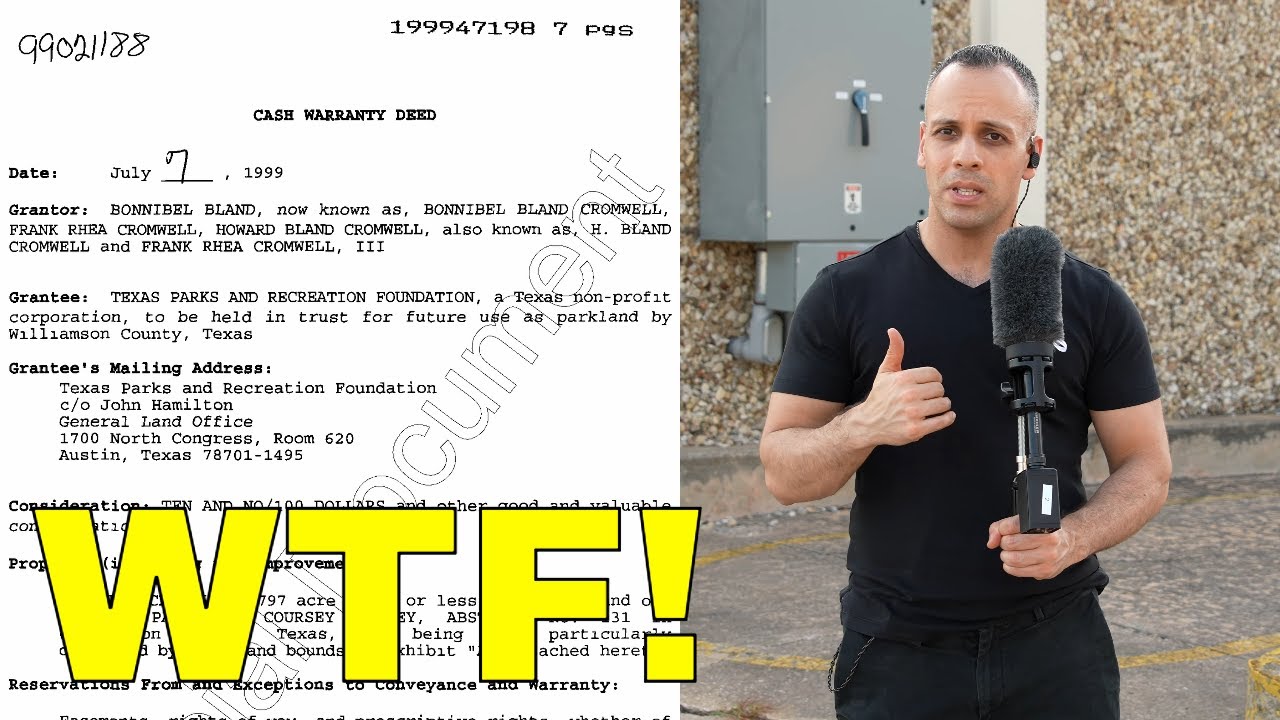
In 1999, a citizen sold 87 acres of land to Taylor, Texas for a nominal ten dollars with the explicit written intent that it be held in trust as future parkland. Decades later, the city bypassed this deed restriction by classifying it as a non-binding 'intent note' to clear the way for a ten-million-dollar private AI data center site. This dispatch explores how municipal authorities use semantic loopholes, closed-door executive sessions, and corporate-stacked public hearings to betray civic legacies and push heavy-industrial developments into residential areas.
Key findings
Municipalities exploit the deaths of public-spirited land donors by treating 'parkland trust' deed clauses as non-binding declarations of intent rather than legal restrictions, turning cheap community land gifts into high-yield corporate data center zoning.
Small-town city councils use obscure project code names and fill public comment sessions with paid corporate representatives to systematically run down the clock, leaving only minutes for actual residents to protest major industrial zoning.
City councils frequently make bad zoning decisions because they face asymmetric legal risks, choosing to alienate their voting base rather than face a protracted, multi-million-dollar lawsuit from a well-capitalized corporate developer.
Quotes
“When somebody gives away 87 acres of land for ten dollars, there's a symbolic thing in there... that man does not need the ten dollars.”
Louis Rossmann · 01:14
“They do a lot of behind-the-door closed meetings... they had 12 bullet points with code names for their different things they were going to discuss.”
Carrie Deanne · 01:54
“Basically it's a false title for what they're going to be discussing so that nobody knows what they're going to be discussing.”
Pamela · 12:41
“Much of this council already voted, I think, at a little bit of a legal gunpoint... they are more concerned about getting sued by a developer.”
Local Resident (Male) · 26:05
The brief
Louis Rossmann takes his trademark right-to-repair outrage to local zoning boards, illustrating how municipal authorities use semantic loopholes to betray civic legacies.
By reclassifying a historic ten-dollar land donation as an 'intent note' rather than a binding restriction, Taylor, Texas exemplifies how AI gold-rush projects easily steamroll local conservation.
This is a dry, cynical look at how community wealth is quietly laundered into corporate infrastructure behind the closed doors of executive sessions.
Small-town municipal governments use legal loopholes, closed-door sessions, and corporate-stacked public hearings to bypass historic land-use promises, putting heavy-industrial data centers in vulnerable residential areas.
By exposing the legal gunpoint that drives local officials, the residents of Taylor, Texas show how common-sense community survival can bridge otherwise deep partisan divides.
It is a raw look at what happens when the balance sheet of municipal tax revenues collides with the property lines of everyday citizens.
Receipts
Visual-only receipts
- Cash Warranty Deed (01:09) displaying the names Bonnibel Bland (Grantor), Texas Parks and Recreation Foundation (Grantee), the date July 7, 1999, the consideration of 'TEN AND NO/100 DOLLARS,' and the property description of 87.797 acres.
- Daniel Seguin Newsweek Quote Graphic (01:34) confirming the city's defense that 'the wording reflected intent rather than a binding restriction' and that 'this note was not a deed restriction.'