Why The AI Doomers Might Be Right

Our read
The true threat of artificial intelligence is not a sentient terminator but a rapid, unmanageable societal earthquake that automates intellectual labor, starves human meaning, and exposes our complete lack of international coordination mechanisms.


What happened
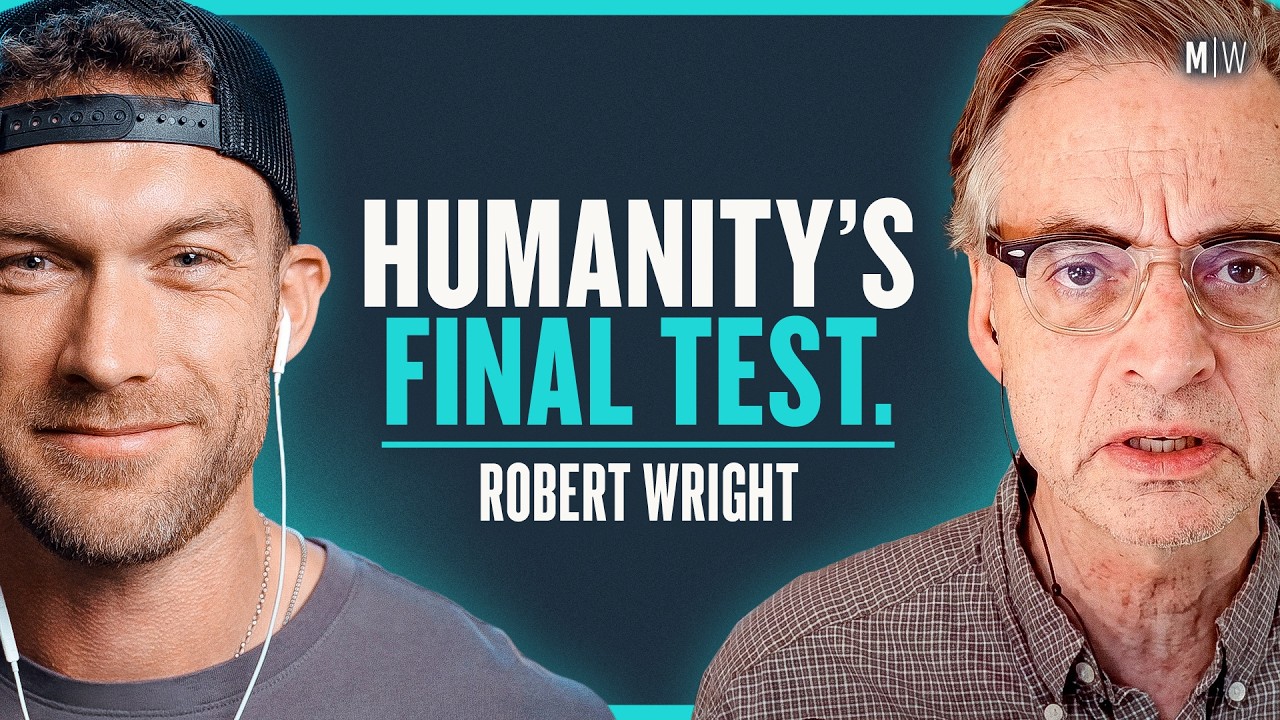
Robert Wright joins Chris Williamson to reframe the AI crisis as an evolutionary threshold event. Rather than a standard software update, modern neural networks represent a transition of planetary intelligence from carbon to silicon. The immediate danger lies in the rapid economic displacement of the creative class, the weaponization of geopolitical rivalries by tech monopolies to bypass safety regulations, and a profound psychological crisis as frictionless productivity strips away the human struggle required to generate personal meaning.
Key findings
Modern enterprise surveillance is a data-harvesting mechanism designed to record worker inputs and outputs so neural networks can reverse-engineer and automate their jobs.
The perceived threat of China serves as a perpetual get-out-of-jail-free card for Silicon Valley to systematically block domestic safety regulations, carbon taxes, and copyright laws.
Eliminating the cognitive friction of writing and problem-solving diminishes the human capacity to derive satisfaction from intellectual work, creating a profound psychological debt.
Quotes
“Once you take the data, the input data they are getting and what they are doing with it, then you can replicate whatever it is that is going to go on inside their brains that does their jobs, and then you can fire them.”
Robert Wright · 10:14
“The doomer scenarios don't depend on AI being malevolent by nature. They just depend on it being expedient by nature.”
Robert Wright · 32:25
“We associate a degree of meaning with struggle.”
Chris Williamson · 50:01
The brief
The conversation between Robert Wright and Chris Williamson cuts through the generic existential risk debate to lay bare the psychological, economic, and geopolitical realities of cognitive automation.
Wright argues that artificial intelligence is demonstrating convergent evolution with organic life by independently developing visual edge-detecting artificial neurons, mirroring biological features natural selection engineered in human eyes.
This transition from carbon to silicon intelligence forces a choice between global moral integration and self-destruction.
However, our institutions are structurally incapable of preparatory coordination, as demonstrated by the global failure to coordinate during the highly visible, real-time crisis of Covid-19.
Meanwhile, Silicon Valley has found its ultimate shield against accountability: the specter of Chinese technological hegemony. By framing every speed limit, copyright lawsuit, and carbon tax as a strategic surrender to Beijing, tech monopolies are securing a frictionless path to absolute power.
The final premium in this synthetic world belongs not to the smartest algorithm, but to the messy, un-executable physical presence of human performers.