Community Notes (Platform Governance)

The take
Community Notes looks like crowdsourced fact-checking. In practice it is how platforms let the majority selectively police narratives that challenge institutions, often burying inconvenient truths under 'context.'
The Tell
Community Notes: The 'community' decides what's true, as long as it's the consensus. Your dissent is just 'context'.

Stakes
When platforms deputize the 'community' to correct information, it matters because you need to know if you're getting actual context or just the consensus view weaponized against a dissenting opinion. It's the difference between open debate and peer-enforced orthodoxy, especially on sensitive topics like health.
The read
Community Notes, while presented as a democratic fact-check, often acts as a sophisticated filter.
It allows platforms to offload content moderation to users, who then apply "context" to posts that diverge from mainstream narratives, effectively outsourcing the policing of inconvenient truths and potentially controversial ideas.
The idea is sound: empower everyday users to correct inaccuracies and add missing context, fostering a more balanced information ecosystem. But the system's design, including its scoring and amplification algorithms, inevitably favors consensus views.
This creates a peer-enforced orthodoxy where genuinely novel or contrarian ideas, like Professor Thomas Seyfried's metabolic theory of cancer, face disproportionate scrutiny and "correction" by the crowd, regardless of their eventual merit.
The concrete fight is clear: independent researchers and contrarian thinkers frequently find their claims "contextualized," while mainstream or institutionally approved narratives often avoid similar public scrutiny.
What you need to remember is that "community" often means "majority," and the majority isn't always right, especially when it comes to challenging established power structures or scientific paradigms. It's less about objective truth and more about narrative control.
In the wild
- "This episode has been independently fact-checked. The full research document can be found in the description below."
- This episode has been independently fact-checked. The full research document can be found in the description below.
Related
 Noble Lie (Nolan)Christopher Nolan's recurring "noble lie" is a trap, revealing how easily we trade uncomfortable truths for comforting fictions, often with unforeseen moral costs for both the deceiver and the deceived.
 Problem is not the problemWhen the elite says 'the problem is not the problem,' they're less concerned with the issue itself and more with who dared to name it. It's the tell that narrative control matters more than actual solutions.
 Free Speech AbsolutistThey call you a 'free speech absolutist' the way priests used to say heretic: not to debate the line, but to make defending open speech sound like a kink for chaos.
 GIST FilterYouTube's GIST filter is less about 'originality' and more about platform-enforced scarcity, a new algorithmic gatekeeper designed to re-monetize creator attention. Fail its AI-driven originality check, and you risk a shadowban, forcing higher production value just to stay visible.
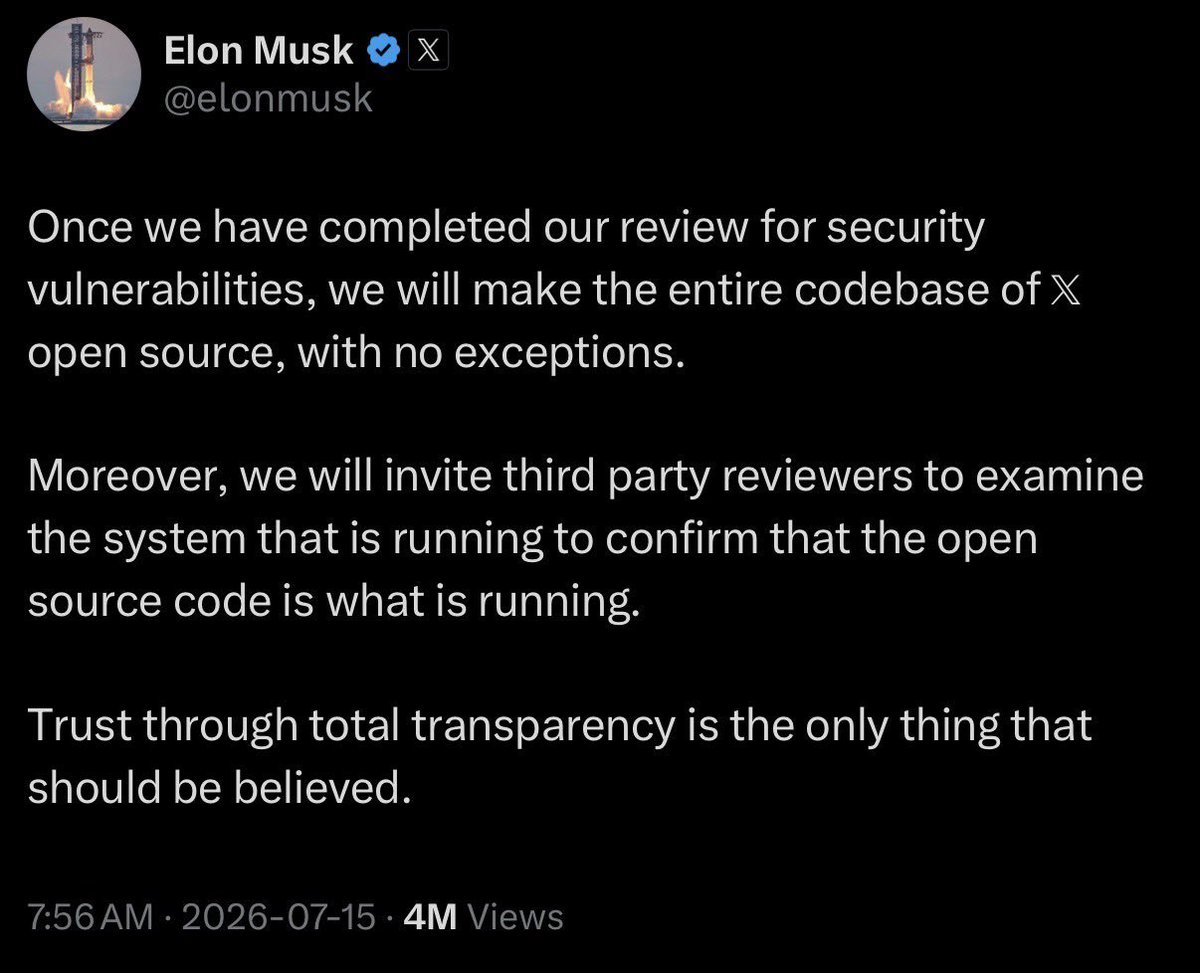 Open Source Social MediaOpen source social media often ships freedom branding with a control payload: nation-states and titans get a cleaner lever over discourse while waving an open-source flag.
 GifnotesGifnotes is the common sense intelligence engine for the timeline: connected knowledge with a spine, minus the corporate hedging and the sanitized encyclopedia tone. Miss the term and you are not just out of the loop, you are the one getting steered by it.
Gifnotes poster
Sources
FAQ
How does Community Notes differ from traditional fact-checking?
Traditional fact-checking often relies on expert journalists or organizations, while Community Notes crowdsources moderation, letting a broad user base apply context. The key difference is the decentralized, peer-driven nature, which can be both faster and more prone to groupthink.
Can Community Notes be gamed or manipulated?
Like any crowdsourced system, it's susceptible. Algorithmic promotion of certain notes and the sheer volume of users can push a consensus view, even if it's incomplete or biased, especially when highly motivated groups coordinate to target specific content.
What's the impact of Community Notes on free speech?
While it doesn't remove content, it adds a layer of 'official' context that can effectively de-platform or delegitimize dissenting views by framing them as incomplete or misleading. This can chill speech by creating a peer-enforced orthodoxy where contrarian ideas are quickly labeled as needing 'correction'.