
Free Speech Censorship
Your pocket lexicon
The take
Free Speech Censorship is the modern debate over who gets to silence whom, especially when private platforms and AI models act as public squares. Care now because the lines between government overreach and corporate moderation are blurring, and your ability to speak freely is the stake.
Why it matters
A fuzzy definition of censorship lets powerful entities control narratives without accountability. This week, it means not knowing if your post was removed for actual harm or for challenging a preferred view, making it harder to discern truth or participate in public discourse.
The note
Free Speech Censorship, in the contemporary sense, extends beyond just government suppression of dissent. It encompasses the growing power of private platforms and their algorithms to restrict or remove content, often under the guise of 'moderation' or 'community standards.' While some content moderation is necessary for functional online spaces, the sheer scale and opacity of these operations raise serious questions about who defines acceptable speech and why.
The mainstream narrative often acknowledges the need to combat 'hate speech' or 'misinformation,' framing platform actions as responsible stewardship. What it often refuses to admit is that when a handful of private companies control the dominant public forums, their content decisions, regardless of intent, can have the same chilling effect as state censorship. The incentives driving these decisions are rarely purely altruistic; they often involve advertiser pressure, political lobbying, or the desire to maintain a specific brand image.
To navigate this, remember that 'free speech' is not 'consequence-free speech,' but also that powerful entities, public or private, will always seek to shape narratives. Your responsibility is to question the source and motive behind any restriction on expression. Understand that AI models, trained on human-curated data, are now becoming the next frontier in this debate, capable of scaling content filtering to unprecedented levels, making critical thinking about information flow more vital than ever.
In the wild
Receipts from the feed. Not the definition. Proof the fight is real.
- Hazelwood is the training-wheels version of free speech. It’s past time the Court revisited it.
- Are LLMs Stifling Political Speech? An Assessment of How AI Models Protect Free Expression
- AI chatbots are at risk of spreading government restrictions on online speech, a new study says
- Why do free speech debates make us so angry?
Related
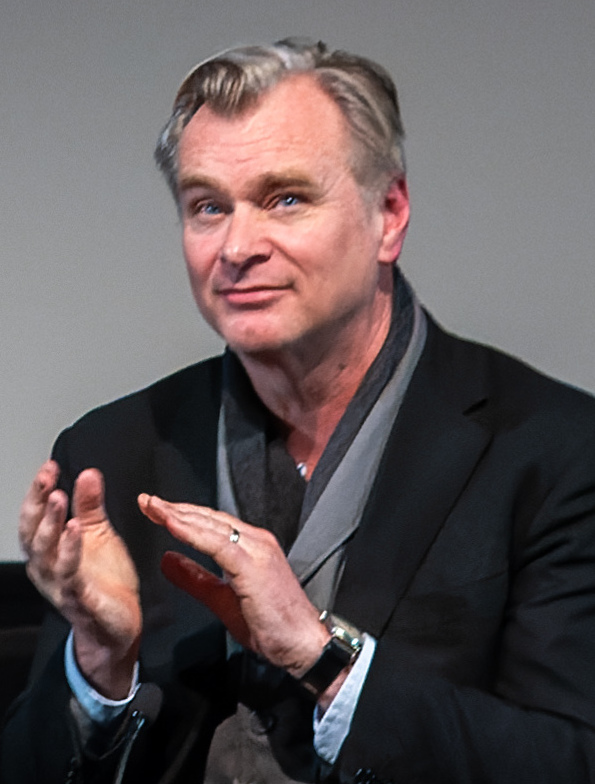 Christopher Nolan Odyssey"Christopher Nolan Odyssey" is the internet's hypothetical film adaptation of Homer's epic, which became a real-world culture war battleground over "woke" casting choices for a movie that doesn't actually exist. It's a prime example of how quickly online outrage can manufacture a cultural flashpoint, proving the internet will fight about anything, even a phantom.
 Citizen VigilanteA 'Citizen Vigilante' is someone who takes justice into their own hands, operating outside established legal systems. It's a term currently sparking debate, not just about the act itself, but about who gets to define justice and what happens when official channels are perceived as failing.
 Citizen Vigilante controversyThe Citizen Vigilante Controversy describes the internet-fueled debate over private individuals or groups taking justice into their own hands, often bypassing official channels. It matters because it blurs the line between public service and mob rule, shaping who gets to enforce norms in a hyper-connected world.
Sources
- U.S. Freezes $131 Million In Iran-Linked Crypto Wallets - Yahoo Finance
- Hazelwood is the training-wheels version of free speech. It’s past time the Court revisited it. - Free Speech Center
- AI chatbots are at risk of spreading government restrictions on online speech, a new study says - AP News
- Are LLMs Stifling Political Speech? An Assessment of How AI Models Protect Free Expression - The Oversight Board
- Why do free speech debates make us so angry? - The Guardian
FAQ
What's the core difference between 'moderation' and 'censorship' today?
Moderation implies content management within stated rules to maintain a functional platform. Censorship implies the suppression of speech for ideological or political reasons, often by powerful entities. The distinction blurs when private platforms become de facto public forums with broad, often inconsistently applied, rules.
How do AI models complicate the free speech debate?
AI can scale content filtering to unprecedented levels, but its 'judgments' are based on human-programmed biases and the data it was trained on. This makes AI an opaque and potentially unaccountable censor, capable of suppressing vast amounts of content without direct human oversight or clear recourse.
Who benefits when the definition of 'free speech censorship' is unclear?
Those in power, whether governments or corporations, benefit from ambiguity. It allows them to control narratives and suppress dissenting views under the guise of safety or community standards, without facing the legal or public scrutiny traditionally associated with censorship.