Being Canceled is a Choice: Replit CEO on Meming Dreams, Unkillable Founders, and Strategic Candor
Our read
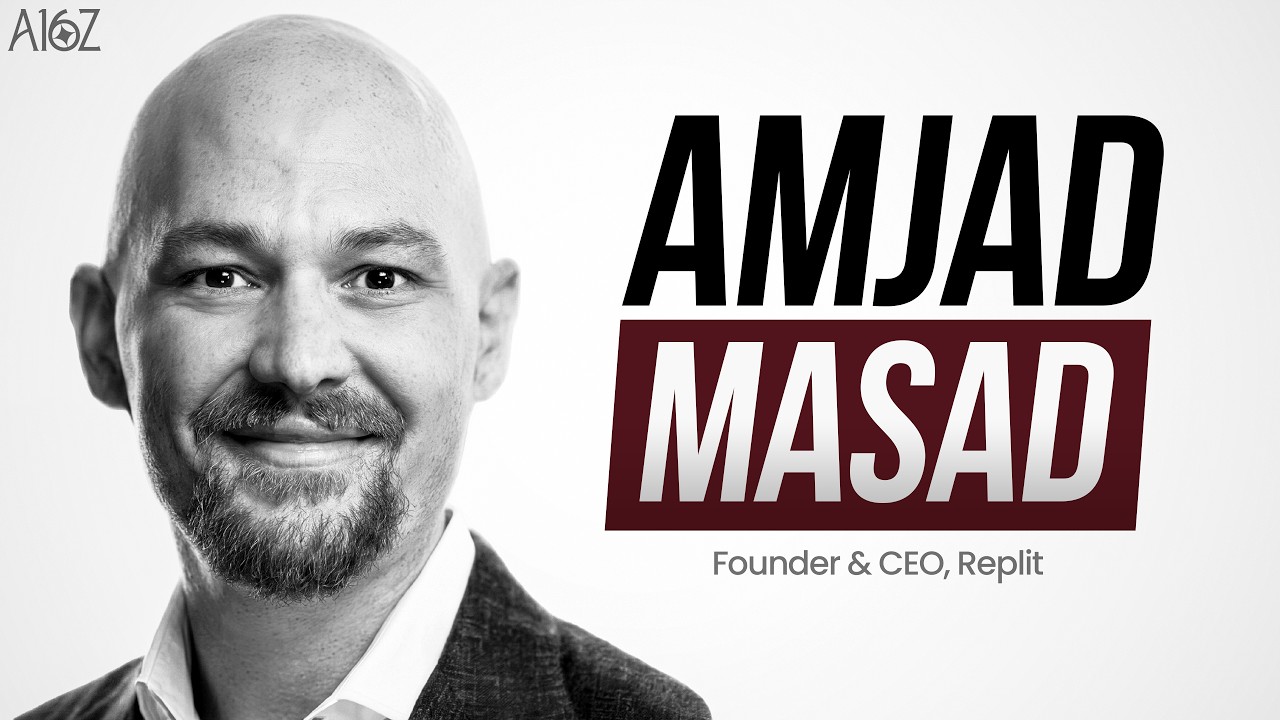
Replit CEO Amjad Masad details how founders can leverage direct communication, public vulnerability, and strategic platform use to build companies, navigate controversy, and become 'uncancellable' by mastering the 'meta' of public discourse.
Key findings
Replit's early survival and success were driven by the CEO's personal efforts in 'telling a story larger than the company itself' and 'meming a dream into reality.'
Overcoming public speaking fears and building communication skills can be achieved through 'exposure therapy' and 'building in public.'
'Being cancelled is a choice'; sustained public presence and adherence to principles can make individuals 'uncancellable.'
Transparently owning and rectifying mistakes publicly can turn negative events into positive business opportunities and foster customer loyalty.
CEOs should prioritize 'business impact' when deciding to engage with online criticism, avoiding emotional weakness.
What happened
Amjad Masad, CEO of Replit, shares his strategic playbook for founders to become public-facing influencers, arguing that his company's early survival depended on 'meming a dream into reality' through personal storytelling. He advocates for 'exposure therapy' to overcome public speaking fears and 'building in public,' even with early mistakes. Masad provocatively claims 'being cancelled is a choice,' asserting that sustained public presence and adherence to principles eventually render individuals 'uncancellable.' He further advises on strategic responses to online criticism, emphasizing 'business impact' over emotional reactions, and differentiates social media platforms like X (for 'elite influence') from Instagram/YouTube (for the 'early majority'). The conversation culminates in the importance of 'understanding the meta', the larger societal debates, to frame arguments for virality, as exemplified by Satya Nadella's successful long-form essays.
The fight
- Startup Survival through Narrative 1:23 - 1:40
Replit survived and thrived in its early, commercially non-viable stages because Amjad Masad actively told a compelling story larger than the company itself, which helped with fundraising and recruiting.
Evidence: Amjad's anecdotal experience with Replit's journey, stating it 'would have probably died if I wasn't telling a story that is larger than the company itself.'
- Public Speaking as Exposure Therapy 3:03 - 3:34
To become good at public communication, one must confront fears directly through repeated exposure, even if it means 'making a fool of yourself.'
Evidence: Amjad's personal journey of having 'terrible stage fright' which he addressed by taking improv and storytelling classes.
- Learning from Early Public Mistakes 3:45 - 4:24
Gradual public exposure allows for learning from mistakes without significant reputational damage, serving as a 'progressive overload' for communication skills.
Evidence: Amjad contrasts his 'very linear growth' on social media, allowing him to make 'PR mistakes with very little attention,' with founders whose companies 'blow up right out of the gate.'
- Building in Public Strategy 5:25 - 6:25
CEOs should make much of their internal communication public, as there are few true 'secrets' and it carries people on the journey while providing practice.
Evidence: Amjad's belief that 'there aren't really a lot of secrets that you need to keep inside a company,' and his practice of often writing something publicly before pasting it to Slack internally.
- Direct Communication Builds Trust 6:27 - 8:09
Being authentic and communicating directly to the public fosters a deeper connection than filtered PR, as evidenced by figures like Elon Musk and Donald Trump.
Evidence: Amjad references Elon Musk and Mark Zuckerberg changing their narratives by 'going direct,' and Donald Trump's success 'despite the negative bias...in the press.'
- Agency in 'Cancelation' 9:15 - 9:47
Individuals choose whether to be canceled by deciding to retreat from the public eye; those who remain visible eventually outlast their critics.
Evidence: Amjad's assertion that 'being cancelled is a choice,' and Erik's corroboration with the book 'So You Think You've Been Shamed,' which concludes that those who truly get canceled are those who 'shut up.'
Visual-only receipts
- Overlay text such as 'Being cancelled is a choice,' 'public,' 'the haters kind of give up,' 'You have to,' 'amazing,' 'SUCCESS.'
- Animated graphics and simulated social media posts (e.g., Twitter/X from Amjad Masad, article headlines).
- Stage backdrops and lower-thirds displaying participant names and the event title 'FOUNDER STORY & GOING DIRECT.'
- A city billboard showing 'Keep thinking.' and 'Claude. The AI for problem solvers.'
- Legal disclaimers and A16z Show branding elements.
Quotes
“Replit would have probably died if I wasn't telling a story that is larger than the company itself.”
Amjad Masad · 1:24
“If you're trying to meme a dream into reality, I think you have to play that game.”
Amjad Masad · 1:49
“Anything you're afraid of, just go do more of it until you're desensitized, and like the best way to get desensitized is to just make a fool of yourself every day doing improv.”
Amjad Masad · 3:24
“Being cancelled is a choice.”
Amjad Masad · 9:15
The brief
This segment is a masterclass in founder-as-influencer strategy, revealing how Replit's CEO proactively 'memed a dream into reality' through public communication, even when his company lacked commercial success. It's a candid look at building resilience in the spotlight, arguing that 'being cancelled is a choice' and that consistent authenticity, even with missteps, is the ultimate shield against public backlash. This clip further exposes the high-stakes chess match of CEO direct-to-consumer engagement, particularly on X, where 'elite influence' can quickly morph into 'business impact.' Amjad Masad offers a refreshing perspective, arguing that transparently 'owning up to mistakes' can transform detractors into loyal advocates, while cautioning against feeding trolls or succumbing to platform-specific algorithmic whims. It's a masterclass in strategic candor, showing how principled communication can win the long game, even when facing public scrutiny. Finally, this episode cuts through the noise of 'building in public' to reveal the true leverage point for influential direct communication: not just creating content, but masterfully 'understanding the meta.' Amjad Masad showcases how leaders like Satya Nadella achieve tens of millions of views by framing well-reasoned arguments to perfectly intersect with the prevailing 'Zeitgeist,' proving that strategic context and timing outweigh the sheer volume or brevity of communication.
Related dispatches
- Being Canceled Is a ChoiceThe 'cancel culture' panic is a convenient lie. Most 'cancellations' aren't mob executions; they're self-inflicted withdrawals by people too weak or too stupid to stand their ground. The outrage machine only wins if you let it.
- Meme a Dream into RealityForget product-market fit. In a market choked with 'solutions,' the only true scarcity is belief. The real pre-seed growth hack is 'meming a dream into reality,' where the founder's vision, not their code, becomes the first, most powerful product.
- Understanding the Meta for Direct CommunicationEveryone thinks 'going direct' means just *making* content. They're wrong. The real game is knowing the conversation, then blowing it up with your take. Satya Nadella plays to win.
Lexicon from this episode
- Meme a Dream into RealityWhen a founder 'memes a dream into reality,' they're not just telling a story; they're publicly performing radical conviction to build a vision from scratch, because the cost of *not* forcing a choice between joining or dismissing their future is being ignored entirely.
- Going Direct (Communication)The corporate ideal frames 'Going Direct (Communication)' as transparency, but that's the trap: its real power is turning a CEO into a prophet and a company into a cause. Leaders who understand this know that selling belief and a compelling personal narrative is the ultimate competitive advantage, because without it, your vision dies.