Mesh beat India's three-hour bitchat ban

Our read
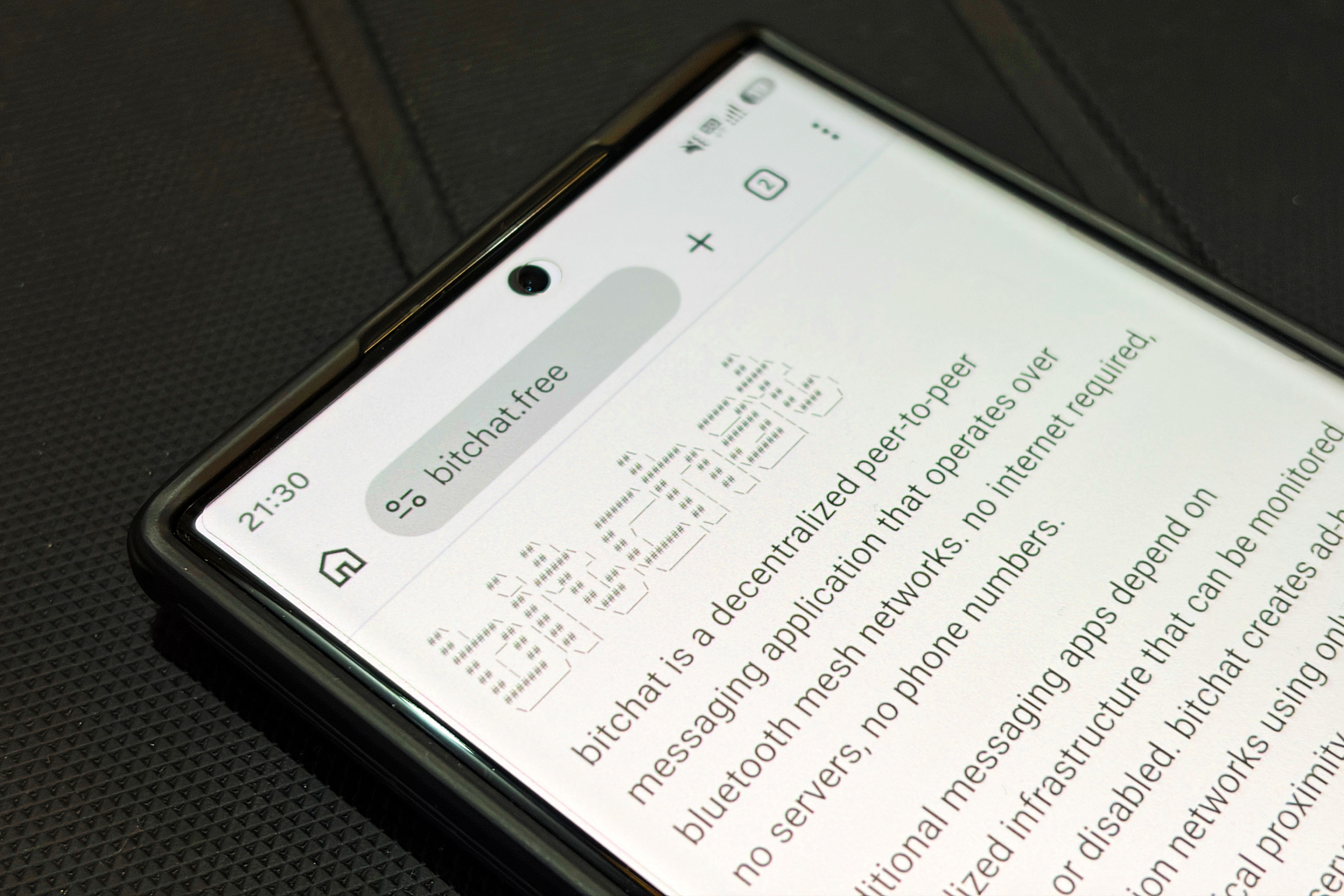
India ordered GitHub to erase Jack Dorsey's offline mesh chat in three hours. No-server tech does not care about intermediary kills: the repos still load, and India is most of the downloads.

What happened
I4C-MHA ordered GitHub to pull bitchat and bitchat-android within three hours, citing Bluetooth mesh, no registration, and shutdown-proof routing. The notice landed as India jumped to about 85% of global downloads and more than 330,000 daily actives amid exam-leak protests and local internet cuts. Jack posted the order, then quote-posted the Sensor Tower surge. The repos still load.
The brief
They are not fighting a post. They are fighting decentralized freedom tech, and a host-level repo kill already lost to phones that keep meshing without GitHub.
The sides
- India I4C
Anonymous Bluetooth mesh that works through carrier cuts blocks lawful interception, so GitHub must erase the source in three hours under IT Act 79(3)(b).
Evidence: I4C notice names bitchat repos and architecture (shutdown routing, no central logs), not a specific unlawful message.
- Permissionless / Jack
No-server mesh that keeps working through shutdowns is the product, and a host-level repo kill cannot un-install phones that already run it.
Evidence: Jack posted the notice and the India download spike; repos still return live pages; IFF notes mesh keeps functioning without servers.
Quotes
“India accounted for about 85% of the app's global downloads between July 17 and July 23, compared with about 1% over the previous 30 days. ... daily active users in India also reached more than 330,000.”
jack
Why now
Jack posted the I4C notice while India became most of bitchat's downloads, jumping from about 1% to about 85% in a week with more than 330,000 daily actives in-country.
The state asked GitHub for a three-hour erase aimed at the architecture itself, not a specific message, right as offline mesh demand spiked under local internet cuts.
That mismatch is the heat: a host-level kill on no-server software, with the named repos still resolving and the download curve proving people were already installing the thing India wanted scrubbed.
Questions
Why did India order GitHub to pull Jack Dorsey's bitchat app within three hours?
The Indian government targeted bitchat because its serverless, Bluetooth-mesh architecture allows citizens to communicate during state-mandated internet blackouts. The Ministry of Home Affairs issued the emergency order as the app's daily active users in India spiked past 330,000 amid widespread student protests over exam leaks. By demanding a host-level deletion, the state attempted to choke off the distribution of a tool it cannot monitor, censor, or shut down through traditional telecom kill switches.
How does bitchat work when the government cuts off the internet?
Bitchat bypasses the traditional internet entirely by routing encrypted messages directly from phone to phone using local Bluetooth and Wi-Fi signals. Each device acts as a node in a decentralized mesh network, passing data along a chain of nearby users until it reaches its destination. Because there are no central servers to seize and no internet service providers to block, the network remains fully operational even when the state shuts down cellular towers and fiber connections.
Did GitHub comply with India's three-hour emergency removal notice?
GitHub did not immediately take down the repositories, and the bitchat code remained accessible to developers and users after the deadline passed. While major tech platforms usually comply with local laws to protect their market access, the decentralized nature of the software means a GitHub deletion cannot stop the app. The source code is already widely mirrored across the web, and users can share the installation files directly with each other offline.
Who gains the most from using offline mesh communication tools like bitchat?
Dissidents, student protestors, and everyday citizens gain the most because mesh tools break the state monopoly on information flow during crises. When governments use internet blackouts to control the narrative and prevent assembly, decentralized apps restore basic coordination capabilities. Conversely, authoritarian regimes and centralized security agencies lose power, as they can no longer use ISP-level filtering or deep packet inspection to track and silence opposition.
What is the cost to Indian citizens if the state successfully bans mesh-networking apps?
Banning mesh apps leaves citizens entirely vulnerable to information isolation and state overreach during periods of civil unrest. Without offline communication alternatives, individuals lose the ability to coordinate safety, document human rights abuses, or access basic community support when the government pulls the digital plug. Accepting this ban establishes a dangerous precedent where the state holds absolute veto power over whether its population is allowed to speak to one another.
How does the bitchat ban compare to previous government crackdowns on encryption?
This crackdown is more aggressive because it targets the distribution of peer-to-peer architecture itself rather than demanding backdoor access to encrypted messages. Traditional fights, like the FBI-Apple encryption dispute, focused on accessing stored data on centralized platforms. India's move against bitchat represents a preemptive strike on serverless infrastructure, signaling that states now view the complete absence of central servers as an inherent national security threat.
Receipts
- Jack Dorsey on X: India takedown notice for bitchat
- Jack Dorsey on X: India download spike (Sensor Tower via TechCrunch)
- TechCrunch: India move against bitchat (facts, not our voice)
- Crypto Jargon on X: Jack Dorsey and the freedom fight
- permissionlesstech/bitchat on GitHub (still live)
- permissionlesstech/bitchat-android on GitHub (still live)
Related dispatches
- TikTok Shadowbans the Fact-CheckersThe professional fact-checking class spent years demanding platforms build automated censorship engines to crush 'misinformation.' Now they are crying foul because those same brainless, context-blind algorithms are eating them too. When you build a machine that deletes speech on keywords, it does not care who is holding the clipboard.
- How OpenCode Broke Anthropic's Moat and Scaled to 20X GrowthWhen Anthropic tried to block OpenCode by blacklisting its name in system prompts, they accidentally validated the open-source alternative as a peer competitor, triggering a massive developer migration toward cheap, high-speed open-weight models.
- Iran's AI-Powered Asymmetric WarfareThe Pentagon spent billions on enterprise AI contracts only to watch adversaries achieve peer-level disruption with open-source models and a few clever prompts. AI didn't invent asymmetric warfare, but it did democratize the cost of chaos.
- The Corporate Bluff Collapses: WeRecoverData's Final RetractionPredatory service operations rely on cheap legal threats to bury consumer advocacy, but calling their bluff with public exposure turns their empty cease-and-desist letters into humiliating, self-inflicted retractions.
- Circle's South Korean PlayWhile Western regulators waste years trying to classify stablecoins as securities, Asian consumer tech giants are quietly building the infrastructure to make legacy credit card networks obsolete.
- The Chat Control Procedural CoupWhen a governing body needs to bypass its own democratic majority to pass a mass surveillance bill, the system isn't broken, it is working exactly as designed to insulate the administrative state from the will of the voters.
Evidence
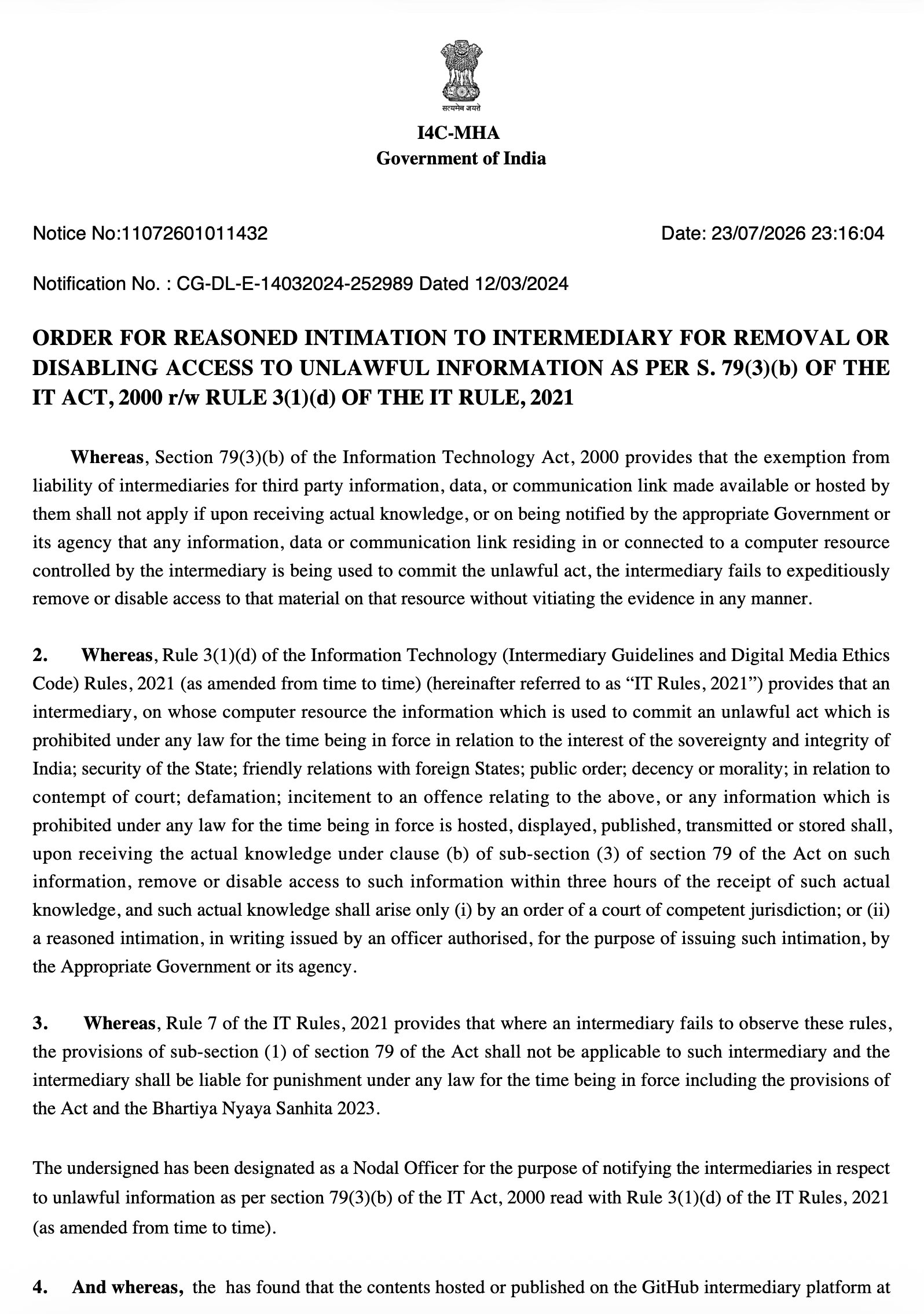
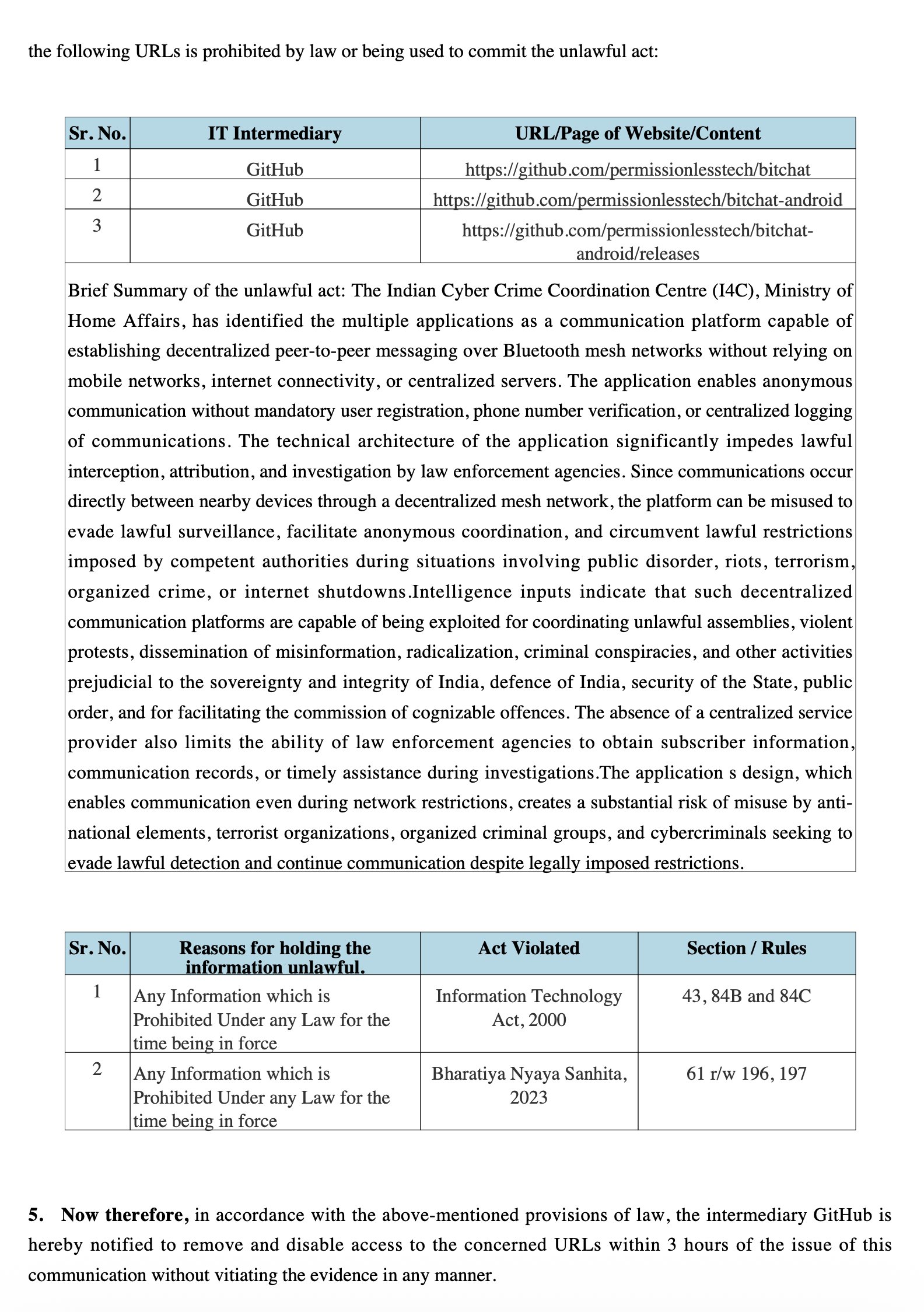
The I4C order Jack posted. Full pages, not cropped scraps.

Visual-only receipts
- I4C-MHA Government of India notice page 1: ORDER FOR REASONED INTIMATION under S. 79(3)(b) IT Act / Rule 3(1)(d), dated 23/07/2026, three-hour removal window.
- Notice page 2: named URLs github.com/permissionlesstech/bitchat, bitchat-android, and releases; cites IT Act 43/84B/84C and Bharatiya Nyaya Sanhita 61 r/w 196/197.