
Megyn Kelly with Rob O'Neill and Dakota Meyer: The Myth of the Born Alpha and the Reality of Asymmetric Warfare

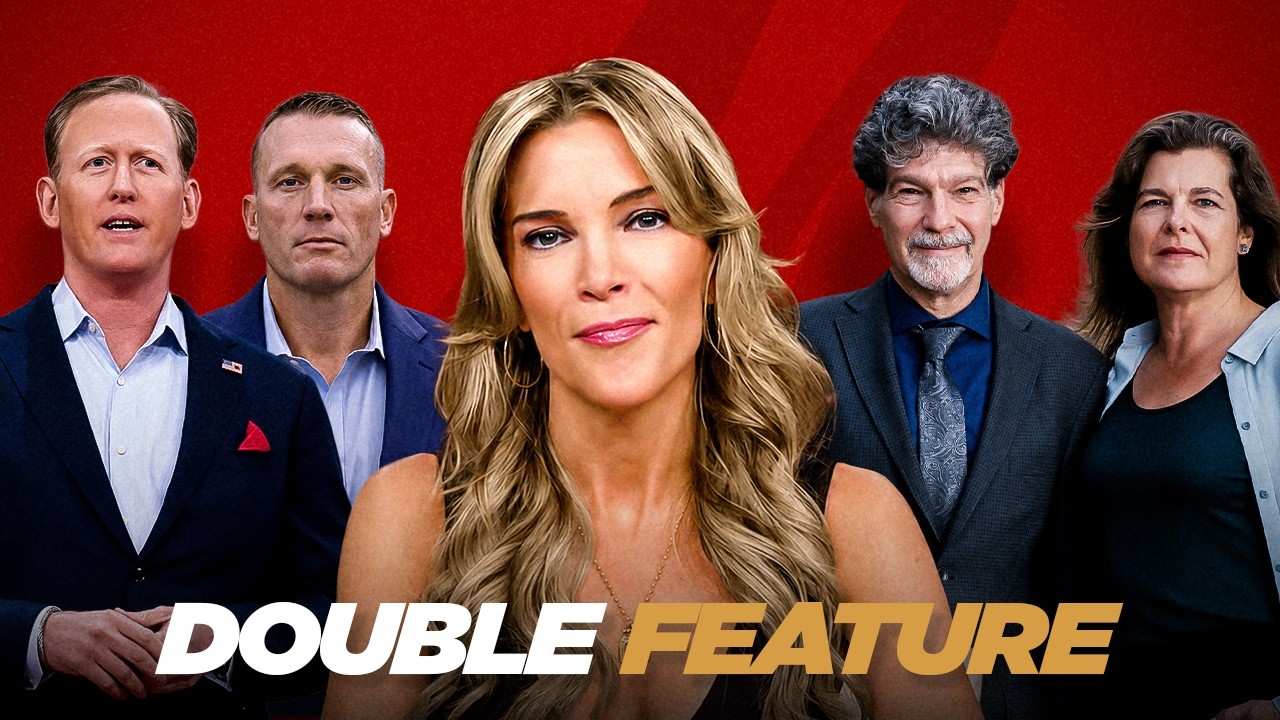
Our read
True leadership is forged through decentralized action and unglamorous repetition rather than polished bureaucratic credentials, a reality laid bare by Ukrainian resistance defying expectations and veterans exposing the hollow nature of modern institutional validation.


What happened
Navy SEAL veteran Rob O'Neill and Marine Corps Medal of Honor recipient Dakota Meyer join Megyn Kelly to strip away the Hollywood mythos of elite military performance. They expose the tactical impossibility of conventional superpower dominance in urban environments, the power of a single leader refusing to run, and why survival in both combat and civilian life requires replacing soft therapeutic empathy with harsh, unvarnished peer accountability.
The brief
The modern elite believes leadership is a credential you buy at Harvard or a script you read at Davos, but the battlefield keeps proving that authority is only earned when you refuse to run.
Key findings
Capturing a capital city is a tactical illusion because occupying administrative buildings immediately inherits a multi-decade urban insurgency against a hostile population that refuses to submit.
True operational readiness under extreme stress is entirely habitual, meaning that if you have to consciously think about life-saving actions under fire, you have already failed.
Surrounding yourself with therapeutic empathy is a soft institutional trap, whereas recovery and mental resilience require intervention partners willing to risk your feelings to preserve your agency.
The sides
- The Fallujah Scale Warning 13:56
Holding a hostile metropolitan city is mathematically and tactically impossible for Russia's current force footprint.
Evidence: Meyer contrasts the US military's three-week struggle to secure Fallujah (300,000 residents) with Kyiv, which is home to millions of active hostiles.
- The Hundred-Thousand Repetition Rule 25:20
Mastering high-stakes execution is a direct function of raw, unglamorous volume rather than spontaneous talent.
Evidence: O'Neill's father forcing a 20-free-throw streak to leave the gym, eventually escalating to 105 consecutive makes, which taught him the identical discipline required for combat marksmanship.
- The Accountability Cure for Self-Pity 57:10
True recovery and mental resilience require surrounding yourself with people who offer harsh accountability rather than comfortable, validating empathy.
Evidence: Tim Kennedy telling Dakota Meyer that he 'needed to look like a warrior' after Dakota gained weight and let himself go during a difficult divorce.
Quotes
“Don't ever think that you can do it when it matters if you can't do it when it doesn't matter.”
Dakota Meyer · 29:45
“Fear is fine. Fear makes you think more clearly... It's when you start to freak out that it's dangerous. Panic is very, very contagious.”
Robert O'Neill · 51:31
“I used to call my gun the M4 charge card... the way that works is you have a car, I have a gun, now I have a car and a gun.”
Robert O'Neill · 39:11
Why now
The conflict in Ukraine exposed the hollow nature of Western diplomatic theater, demonstrating that a single leader's refusal to run can shame comfortable, neutral nations into arming a resistance.
By juxtaposing Zelensky's high-stakes battlefield presence with their own histories as unlikely elite warriors, special operations veterans Rob O'Neill and Dakota Meyer illustrate that authentic courage is built on action rather than corporate posturing.
They strip away the media-induced hysteria of nuclear armageddon to expose the actual tactical trap of asymmetric warfare. A major power mistakes administrative occupation for military victory while underestimating the absolute friction of street-by-street urban combat.
If the US military spent three weeks clearing a mid-sized town like Fallujah, any invading force is staring down a multi-decade meat grinder in a major metropolis that no amount of heavy conventional armor can salvage.
Ultimately, this operational discipline carries over to the home front. Survival in extreme environments, whether in a chaotic fire-fight or a collapsing civilian landscape, requires a ruthless rejection of the modern therapeutic mindset.
Composure is not an innate personality trait but a disciplined social guardrail that stops panic before it metastasizes. To maintain this edge, individuals must actively replace validating cheerleaders with accountability partners who value survival over temporary emotional comfort.
Questions
Why is capturing a capital city like Kyiv considered a tactical illusion?
Capturing a city's administrative buildings is not the end of a war, it is merely the opening ceremony of a twenty-year meat grinder. Dakota Meyer contrasts the US military's three-week struggle to secure Fallujah, which had 300,000 residents, with Kyiv, a city of millions where every citizen wants to fight. An armed and hostile population makes long-term occupation economically and militarily unsustainable.
How does Rob O'Neill distinguish between fear and panic?
Fear is a functional biological tool that heightens sensory awareness and makes you think more clearly, whereas panic is a catastrophic cognitive freeze. Rob O'Neill explains that controlling what you project outwardly is a public service that prevents mass panic, which acts as an uncontrolled social contagion that instantly destroys collective agency.
What is the danger of surrounding yourself with therapeutic empathy during a crisis?
Surrounding yourself with soft, validating empathy keeps you comfortable in your decline and fosters a victim mindset. Dakota Meyer credits his friend Tim Kennedy's blunt, abrasive assault on his physical decline post-military with saving his life, proving that harsh, unvarnished peer accountability is the true cure for self-pity.
Why does Dakota Meyer argue that elite performance relies on zero-stake defaults?
Humans do not rise to the occasion under fire; they sink to the level of their baseline training. If you have to consciously think about life-saving actions like a medical evacuation under extreme stress, you have already failed. Complex procedures must be drilled relentlessly when nothing is on the line so they function entirely on subconscious muscle memory.
How does the conversation mock modern corporate credentialing?
The dialogue highlights the deep chasm between the civilian credentialing class and high-leverage individuals who maintain real-world security. Megyn Kelly describes competing for a prestigious law firm job against a combat veteran with a Bronze Star for clearing minefields, illustrating how institutional hiring queues treat raw, life-or-death survival instinct as an equivalent extracurricular to standard resume padding.
Receipts
Lexicon from this episode
Visual-only receipts
- Archival footage of President Barack Obama presenting the Medal of Honor to Dakota Meyer in 2011, detailing the combat actions where Meyer disobeyed direct orders to rescue trapped comrades.