Nolan's Odyssey: Reimagining Epic, Redefining Filmmaking
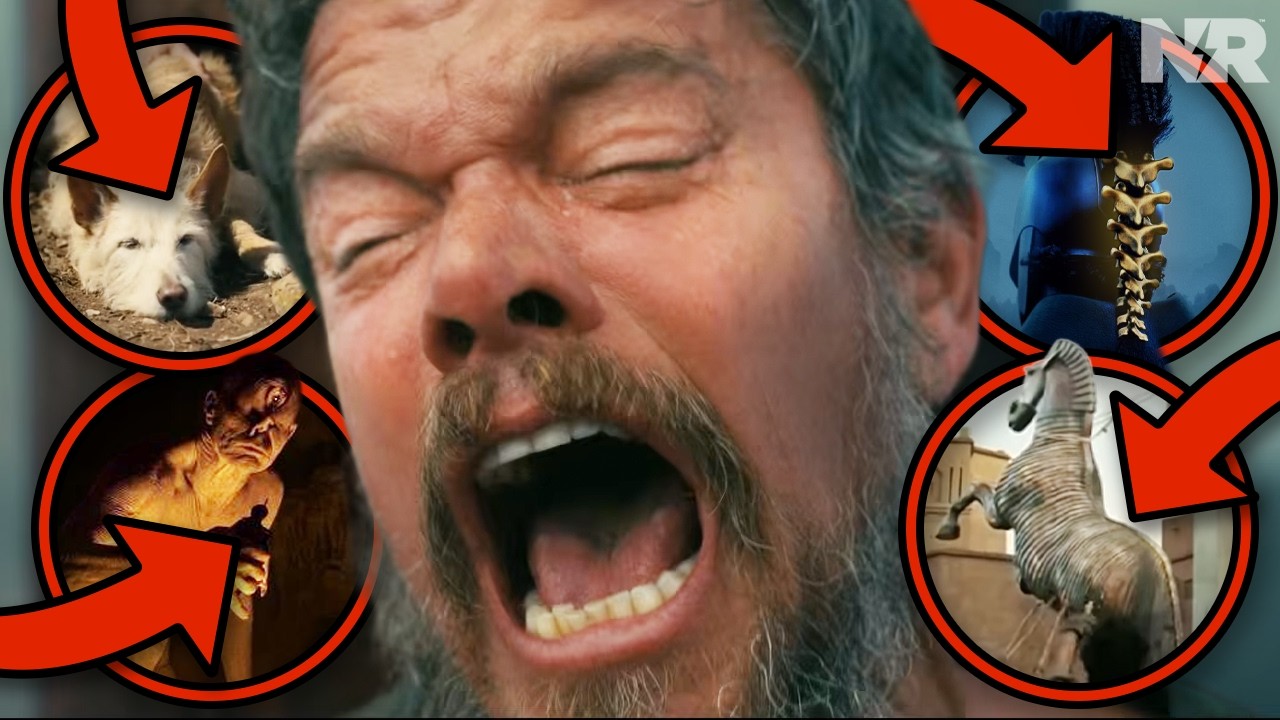
Our read
Christopher Nolan's hypothetical 'Odyssey' isn't just an adaptation; it's a masterclass in reinterpreting ancient myth through cutting-edge practical effects and a signature thematic lens, challenging traditional narratives of heroes and gods.
Key findings
Nolan's film reinterprets historical mysteries (e.g., 'People of the Sea') and mythological narratives (e.g., Trojan Horse as piety, Helen's origins), offering unique perspectives.
The production pioneers the 'Keighley' IMAX camera for on-set audio, employs the 'Texas Switch' for divine appearances, and utilizes 60-foot animatronics for the Cyclops, prioritizing practical effects over CGI.
Odysseus is reimagined as a 'far more honorable' hero, aligning with a recurring 'Nolan Trope' of elevating protagonists to 'superior men filled with regrets.'
The film explores Nolan's signature themes, including 'apparent magic,' the profound implications of 'Zeus' Law of Hospitality,' and the ethical complexities of the 'noble lie.'
Nolan integrates elements of oral tradition (e.g., Travis Scott as The Bard, intentional repetition) and historically authentic sound design (e.g., Aulos for Sirens, bowstring as musical motif) to ground the epic in its origins.
What happened
This dispatch unpacks Christopher Nolan's envisioned 'The Odyssey,' revealing how the filmmaker deconstructs classic epic poetry, reinterprets historical mysteries like the 'People of the Sea,' and challenges traditional heroic narratives. The analysis highlights Nolan's relentless pursuit of practical effects, from the innovative 'Keighley Camera' for authentic IMAX sound to 60-foot animatronics for the Cyclops. It also delves into his signature thematic elements, such as 'apparent magic,' 'Zeus' Law of Hospitality,' and the 'noble lie,' demonstrating how Nolan transforms ancient tales into a deeply layered, technologically advanced, and philosophically rich cinematic experience.
The fight
- Layered Storytelling & Self-Reference 0:01 - 1:13
Nolan's 'The Odyssey' is a deeply layered and self-referential work, engaging in conversation with his past films and the source material through subtle thematic and visual cues.
Evidence: The film's opening references Nolan's 'Oppenheimer' and 'Interstellar,' the Universal logo visually depicts the Mediterranean and Zeus's lightning, and the 'Law of Hospitality' is central from the start (0:01-1:13).
- Challenging Myth & History 1:14 - 4:10
Nolan's adaptation challenges traditional interpretations of ancient Greek history and myth, providing unique perspectives on 'magic' and historical enigmas.
Evidence: The opening text 'A time of apparent magic...' suggests subjective magic, and the film offers an 'explicit answer' to the historical mystery of the 'People from the Sea' (1:14-1:47, 3:17-4:10).
- Oral Tradition & Narrative Reframing 1:48 - 8:23
The film uses specific artistic and technical choices to reflect the poem's oral tradition and reframe its narrative, modernizing and re-evaluating the classic epic.
Evidence: Casting Travis Scott as The Bard, the chanted prologue, the reinterpretation of the Trojan Horse, Penelope interrupting the story, and the non-linear plot structure all serve this purpose (1:48-2:22, 4:31-5:15, 7:59-8:23).
- Character Depth & Rationalization 5:16 - 7:34
Nolan's interpretation of characters like Sinon and the Trojans adds depth and rationalizes their actions, 'fixing' perceived illogical plot points.
Evidence: Sinon is portrayed as an exploited farm boy, and the Trojans accept the horse as a sacred 'gift for Athena' out of piety, meticulously handling it (5:16-6:27, 7:21-7:34).
- Filmmaking Innovation & Authenticity 6:28 - 7:52
Nolan champions cutting-edge filmmaking technology and practical effects for authenticity and immersion, overcoming traditional limitations.
Evidence: The development of the 'Keighley' camera for on-set audio, its nickname 'The Blimp,' the use of mirrors for actor eye-lines, and the extensive practical Troy set in Morocco exemplify this (6:28-7:20, 7:35-7:52).
- Odysseus: The Honorable Hero 13:00 - 13:20
Nolan's 'The Odyssey' portrays Odysseus as a more honorable figure than Homer's original 'trickster,' aligning with a recurring Nolan directorial trope.
Evidence: The commentator notes Nolan's tendency to 'prop up his heroes on pedestals, making them superior men filled with regrets' (13:00-13:20).
Visual-only receipts
- Rapid cuts of scenes from 'Christopher Nolan's The Odyssey' interspersed with images from 'Oppenheimer' and 'Interstellar' (0:00-0:10).
- Erik Voss wearing an 'I DIDN'T UNDERSTAND TENET' shirt (0:09).
- Universal Studios logo showing the Mediterranean Sea and lightning (0:52).
- Black screen with text: 'A time of apparent magic...' (1:14).
- Inset image of rapper Travis Scott and a staff with a golden cow's head finial (1:49, 2:00).
- Emily Wilson's translation of 'The Odyssey' opening lines (2:54-3:16).
Quotes
“Christopher Nolan's 'The Odyssey' is a masterpiece in conversation with all of his past films from 'Oppenheimer' to 'Interstellar'. So let's unpack all of these subtle connections.”
Erik Voss · 0:00-0:06
“Christopher Nolan doesn't set this film in a time of actual historically recorded magic, but rather of subjective magic. Magic according to unreliable accounts, seen by unreliable eyes.”
Erik Voss · 1:20-1:29
“By tricking the Trojans this way, Odysseus is totally violating Zeus's law of hospitality and directly insulting Athena.”
Erik Voss · 6:21-6:27
“But this is also kind of a trope with Nolan's films, that he likes to prop up his heroes on pedestals, making them superior men filled with regret, rather than them just being, you know, deceitful little shits like men sometimes are in the world.”
The Commentator · 13:09-13:20
The brief
Christopher Nolan's hypothetical 'The Odyssey' is presented not merely as an adaptation, but as a profound deconstruction of myth, history, and the very act of storytelling. The film, as analyzed, meticulously reinterprets ancient narratives, from providing an explicit answer to the historical mystery of the 'People of the Sea' to reframing the Trojan Horse as a tragic act of piety rather than foolishness. This approach extends to character portrayals, where Odysseus emerges as a 'far more honorable' hero, a recurring 'Nolan Trope' that elevates protagonists to 'superior men filled with regrets.'
Nolan's commitment to immersive realism drives significant technical innovation. The development of the 'Keighley Camera,' a specially designed IMAX camera with a muted shell, allows for direct on-set audio recording, a groundbreaking achievement for large-format productions. Fantastical elements, like the sudden appearances of Athena, are grounded in practical 'Texas Switch' cinematography, while the colossal Cyclops sequence relies on a 60-foot animatronic puppet and forced perspective, echoing 'old school filmmaking techniques of Ray Harryhausen.' This preference for tangible effects over CGI ensures a visceral, grounded aesthetic.
Thematic depth is woven throughout, with the film exploring 'apparent magic' as subjective experience rather than literal fact, and positioning 'Zeus' Law of Hospitality' as a central moral axis whose violation has dire consequences. Nolan's signature theme of the 'noble lie' is also highlighted, examining the ethical toll of deception, even when intended for a greater good. By integrating elements of oral tradition, such as Travis Scott as 'The Bard' and intentional narrative repetition, and employing historically authentic sound design with instruments like the Aulos, Nolan crafts an 'Odyssey' that is both deeply rooted in its ancient origins and boldly reinterpreted for a contemporary audience, challenging perceptions of truth, heroism, and the power of narrative itself.
Related dispatches
- Nolan's 'Noble Lie' and the Trojan HorseWe love to pretend the 'noble lie' is some high-minded philosophical concept, but Nolan's take on the Trojan Horse rips off the mask: it's just a fancy excuse for deceit, especially when your 'greater good' means mass slaughter. Some 'clever maneuvers' just make you a sacred rule-breaking asshole.
- The 'Keighley Camera' and IMAX AudioThe 'IMAX sound problem' was never a problem; it was an excuse for lazy filmmaking. Christopher Nolan's 'Keighley Camera' is a giant middle finger to the industry's collective shrug, proving that if you actually give a shit about actor dialogue and immersive audio, you can fix the 'unsolvable' tech issues. Innovation happens when someone stops accepting mediocrity.
- Helen of Troy: Race, Status, and Culture WarsWhen the culture war comes for Helen of Troy, they forget she hatched from an egg. Nolan's take on 'white-armed' Helen reminds us that ancient texts aren't just waiting to be shoehorned into modern racial politics; sometimes 'white' just meant you didn't work in the sun. Get a grip, nerds.
Lexicon from this episode
- Keighley CameraThe Keighley Camera is Christopher Nolan's answer to the trap of choosing between epic IMAX visuals and authentic on-set sound, because real performances beat ADR every time.
- Zeus' Law of HospitalityZeus' Law of Hospitality wasn't just about being nice to strangers; it's a brutal economic and social contract that kept ancient societies from collapsing into total anarchy. Violating it was a direct challenge to the fragile order, with real-world costs disguised as divine wrath.
- Noble Lie (Nolan)Christopher Nolan's recurring "noble lie" is a trap, revealing how easily we trade uncomfortable truths for comforting fictions, often with unforeseen moral costs for both the deceiver and the deceived.