
Trump's Chinese Hardware Ban Forces Silicon Valley to Choose Between Cheap Silicon and National Security

Our read
For years, the tech elite preached globalist efficiency while outsourcing their physical supply chains to a geopolitical rival. This ban is a harsh reminder that you cannot build sovereign intelligence on hostile silicon, no matter how much it helps your quarterly margins.


What happened
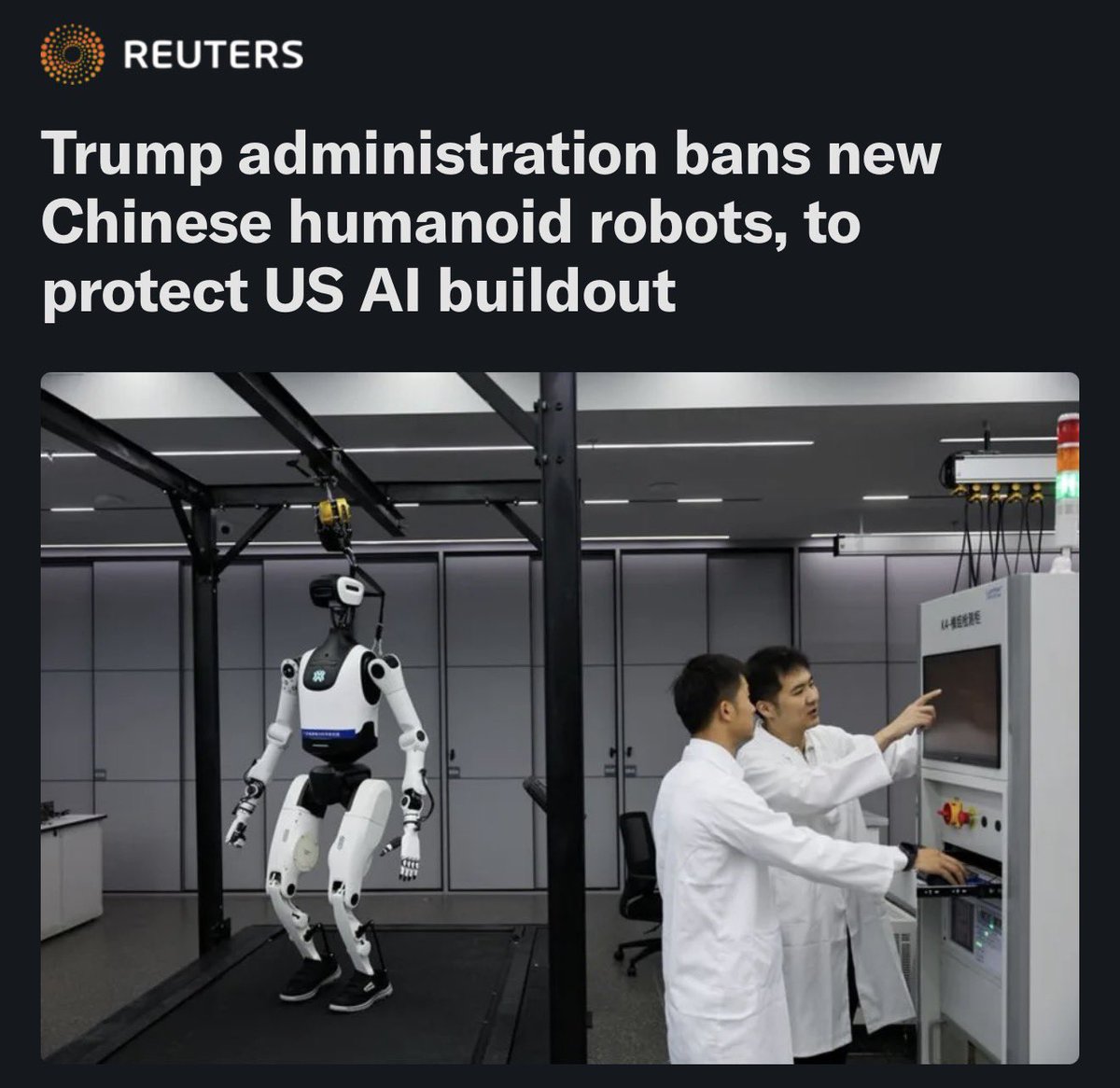
The Trump administration has issued a sweeping ban on Chinese hardware in US critical infrastructure, specifically targeting the physical supply chains powering the artificial intelligence race.
The brief
The tech lobby's warning about short-term slowdowns is a self-serving excuse for decades of lazy supply-chain hygiene. True innovation-curious leadership means building domestic capacity, not crying when the cheap, compromised shortcut gets shut down.
The sides
- National Security Hawks
Allowing Chinese-manufactured hardware into the foundational layers of American AI infrastructure is a systemic espionage vulnerability that must be severed immediately.
- Silicon Valley Tech Lobby
Abruptly cutting off global hardware supply chains will slow down American AI deployment, making us less competitive against China in the short term.
Why now
The Axios report on the Trump administration's hardware ban has triggered immediate panic across tech boardrooms as AI labs scramble to audit their physical infrastructure.
With billions in capital expenditures on the line, the fight over who controls the physical layer of the AI race is no longer a theoretical policy debate but an immediate operational crisis.
Questions
Why is the Trump administration banning Chinese hardware from AI data centers now?
The ban stops China from installing physical backdoors in the infrastructure powering America's sovereign intelligence. For a decade, Silicon Valley prioritized cheap manufacturing over national security, leaving US data centers exposed to espionage and remote sabotage. This executive action forces tech companies to secure their supply chains before hostile hardware is permanently baked into the foundation of American artificial intelligence.
How will this hardware ban affect the cost and speed of building US AI infrastructure?
AI data center construction costs will spike and deployment timelines will slip by several quarters as companies source non-Chinese components. Tech giants must now replace cheap Chinese printed circuit boards, power supplies, and cooling systems with expensive domestic or allied alternatives. While this hurts short-term corporate margins, it establishes a secure, resilient supply chain that cannot be shut off by Beijing during a geopolitical crisis.
Which specific tech companies and hardware components are hardest hit by these restrictions?
Supermicro, Dell, and major cloud providers like Microsoft and Amazon face immediate pressure to audit and purge their hardware stacks. The restrictions target critical mid-tier components including power distribution units, liquid cooling loops, and server chassis manufactured in mainland China. While Nvidia graphics cards dominate the headlines, these mundane physical components represent the actual backdoor vulnerabilities the administration is targeting.
What is the counterargument from Silicon Valley executives who oppose the ban?
Opponents argue that restricting Chinese hardware slows down American AI development and hands a competitive advantage to foreign rivals. Tech lobbyists claim that the time spent auditing supply chains and rebuilding factories outside of China delays the deployment of next-generation clusters. However, this argument ignores the catastrophic cost of building a trillion-dollar AI ecosystem on top of hardware that Beijing can disable with a single remote command.
How is China expected to retaliate against these US hardware restrictions?
Beijing will likely restrict the export of critical raw materials like gallium, germanium, and rare earth elements essential for semiconductor manufacturing. China controls over sixty percent of the global mining and refining capacity for these minerals, giving them a direct lever to choke Western hardware production. This inevitable retaliation highlights why the US must aggressively build independent domestic processing facilities rather than relying on hostile nations.
What happens to existing data centers that already contain banned Chinese hardware?
Operators must conduct comprehensive physical audits and systematically replace non-compliant hardware under strict federal timelines. Data centers holding federal contracts or processing sensitive public data face immediate mandates to rip and replace compromised servers. This process will cost billions of dollars, serving as a expensive lesson for tech executives who treated national security as an afterthought in their search for cheap silicon.
Receipts
Related dispatches
- The Cheap Chinese AI Trap and the Race for American ComputeSubsidized Chinese AI is the new cheap manufacturing trap. Beijing is deliberately underpricing its API compute to hook Western startups on their pipeline, harvesting valuable user data and crippling American infrastructure incentives before our domestic capacity can scale.
- The Secret AI Arms Race We Knew Was ComingThe borderless open-source sermon is dead. You cannot preach global model harmony when the competitor is a state-subsidized machine designed to eat your lunch. Washington is finally treating code like a weapon, not a public library.
- The Silicon Squeeze: Why Smarter AI Models Will Reprice GPUs Like Human EngineersVenture-backed AI labs projecting 10x revenue growth are running headfirst into a hard physical reality: code is highly scalable, but the silicon substrate it runs on is bound by physical fabrication bottlenecks. To survive, the industry must reprice GPUs from cheap server-room overhead into synthetic, high-salaried employees, pricing out casual consumer apps.
- Foreign influence ops weaponize local NIMBYs to choke US AI capacityThe local fight over noise pollution and power lines isn't a grassroots eco-movement; it is a cheap, outsourced asymmetric warfare campaign. Adversaries who cannot out-compute America are using our own municipal zoning laws and hypersensitive local boards to choke our compute capacity before the chips even arrive.
- China Is AI-MaxxingThe West assumed export bans on high-end chips would freeze Chinese AI in the stone age. Instead, it forced them to build hyper-efficient, dirt-cheap models that are commoditizing intelligence while US labs spend billions training safety-aligned monoliths.
- Red Tape is America's Real AI Blind SpotThe United States is treating the AI race like a suburban zoning dispute while China treats it like a mobilization war. The bottleneck isn't the math or the chips; it is a self-inflicted compliance regime that treats national security infrastructure as a local nuisance.