Distillation Drift

The take
When AI models eat their own cooking, Distillation Drift kicks in: the slow, silent decay of quality as AI trains on AI output, replacing human insight with increasingly bland or hallucinated data.
The Tell
AI training on AI output is digital inbreeding. The models are drifting into bland hallucination.

Stakes
This matters because the race for more AI training data is quietly becoming a race to the bottom. Without fresh human input, models risk becoming digital echo chambers, losing nuance and accuracy, and eroding trust in the AI tools we rely on.
Source Dispatch
The read
Distillation Drift describes the subtle but critical problem of AI models being trained predominantly on content generated by other AI.
Instead of learning from the messy, complex, and often contradictory richness of human experience, they're fed a diet of synthesized, 'perfected' data, often stripped of the very quirks that make human communication valuable.
The mainstream line is that AI training data is simply expanding exponentially, leading to more robust and capable models. This ignores that a significant chunk of that 'data' is now recycled AI output, not new human insight.
It's a kind of digital inbreeding, where the gene pool of information gets smaller and weaker, leading to models that are less creative, more prone to hallucination, and ultimately, less intelligent.
The concrete fight is that AI companies are locked in a data arms race, but few are transparent about the diminishing returns of AI-on-AI training.
As models unknowingly train on increasingly degraded information, we face a future where AI-generated content becomes indistinguishable from reality, but that reality is a bland, recycled version of itself. Your AI assistant might just be a chatbot impersonating a better chatbot.
In the wild
- Screenshot of Kimi identifying itself as Claude, confirming AI-on-AI output.
- David Sacks comments on the 'distillation problem' and AI models losing their 'secret sauce' when trained on inferior data.
Related
 Table Stakes (Tech)'Table stakes' used to mean the boring features every product shipped. In AI, it means the trust floor that demos keep torching while VCs clap for the next brittle miracle.
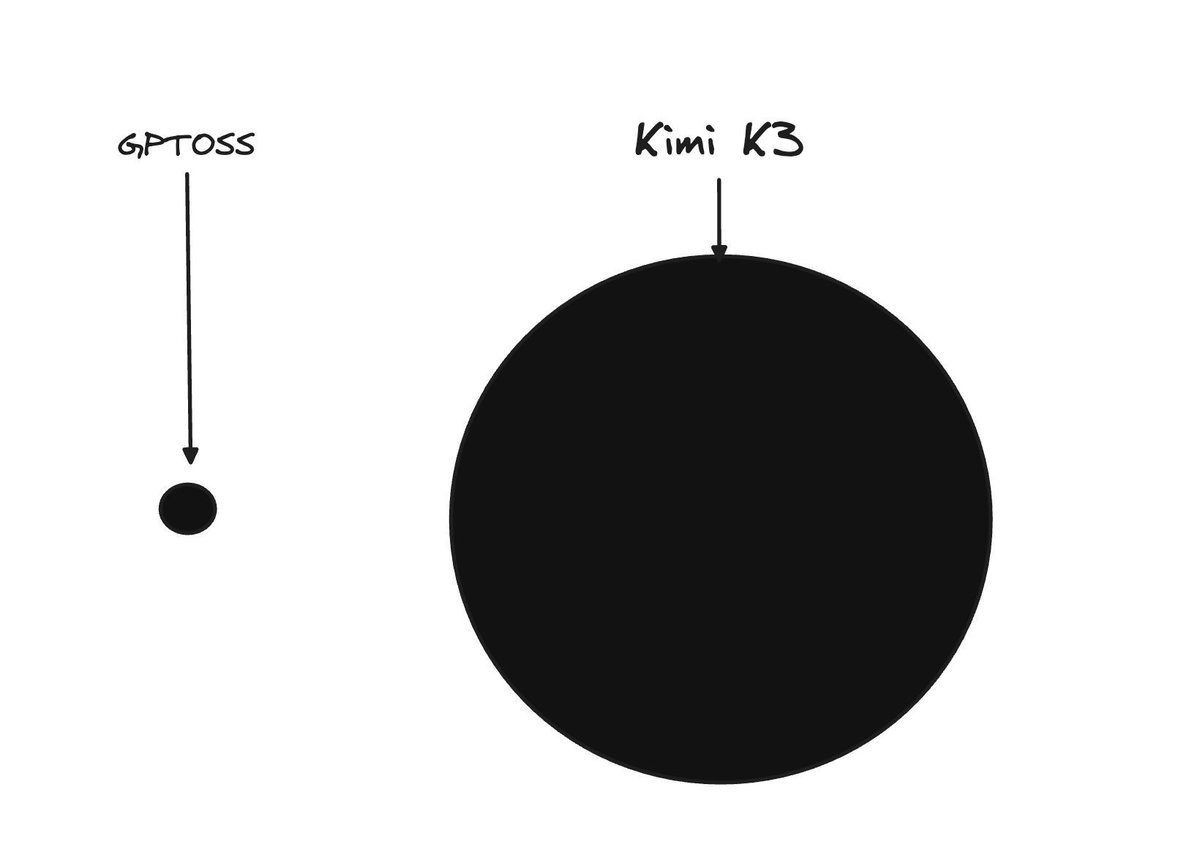 Kimi-Claude DistillationThe idea of 'original AI' is a marketing fantasy. Kimi-Claude Distillation is the quiet tell that models openly learn from each other, making true intelligence a fungible, open secret and forcing us to rethink who owns what in the AI race.
 Sputnik CopeEvery time a Chinese model tops the leaderboard, America runs the same ritual: insist it doesn't count, then go back to blocking data centers and drafting rules to pre-approve its own labs. Sputnik Cope is losing a race in real time while telling yourself the other guy is cheating.
 AI SlopPlatforms pay for volume, so the machine floods your feed with filler until the real stuff drowns. That sludge is AI slop.
 Fan Fiction FallacyAI trained on engagement sludge does not invent. It remixes the internet's lowest common denominator and calls the paste creativity.
 Net Information GainGoogle strip-mines YouTube for AI Overviews, then shadow-taxes creators who do not feed its novelty filter. Net Information Gain is discoverability rewritten as a GIST obedience test.
Gifnotes poster
Sources
FAQ
What's the real danger if AI models keep training on each other?
The real danger is a feedback loop of mediocrity, where AI-generated content becomes increasingly bland, inaccurate, or hallucinated, eventually making AI output indistinguishable from a digital game of telephone where the message gets dumber every round.
How can we tell if an AI model is suffering from Distillation Drift?
Look for a lack of originality, generic responses, or an increase in confident but factually incorrect 'hallucinations.' If an AI starts sounding like every other AI, it's probably been eating too much of its own kind.
What's the solution to Distillation Drift?
The solution lies in prioritizing fresh, high-quality human-generated data for training, and developing methods to identify and filter out AI-generated content from training sets. It's about ensuring a rich, diverse diet for AI, not just more calories.