
/soh-shuh-liz-uhm for thuh banks/
Socialism for the Banks

The take
Populism didn't crawl out of nowhere. It was minted in 2008, when the same system that bailed out the banks made everyone else pay for it with a decade of austerity. Socialism for the banks, austerity for the people is the receipt that turned 'trust the experts' into a punchline.
The Tell
Socialism for the banks, austerity for the people: the 2008 receipt that turned 'trust the experts' into a punchline.

Stakes
The financial crisis was the moment the deal stopped being deniable: losses got socialized, profits stayed private, and the people who lit the fire kept their bonuses while everyone else absorbed the cuts. You cannot lecture a population about fiscal responsibility right after you suspended it for your friends. Every populist since has been running on that betrayal, and fact-checking does nothing to a grievance that happens to be true.
Source Dispatch
The read
The phrase names a specific bait-and-switch. When the banks failed in 2008, the state discovered infinite money overnight: bailouts, guarantees, quantitative easing, whatever it took.
When the bill came due, the same state rediscovered scarcity and handed it to the public as austerity, frozen wages, gutted services, and a lost decade of investment. Gains were kept private. Pain was made public.
That asymmetry, more than any single immigration number, is the wound populism keeps pressing on.
The honest counterpoint is that the bailouts probably prevented a full depression, and some fiscal tightening afterward was unavoidable. Fair enough.
But that is an argument about the rescue, not about who paid for it. The political damage was never the math; it was the message.
A governing class that finds unlimited money for its own institutions and only then remembers 'hard choices' for everyone else has already told voters exactly whose side it is on. The competence was real and the contempt was too.
The tell is who is asked to sacrifice next. Watch any crisis and ask whether the cost lands on the balance sheets that caused it or on the households that didn't.
When the answer is always the households, 'we're all in this together' curdles into a joke, and the people repeating it lose the authority to be surprised when voters go looking for someone angrier.
In the wild
- The 2008 to 2009 bank rescues committed trillions in public money and guarantees across the US and UK.
- Post-crisis austerity cut public services and froze real wages across much of Europe through the 2010s.
- Bank bonuses largely recovered within a few years of the taxpayer-funded rescues.
- Alastair Campbell, on TRIGGERnometry, cited this dynamic as a core driver of the populist backlash.
Related
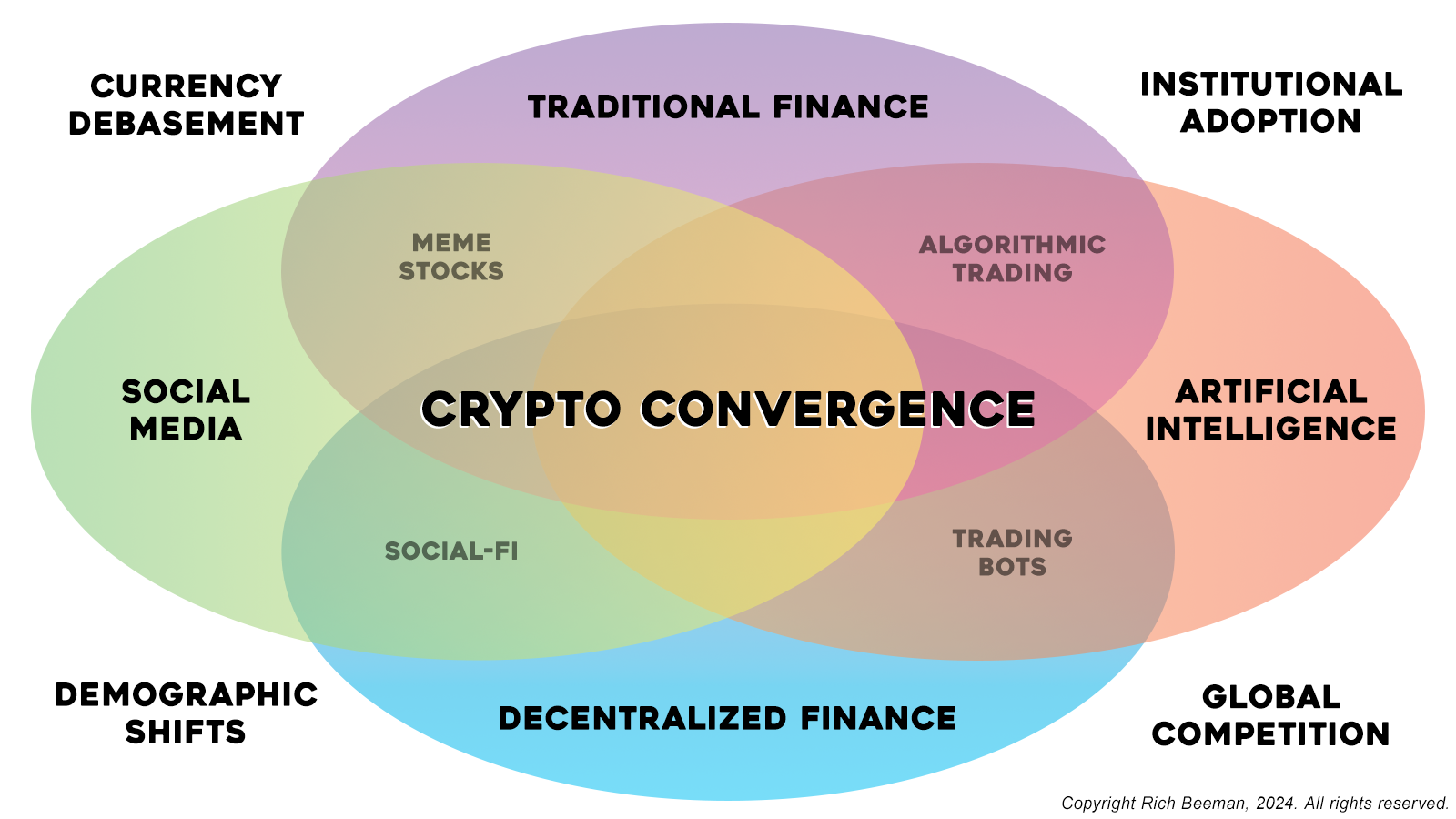 Crypto ConvergenceCrypto Convergence is what happens when DeFi, AI, social media, and TradFi stop pretending they are in different group chats. The winners will not be the slickest tech, they will be whoever owns the plumbing where all four meet, and it probably will not be you.
 Elastic SlurThe reason nobody can win the 'woke' argument is that both sides are fighting over a different word. An elastic slur stretches until it means simple decency to the people defending it and a rigid hierarchy of oppression to the people attacking it, so the real fight is over who owns the dictionary.
 Problem is not the problemWhen the elite says 'the problem is not the problem,' they're less concerned with the issue itself and more with who dared to name it. It's the tell that narrative control matters more than actual solutions.
 Demonization DividendAttack an insurgent politician hard enough and you don't bury him, you bankroll him. The demonization dividend is the payout every media pile-on hands its target: living proof for his base that the establishment fears him, which is the only argument he ever needed.
 Greta Thunberg of TaxGary Stevenson is the influencer-economist who's great at selling the idea of fixing inequality but not so great at the actual math, costing public trust in real expertise. He's the "Greta Thunberg of Tax," a label for those who weaponize passion over precision in complex policy debates.
 Improper PaymentsWhen the government talks about 'Improper Payments,' they're politely describing billions in your money vanishing into a system that treats 'waste' as a feature, not a bug. It's the cost of an administrative state designed for disbursement, not accountability.
Gifnotes poster
Sources
FAQ
Isn't this just an anti-capitalist slogan?
No, and that's the point. It isn't a complaint about markets; it's a complaint about markets being suspended for the powerful and enforced on everyone else. Plenty of capitalists hate moral hazard too.
Weren't the bailouts necessary?
Maybe. But necessity explains the rescue, not the distribution of the pain afterward. The grievance is about who paid, not whether anything was done.
Why does a 2008 phrase still matter?
Because the trust it broke never came back. It's the origin story every populist movement in the West has been quoting, consciously or not, ever since.