AI's Fan Fiction Problem, Dopamine Websites, and Gay Certification Bureaucracy
This episode uncovers how AI's creative output is hampered by low-quality training data, explores South Korea's 'dopamine websites' for impulse control, and exposes California's bizarre 'gay certification' program, alongside a WWII double agent's audacious deception and the adaptive roots of survivor's guilt.
Key findings
AI creative models struggle with 'empty metaphors' and clumsy analogies, traced to disproportionate fan fiction in their training data.
South Korea features 'dopamine websites' allowing users to simulate impulse satisfaction (e.g., browsing food menus) without actual consumption.
'Normality' is a highly arbitrary, culturally relative concept, illustrated by Montaigne's historical lists and modern unhealthy behaviors.
California's 'Gay Certification' program mandates specific documentation (e.g., letters from LGBTQ+ organizations or personal contacts) for businesses to qualify for state contracts.
WWII double agent Juan Pujol García (Garbo) used a fictional network of 27 sub-agents to feed critical misinformation to Hitler, critically influencing D-Day.
Why it matters
Modern Wisdom delves into the surprising and often bizarre aspects of human behavior and technology. Topics range from the unexpected origins of celebrity names and the limitations of AI-generated fiction due to fan fiction training data, to the arbitrary nature of social norms across cultures, the bureaucratic complexities of California's 'gay certification' program, and the incredible true story of WWII double agent 'Garbo.' The conversation also touches on extreme acts of heroism and the evolutionary purpose of survivor's guilt.
Argument map
- AI's creative writing quality is degraded by reliance on vast, often poor-quality, training data. 07:41
AI-generated fiction often contains clumsy language and empty metaphors because its training data includes a disproportionate amount of low-quality human-written content like fan fiction.
Evidence: Chris cites a computer scientist's claim that AI's metaphorical weaknesses are traceable to fan fiction, giving examples like 'a belly sound as if the earth swallows a shout' from an award-winning AI story.
- Dopamine websites allow users to simulate impulse satisfaction without consumption. 1:43
South Korea has introduced 'dopamine websites' that allow users to endlessly browse food delivery menus or join virtual smoke breaks, simulating the experience and dopamine hit without actually completing the impulsive action.
Evidence: Host describes the concept and its use in South Korea, where users get the 'familiar dopamine hit without spending money, smoking, or giving into other impulsive habits.'
- Normality is a social construct, arbitrary and culturally dependent. 1:26
What is considered 'normal' is largely arbitrary, culturally dependent, and historically fluid, often leading to practices that appear irrational or unhealthy from an external perspective.
Evidence: Montaigne's lists of bizarre historical practices (e.g., ritualistic patricide, blackening teeth) and modern statistics on unhealthy behaviors (e.g., high sugar intake, sedentary lifestyle).
- California implements a 'Gay Certification' program for state contracts, with complex bureaucratic requirements. 27:24
California public utilities are mandated to direct hundreds of millions of dollars in contracts to LGBT-owned firms, which requires a formal 'gay certification' process.
Evidence: The CPUC established a goal for utilities to buy from state-certified LGBT businesses, requiring documentation like letters from LGBT organizations or personal contacts attesting to 'homosexual orientation.'
- A Spanish double agent, Juan Pujol García (Garbo), used elaborate deception to significantly influence WWII. 32:02
Garbo, despite being rejected by British intelligence, became a valuable spy for both the Nazis (under false pretenses) and then the British, by fabricating a massive network of sub-agents and feeding misinformation, crucially influencing the D-Day deception.
Evidence: Detailed historical narrative of his recruitment by Germans, creation of 27 fake sub-agents, conveying fake D-Day location, receiving awards from both sides.
- Acts of extreme heroism often come with severe, life-altering personal costs. 39:00
Individuals performing extraordinary acts of heroism often suffer severe, life-altering personal costs.
Evidence: Shavarsh Karapetyan, a world champion swimmer, rescued 37 people from a sunken bus but suffered lacerations, septic fever, pneumonia, and nervous prostration, permanently ending his athletic career.
Visual-only receipts
- Lower thirds 'MODERN WISDOM' or 'MOD | DOM' appear frequently.
- On-screen images include Cristiano Ronaldo on a GQ cover, a ChatGPT search result for 'Osama bin Laden Jimenez Lopez,' Rory MacDonald's walkout music list, an 'Atlas Obscura' article on Joseph Palmer's grave, and a City Journal article on California's 'Gay-Certification Program.'
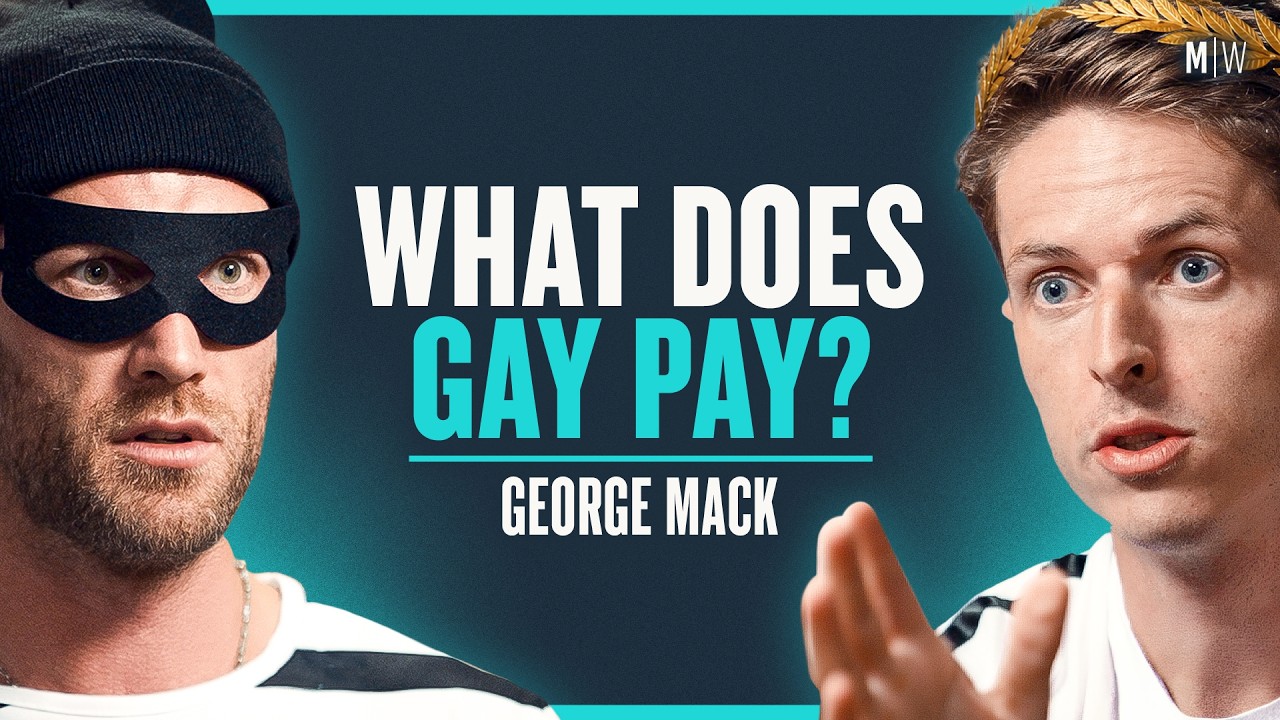
- Hosts are dressed in costumes: one as a Roman Senator/Emperor, the other as a bandit/burglar.
- Various energy drink cans (Ghost, Scotmilk, C4) are visible on the table.
- A split image of Shavarsh Karapetyan and a sunken bus during the rescue is shown.
- Jared (AI assistant) appears on screen next to a smartphone in a stand.
Quotes
“My parents named me after Ronald Reagan because they both liked this name and thought it would sound strong.”
Chris Williamson · 00:27
“The idea is simple: get the familiar dopamine hit without spending money, smoking, or giving into other impulsive habits.”
Chris Williamson · 1:05 - 1:10
“You're supposed to kill your own father. When you and your father hit a certain age, you say goodbye.”
Guest · 2:00 - 2:03
“So much of it's ecology, right? I mean, and that's the reason why changing your environment has such a big impact on your life.”
Chris Williamson · 24:43
The brief
This Modern Wisdom episode takes a wild ride through the unexpected impacts of environment, identity, and technology. It begins by playfully uncovering surprising and often bizarre connections between names, celebrity, and human decisions, from Ronaldo's presidential namesake to footballers named after infamous dictators. It then pivots sharply to a crucial insight into AI's creative limitations, arguing that its output quality is compromised by the sheer volume of low-quality fan fiction in its training data, offering a unique perspective on the future of generative AI.
The conversation then offers a thought-provoking deep dive into the elusive concept of 'normality.' By juxtaposing peculiar historical practices from 'Montaigne's lists' with South Korea's emerging 'dopamine websites' and stark statistics about modern Western lifestyles, the episode cleverly reveals how fluid and often counterproductive our societal norms can be. It's a compelling prompt to question whether today's 'normal' is truly optimal, or merely a collective social contagion.
The journey continues through the astonishing quietude of Irish public transport to California's bizarre 'gay certification' program for businesses. The standout, however, is the unbelievable true story of Juan Pujol García, the Spanish chicken farmer turned WWII double agent 'Garbo,' whose fictional spy network reshaped D-Day, proving that sometimes, reality is stranger, and far more deceptive, than fiction.
Finally, the segment is an unexpected journey from Cold War espionage to underwater heroism, revealing how the stakes of survival ripple through individual lives and societal structures. It dissects the profound personal sacrifices behind heroic acts and then, with striking precision, uses AI to unpack the adaptive roots of survivor's guilt and reveal a surprising gender bias in how we honor those who save others, underscoring the complex interplay between human nature, history, and the often-unseen costs of being a hero.
Lexicon from this episode
- Fan Fiction FallacyThe Fan Fiction Fallacy isn't just a technical glitch in AI; it's the cost of training models on a content ecosystem that rewards endless, unrefined output over genuine quality, mirroring our own cultural incentives.
- Dopamine WebsitesDopamine websites are less about 'impulse control' and more about 'impulse displacement,' creating a new, frictionless arena for addictive loops that risk delaying the real work of self-mastery.