What Getting 3 Billion Views Taught Me About Human Psychology
Viral content isn't luck; it's engineered psychology. Brands win by "format stealing" and setting "curiosity traps," leveraging brain shortcuts and self-presentation over product features.
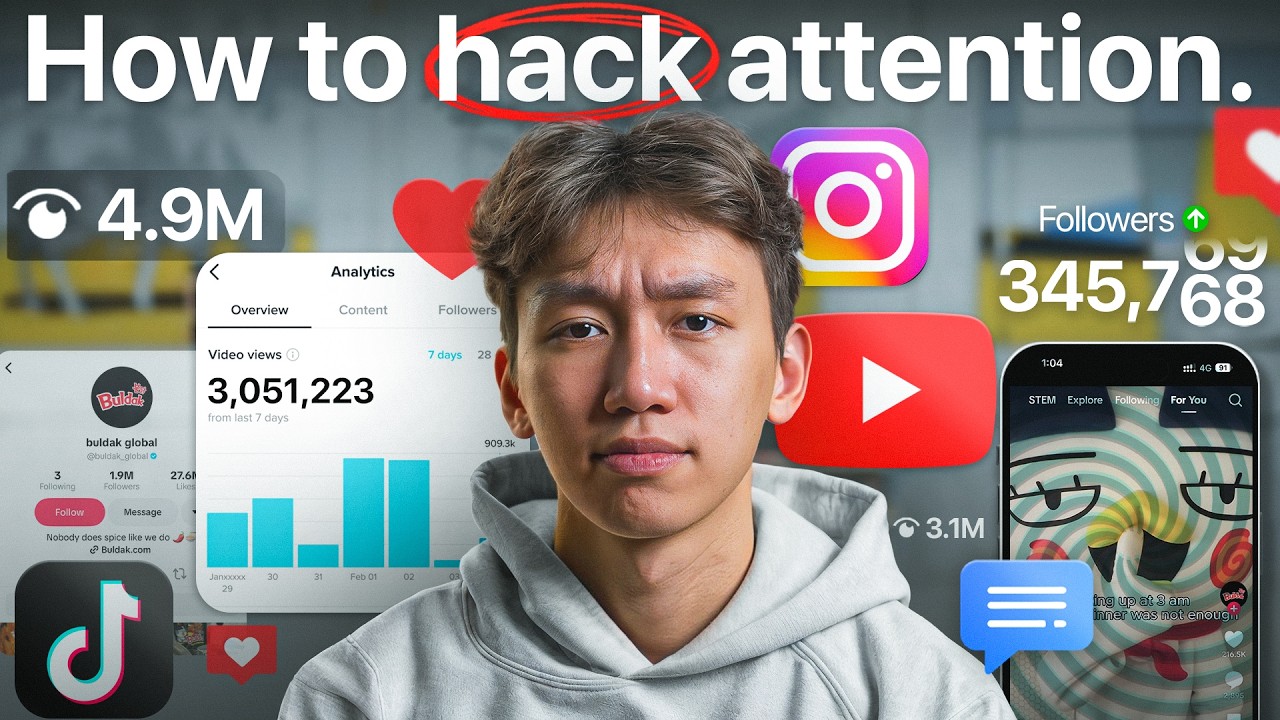
Key findings
Viral content creation hinges on the "mere exposure effect," where viewers favor formats their brains already recognize and like, making "format stealing" (adapting proven content structures) more effective than inventing original content.
The "curiosity trap" is vital for hooks, emphasizing that the best hooks never feature the product directly but instead trigger curiosity, disbelief, or identity recognition in the first two seconds, neurologically committing the viewer to finish the content.
Brands should focus on communicating "psychological values", what a product means to a person's identity and emotional life, rather than just product attributes or functional consequences, to make viewers feel understood instead of sold to.
Why it matters
This episode dissects the psychological underpinnings of viral content, revealing that billions of views aren't accidental but the result of meticulously engineered engagement. It's a masterclass in "format stealing" and setting "curiosity traps" - proving that brands need to understand the human brain's shortcuts and self-presentational desires more than their product features to truly win on social media.
Argument map
- Familiarity Drives Engagement 0:39
To go viral, use familiar content formats because the brain prefers what it already recognizes, leading to confusion and scrolls with original formats.
Evidence: The brain's rapid filter asks three questions in under a second; if all are 'no,' it scrolls. The 'mere exposure effect' increases liking with repeated exposure. Case study: Buldak ramen account pivoted to 'format steal' (spicy challenges, reaction videos) from 300K to 1.8M followers and 900M+ views in 12 months.
- The Curiosity Trap Hooks Viewers 2:22
Avoid leading with the product in your hook; instead, create a 'curiosity gap' that compels the viewer to stay and resolve the discomfort of not knowing.
Evidence: Product-led hooks are immediately tagged as ads. A gap between what the brain knows and wants to know creates discomfort. Case study: Stan (creator platform) video used 'How much do you pay for rent?' format in CEO's office, not featuring software directly, achieving 1.1M TikTok views, 5M LinkedIn views, 20M personal brand views.
- Sell Identities, Not Products 3:49
People purchase based on 'psychological values' (identity and emotional outcome), not just product attributes or functional features. Content should speak to the aspirational self.
Evidence: "Means-end chain theory" identifies three layers: product attributes, functional consequences, and psychological values. Brands often focus on layer one, but the brain cares about layer three. Example: AG1 supplement content focused on sleep, stress, discipline, wellness (identity/lifestyle outcomes) rather than the supplement itself.
- Leverage Authority as a Cognitive Shortcut 4:52
Social media is shallow; the brain takes shortcuts, and authority is the biggest. Credibility in the first two seconds is crucial for engagement.
Evidence: The brain doesn't critically evaluate credibility in split seconds; it accepts it. Examples: titles like 'Thai chef,' 'Harvard student,' '25-year-old software engineer who sold his company.' Case study: Japanese restaurant's food content got 200-300 views, but switching to a 'Hey chef, can you make me something with this?' format resulted in 1.8M and 2M views, 300K followers in 3 months.
- Content is Shared for Self-Presentation 6:20
People share content that makes *them* look good (smart, funny, knowledgeable) to their friends, not necessarily just what they personally enjoy.
Evidence: The question is 'Will sharing this make me look good?' not 'Will they like this?' Content should be explainable in one sentence and evoke humor, surprise, or awe. Sadness and anger get views but don't spread the same way.
- Stories & Tight Editing Hijack Attention 7:19
Stories reduce critical thinking and boost emotional processing. Extremely tight editing and captions sustain engagement by constantly delivering new information.
Evidence: People 'stop arguing' and 'critical thinking slows down' when immersed in a story. A consistent story structure (hook, problem, story, payoff) mimics natural brain processing. Editing is crucial: every millisecond must deliver new information, with cuts resetting the brain's attention clock. Captions are essential for dual processing, locking the brain in. Case study: Buldak 2.2M view video had clips 'barely a few seconds' with 'zero dead space'.
Visual-only receipts
- Grid of diverse short-form video content with "3,092,302,307+ Views" overlay.
- Logos of brands: Buldak, Replit, Airalo.
- Graphic of a human head with a brain, light beam, and text: "Everything to do with how the human brain works."
- Slide: "6 psychological principles" with a timeline and labels.
- Text overlay: "familiarity beats originality every single time."
- TikTok profile screenshots for @buldak_global showing before (low views, 300K followers) and after (1.8M followers, 900M+ views).
Quotes
“Every scroll, every share, every follow is driven by psychological triggers happening in people's brain within the first half second of seeing your content.”
Speaker · 0:16
“When your brain encounters a format that has never seen before, it does not get excited, it gets confused. And confusion is the fastest path to a scroll.”
Speaker · 1:12
“When your content speak to identity and not features, the viewer does not feel sold to, they feel understood.”
Speaker · 4:41
“People don't share what they like. They share what makes them look good.”
Speaker · 6:20
The brief
Viral content creation on social media is not about the product itself, but about deeply understanding human psychology and leveraging six specific principles to grab attention, foster engagement, and encourage sharing within the first crucial seconds. The speaker, a content strategist with billions of views, outlines these principles. First, familiarity beats originality: people's brains favor formats they've seen and enjoyed, making 'format stealing' more effective than inventing new content. Second, the 'Curiosity Trap' is crucial for hooks; instead of leading with the product, content should trigger curiosity, disbelief, or identity recognition to neurologically commit viewers. Third, people buy identities, not products: brands should communicate 'psychological values' and emotional outcomes, making viewers feel understood. Fourth, authority acts as a cognitive shortcut; displaying credentials in the first two seconds makes the brain accept content's worthiness. Fifth, people share what makes them look good, not just what they like; content must be easily explainable and evoke humor, surprise, or awe. Finally, stories hijack the brain, slowing critical thinking, and hyper-optimized editing with constant new information and captions sustains engagement.
Lexicon from this episode
- Format StealThe 'Format Steal' isn't a creative shortcut; it's a strategic recognition that human brains prefer familiar patterns, a truth content gurus often ignore at your audience's cognitive cost.
- Curiosity TrapThe 'Curiosity Trap' isn't just a clever content hack; it's the default human operating system, weaponized by everyone from marketers to cult leaders, proving that a well-placed question can be more powerful and manipulative than any direct command.