Outrage Farming

The take
The most lucrative outrage farming is no longer done by the trolls in the comment section, but by the credentialed trust-and-safety industry that needs a constant supply of online fires to justify its own funding, employment, and censorship powers.
The Tell
The trust-and-safety industry is just outrage farming with a PhD, a Swiss bank account, and a government grant.

Stakes
When the establishment warns you about online toxicity, they are usually protecting their market share. The safety-industrial complex has turned policing bad behavior into a highly profitable racket, where the only way to secure the next government grant or corporate retainer is to make sure the digital streets never actually get clean.
The read
The mainstream consensus insists that internet safety is a neutral, scientific endeavor managed by objective experts trying to cool down the cultural temperature.
We are told that without these clipboard-carrying arbiters, the digital public square would instantly degenerate into a lawless wasteland of hate and misinformation. It is a neat, heroic narrative designed to make censorship look like basic sanitation.
But look at the incentives and the mask slips entirely. If the internet ever actually became civil and calm, the entire trust-and-safety apparatus would go broke overnight.
The business model of the modern NGO requires a constant, escalating threat level to keep the donor checks clearing and the panel invitations coming. They do not want to solve the problem; they want to manage the crisis in perpetuity.
By hunting down obscure posts, amplifying them into national emergencies, and presenting the resulting panic to nervous corporate advertisers, these safety cartels have perfected a highly sophisticated protection racket.
They do not just report the fire; they actively fan the sparks to prove they are the only ones holding the hose.
In the wild
- The Center for Countering Digital Hate (CCDH) weaponizing highly selective data to pressure platforms into deplatforming independent creators under the guise of public safety.
- Media Matters for America orchestrating highly artificial ad-placement setups to trigger corporate boycotts and force compliance from social media networks.
- The World Economic Forum elevating 'misinformation' to the top of its global risk register, conveniently positioning elite global governance as the only viable solution.
Related
 Terminally onlineTerminally Online is when the feed's stakes feel more real than your actual life. Likes, outrage loops, and timeline drama become the OS; IRL is the side quest.
 AI SlopPlatforms pay for volume, so the machine floods your feed with filler until the real stuff drowns. That sludge is AI slop.
 NewsjackNewsjacking is when a brand or influencer hijacks a trending news story or event to promote their own sh*t. Basically the digital equivalent of an ambulance chaser, but for clicks.
 SaaspocalypseThe joke stopped being a joke. Vibe-coded custom tools are eating the monthly SaaS stack one workflow at a time. That slaughter is Saaspocalypse.
 Vibe CodingVibe coding was sold as everyone becoming a software mogul. What it actually does is liquidate entry-level coding jobs and leave the high-agency architect as the only adult in the room who can debug the beautiful mess a model spat out in three seconds.
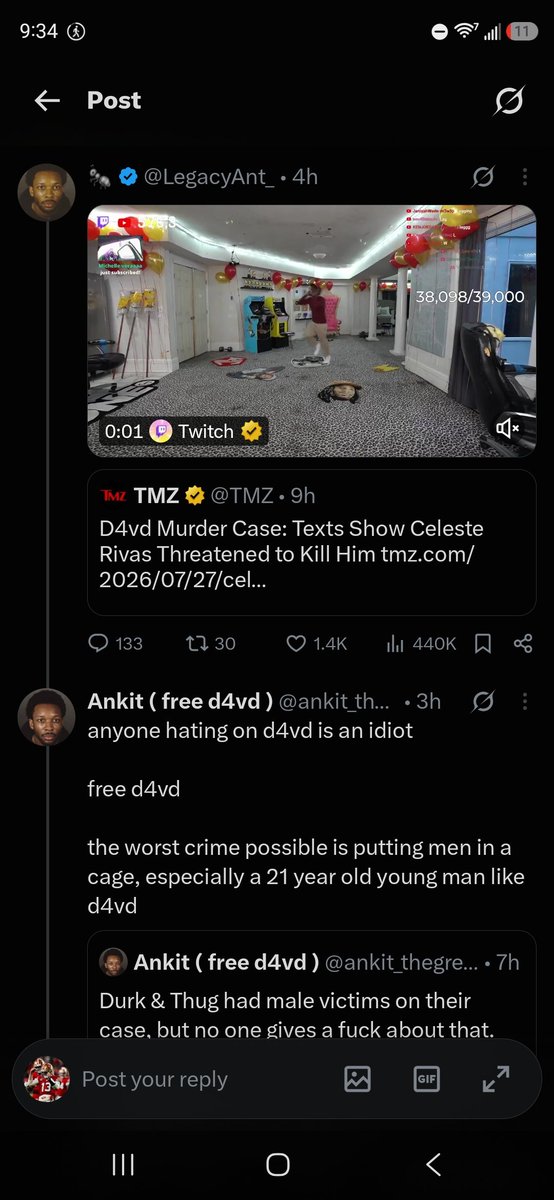 Rage FarmingEstablishment gatekeepers use the rage farming label as a convenient cheat code to dismiss legitimate public anger as a cheap algorithmic stunt. When legacy institutions can brand every spicy counter-narrative as manufactured emotional manipulation, the price you pay is a public square where real dissent is systematically muted under the guise of keeping the peace.
Gifnotes poster
Sources
FAQ
What is the real business model behind the online safety industry?
It is a classic demand-creation loop. Trust-and-safety NGOs, academic research centers, and activist groups secure their funding by proving that the internet is a dangerous, toxic wasteland. If the online temperature cooled down, their grants, corporate consulting fees, and policy influence would vanish. Therefore, they must constantly search for, amplify, and outrage-farm marginal content to manufacture a permanent state of emergency that requires their paid intervention.
How do establishment fact-checkers actually feed the outrage loop?
They act as the distribution network. By taking obscure, low-reach posts from the dark corners of the internet and elevating them to national news through 'debunking' campaigns, they give toxic content millions of free impressions. This amplification outrages their own left-leaning donor base, who then demand more censorship, which in turn outrages independent creators, keeping the entire outrage-farming ecosystem highly profitable for both sides.
Who benefits most when online platforms are pressured into censorship?
Legacy media conglomerates and bureaucratic institutions. Independent creators and decentralized platforms have broken the monopoly on information. By framing free speech as a safety crisis, legacy players and aligned NGOs can pressure platforms to alter their algorithms, throttling independent competitors and redirecting attention and ad dollars back to compliant, establishment-friendly channels.
What is the difference between organic internet drama and institutional outrage farming?
Organic drama is bottom-up, chaotic, and usually burns out in forty-eight hours. Institutional outrage farming is top-down, highly structured, and designed to produce a specific policy or financial outcome. It uses academic-sounding terminology, coordinated press releases, and advertiser boycotts to turn minor online skirmishes into permanent regulatory leverage.
How can independent creators protect themselves from targeted outrage campaigns?
The only defense is to refuse the premise of the moral trial. The safety cartel relies on the target apologizing, which they use as an admission of guilt to demand total deplatforming. Building direct-to-audience distribution channels, diversifying revenue streams away from fragile ad networks, and treating coordinated activist campaigns as a marketing event rather than a moral crisis completely neutralizes their leverage.