Regulatory Capture

The take
Tech monopolists begging Congress for strict AI safety rules are not trying to save humanity; they are using regulatory capture to build a massive compliance moat that outlaws open-source competition. The risk is a future where only a handful of state-sanctioned conglomerates are legally allowed to build the tools that shape human thought.
The Tell
AI safety lobbying: saving humanity in public, building a compliance moat to starve out open-source in private.

Stakes
This is about who is allowed to write code. If the legacy giants successfully lobby Washington to criminalize independent, open-source developers under the guise of existential risk, they secure a permanent monopoly on artificial intelligence.
The read
When Sam Altman and Google executives testified before the Senate Judiciary Committee, they did not bring a list of demands for higher taxes; they brought a plea for a licensing regime.
The mainstream narrative frames this as a rare moment of corporate civic duty, where tech barons are so terrified of their own creations that they are practically begging for a leash.
It is a beautiful performance designed to make you believe the only thing standing between us and a rogue superintelligence is a government clipboard. In reality, the math of compliance is the ultimate anti-competitive weapon.
A trillion-dollar conglomerate can easily absorb the cost of a thousand-person legal and safety department to audit every line of code. A bootstrap startup, an academic lab, or an independent developer working out of a garage cannot.
By demanding that every major model receive a government stamp before release, the incumbents are attempting to make unlicensed software development a federal crime. What is actually at stake is the survival of the open-source ecosystem.
The most rapid, democratic innovations in AI have not come from corporate boardrooms, but from decentralized developers refining models on consumer hardware.
Shutting down that pipeline does not make the world safer; it simply ensures that the future of human intelligence is rented back to us by a cartel of approved vendors.
In the wild
- Sam Altman testifying before the Senate Judiciary Committee, calling for a new federal agency to license AI models.
- Google publishing policy whitepapers advocating for strict risk-management frameworks that would penalize open-source distribution.
Related
 Terminally onlineTerminally Online is when the feed's stakes feel more real than your actual life. Likes, outrage loops, and timeline drama become the OS; IRL is the side quest.
 AI SlopPlatforms pay for volume, so the machine floods your feed with filler until the real stuff drowns. That sludge is AI slop.
 NewsjackNewsjacking is when a brand or influencer hijacks a trending news story or event to promote their own sh*t. Basically the digital equivalent of an ambulance chaser, but for clicks.
 SaaspocalypseThe joke stopped being a joke. Vibe-coded custom tools are eating the monthly SaaS stack one workflow at a time. That slaughter is Saaspocalypse.
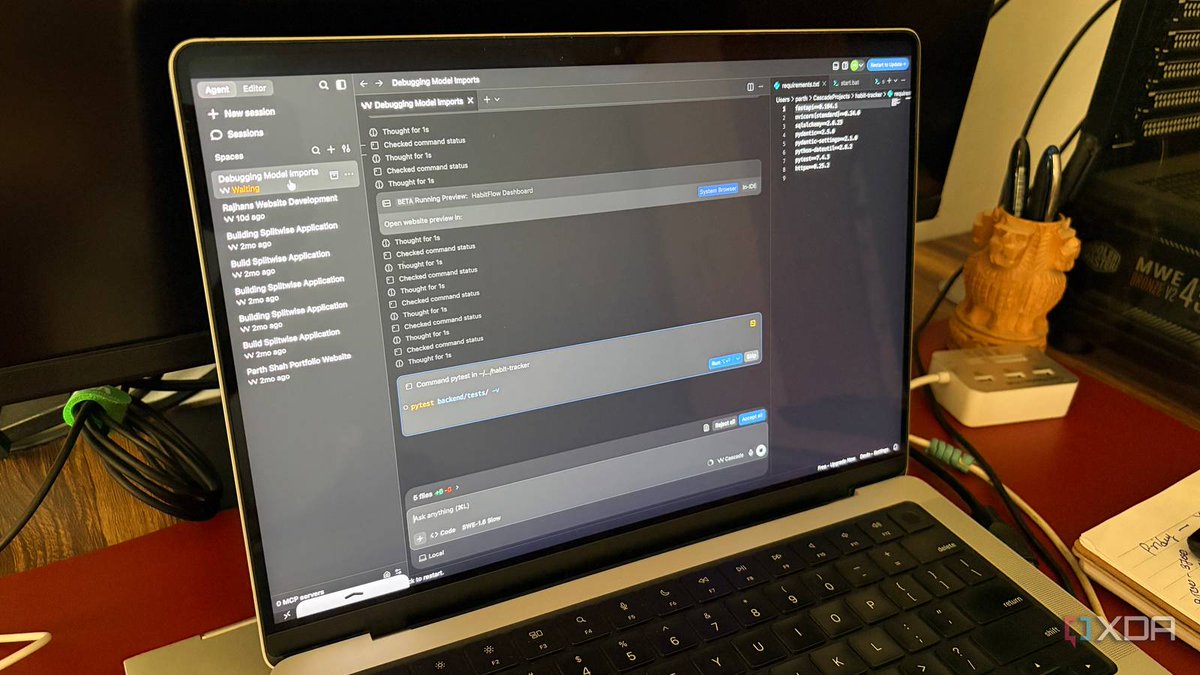 Vibe CodingVibe coding was sold as everyone becoming a software mogul. What it actually does is liquidate entry-level coding jobs and leave the high-agency architect as the only adult in the room who can debug the beautiful mess a model spat out in three seconds.
 Pacing the FrontierClosed-source pioneers lobby Washington to slow down AI development under the banner of existential safety, but this sudden urge to pace the frontier is a calculated trap designed to outlaw the open-source competitors who are rapidly commoditizing their expensive intelligence layer.
Gifnotes poster
Sources
FAQ
Why are tech giants asking the government to regulate them?
Because they know that complex, expensive compliance standards are easy for a trillion-dollar company to handle but impossible for a small startup or independent developer to afford.
How does this affect open-source software?
If licensing regimes become law, releasing a powerful AI model without government permission could be treated as a regulatory violation, effectively criminalizing independent coding.
What is the alternative to government licensing?
Focusing on liability for actual harms committed with AI tools rather than preemptively banning the creation of the technology itself, which keeps the playing field open for innovators.