
Next Frontier of AI

The take
The next frontier of AI is abandoning the physical world to save it, because trying to teach robots how to navigate reality by letting them bump into actual walls is a slow-motion trap that will keep hardware useless for decades.
The Tell
We are trying to train robots in the real world when we should be forcing them to play a million hours of Grand Theft Auto at 10x speed.

Stakes
We are wasting years trying to train physical robots in physical labs when the real breakthrough requires building hyper-fast, synthetic 3D simulations first. If we do not shift to this virtual-first training pipeline, American robotics will remain a series of expensive, clumsy science projects while competitors scale simulated brains at a million times our speed.
Source Dispatch
The read
The mainstream consensus is that robots will master our world the way humans do: by slowly practicing tasks in real-world labs, watching YouTube videos, and collecting physical data. It sounds logical because it matches our own biology.
But physical training is a dead end. Collecting real-world telemetry is too slow, too expensive, and prone to breaking expensive hardware every time a model tries to learn what a table edge is.
To get machines that actually work, we have to train them inside hyper-realistic, synthetic 3D simulations first, a process known as Real-to-Sim-to-Real (R2S2R). Spatial intelligence startups like Fei-Fei Li's World Labs are building these digital training grounds.
Instead of a robot spending three weeks learning how to open a door in a physical lab, a virtual agent can open a million simulated doors in a second, mastering the physics of the universe before its brain is ever uploaded into a physical chassis.
This is not about building video games; it is about creating high-fidelity digital twins of reality where AI can fail, iterate, and evolve without friction.
The winner of the robotics race will not be the company with the flashiest metal humanoid, but the one with the most robust synthetic simulation pipeline. We have to build the matrix before we can build the machines.
In the wild
- Fei-Fei Li launches World Labs with over $230 million in funding to pioneer spatial intelligence and synthetic 3D worlds.
- Nvidia expands its Omniverse platform to accelerate Real-to-Sim-to-Real pipelines for industrial robotics.
- Episode: The Next Frontier of AI Is Spatial Intelligence (https://www.youtube.com/watch?v=-tabaM5l3s0)
Related
 Terminally onlineTerminally Online is when the feed's stakes feel more real than your actual life. Likes, outrage loops, and timeline drama become the OS; IRL is the side quest.
 NewsjackNewsjacking is when a brand or influencer hijacks a trending news story or event to promote their own sh*t. Basically the digital equivalent of an ambulance chaser, but for clicks.
 BEHODLBEHODL is Gifdead's unserious-serious mashup of behold and HODL: look at this, and maybe don't panic-sell your personality. It's the internet's way of saying, "Pay attention, but don't let the algorithm or the mob dictate your next move."
 Frontier LitigiousnessThe ultimate risk of building a new frontier is that the physical pioneers who clear the wilderness are systematically stripped of their gains by a secondary wave of legally literate paper-shufflers. Frontier Litigiousness is the process where raw courage is colonized by compliance, turning early builders into trespassers on their own land because they lacked a law degree.
 Curiosity TrapMarketers and cult leaders open a knowledge gap on purpose so you cannot look away until they close it. Curiosity Trap is that hijack of your attention budget, sold as engagement craft.
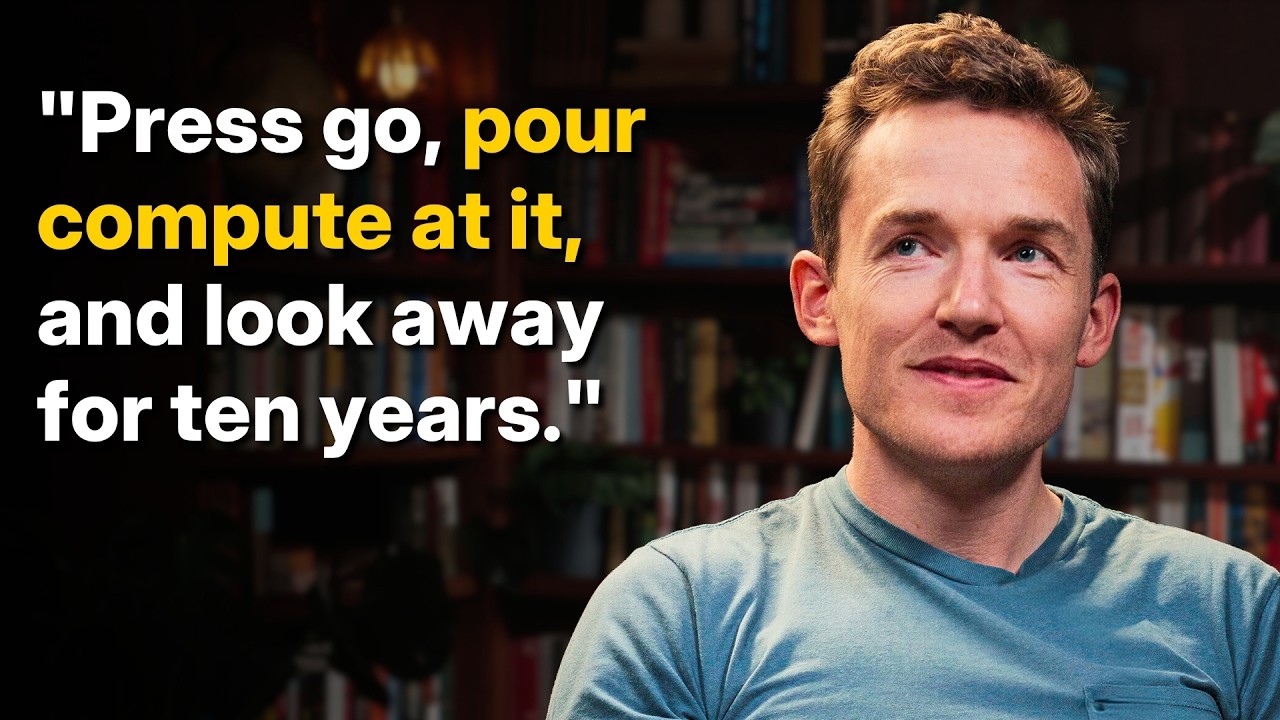 GrindabilityThe ultimate bottleneck to superintelligence is not raw silicon intellect, but grindability: the structural friction of an environment that determines whether an AI can run a billion self-play simulations without real-world consequences.
Gifnotes poster
Sources
FAQ
What is spatial intelligence in AI?
It is the ability of an AI model to understand, reason about, and interact with the physical 3D world, moving beyond flat text and images into depth, physics, and spatial relationships.
Why can we not just train robots in the real world?
Real-world training is too slow and expensive. A physical robot can only experience one second of reality per second and breaks when it fails, whereas a simulated robot can run millions of hours of training simultaneously in a digital environment.
What does Real-to-Sim-to-Real mean?
It is a development pipeline where developers take data from the real world, build a highly accurate digital simulation of it, train the AI brain inside that simulation at hyper-speed, and then deploy the finished brain back into a physical robot.