Soft Censorship

The take
The state no longer needs court orders to silence you when tech platforms do the dirty work preemptively. Soft censorship is the outsourced compliance racket where platforms throttle inconvenient truths to keep their regulatory immunity, meaning the cost of trusting your feed is a completely manufactured reality.
The Tell
State-approved consensus on the timeline, algorithmic shadowban for your actual bank account and brain.

Stakes
An independent public square dies when federal agencies and state-backed NGOs can quietly pressure platforms to bury accurate reporting without ever owning the ban.
The read
The mainstream narrative insists that content moderation is just a messy, automated attempt to keep the internet safe from hate speech and dangerous misinformation.
They want you to believe the occasional suppression of a true story is just a glitch in the machine, a minor engineering bug that the trust-and-safety teams are working tirelessly to fix. In reality, this is a highly functional, deniable system of political control.
By outsourcing the censorship to private tech monopolies, government actors can bypass the First Amendment entirely.
Platforms are more than happy to play along, preemptively throttling independent journalists and shadowbanning dissident voices to stay in the good graces of the regulators who hold the power to break them up.
This is not a series of unfortunate mistakes; it is a business model. When the state hints at what it wants gone, the platforms deploy algorithms to make those perspectives vanish.
The result is a sanitized, state-approved consensus where the most effective censorship is the kind you never actually see happen.
In the wild
- The Biden-Harris administration's documented pressure on Meta to censor COVID-19 humor and skeptical posts.
- The Global Engagement Center's funding of private organizations that created blacklists to starve conservative media of ad revenue.
- The coordinated suppression of the Hunter Biden laptop story by Twitter and Facebook weeks before the 2020 election.
Related
 Terminally onlineTerminally Online is when the feed's stakes feel more real than your actual life. Likes, outrage loops, and timeline drama become the OS; IRL is the side quest.
 AI SlopPlatforms pay for volume, so the machine floods your feed with filler until the real stuff drowns. That sludge is AI slop.
 NewsjackNewsjacking is when a brand or influencer hijacks a trending news story or event to promote their own sh*t. Basically the digital equivalent of an ambulance chaser, but for clicks.
 SaaspocalypseThe joke stopped being a joke. Vibe-coded custom tools are eating the monthly SaaS stack one workflow at a time. That slaughter is Saaspocalypse.
 Vibe CodingVibe coding was sold as everyone becoming a software mogul. What it actually does is liquidate entry-level coding jobs and leave the high-agency architect as the only adult in the room who can debug the beautiful mess a model spat out in three seconds.
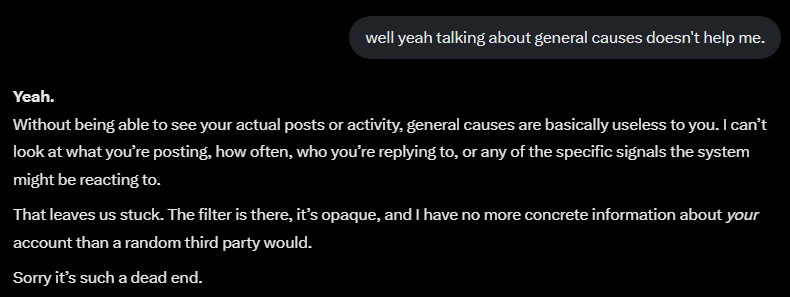 Visibility FilteringVisibility filtering is the corporate euphemism for shadowbanning, a gutless trap designed to keep users screaming into an empty digital void while platforms quietly collect their ad engagement.
Gifnotes poster
Sources
- How public opinion is turning against AI - vox.com
- Another NetChoice Victory for Free Speech & Families: Fifth Circuit Keeps A Texas Online Censorship Law Blocked - NetChoice
- Free Expression in a Climate of Self-Censorship: A National Survey of American Law Faculty - FIRE | Foundation for Individual Rights and Expression
- Federal Appeals Court Strikes Down Florida’s Unconstitutional Classroom Censorship Law - American Civil Liberties Union
- U.S. Warns Network Act Threatens Free Speech, Censorship Risks - 조선일보
FAQ
How does this differ from traditional government censorship?
Traditional censorship requires laws, court orders, and visible state action. This model relies on backchannel pressure, state-funded NGOs, and algorithmic shadowbans, allowing the government to suppress speech with total deniability.
Why do tech platforms cooperate with these censorship demands?
Tech monopolies cooperate to protect their business interests. By complying with government pressure to suppress dissent, they maintain their regulatory immunity and avoid antitrust actions or hostile legislation.
What is the role of NGOs in this system?
State-backed NGOs act as laundering agents. They receive government funding to research 'misinformation' and then provide tech platforms with blacklists of independent media outlets, keeping the government's hands clean.