
Citizen Soldier

The take
The romanticized myth of the Citizen Soldier as a pure moral crusader obscures the raw economic preservation and survival instincts that actually fought and won the American Civil War, creating a dangerous historical blind spot because it replaces real human incentives with a soft moral fable.
The Tell
The Union didn't march south because they read moral philosophy; they marched to keep Western land free of slave-labor competition.

Stakes
Stripping the economic self-interest from historical struggles turns brutal survival decisions into clean, modern morality plays. When we pretend the Union ranks were filled with altruistic volunteers marching solely to end Southern bigotry, we ignore the reality that white working-class laborers were primarily defending their own Western jobs and land monopolies from slave-labor competition.
Source Dispatch
The read
The standard history textbook paints the Union volunteer as an enlightened progressive who dropped his plow solely to redeem the nation's soul.
In reality, the average Northern worker was motivated by a fierce defense of free labor, meaning they wanted to keep the Western territories open for white homesteaders and completely free from the crushing economic competition of wealthy slaveholders.
It was a fight for market dominance and personal survival, not a modern human rights seminar.
Historians Gary Gallagher and Michael Burlingame point out that on the flip side, the Confederacy weaponized racial anxiety to convince poor white Southerners to fight for a slave system they did not even own.
The Confederate central government quickly became the most intrusive, high-taxing, draft-enforcing authority in American history up to that point. Both sides were driven by cold, existential math rather than pure ideological consensus.
Remembering the raw incentives behind the Citizen Soldier is not about cynicism; it is about understanding how real human beings behave under pressure.
When the consensus class sanitizes history into a simple battle of good versus evil, they lose the ability to analyze modern conflicts where economic anxiety, resource control, and survival instincts still dictate the play.
In the wild
- Gary Gallagher and Michael Burlingame on Lex Fridman dismantle the romanticized myths of the Union and the Confederacy, exposing raw economic self-interest and deep racial anxieties.
- Gary Gallagher: 'In terms of causation, if you take slavery out of the picture, there is no Civil War. Period.'
- Gary Gallagher: 'The most intrusive central government in American history, by far, until deep into the 20th century, was the Confederate central government.'
- Episode: The Cold Math of the Civil War: Gary Gallagher and Michael Burlingame on Lex Fridman (https://www.youtube.com/watch?v=XyXBwO5jYpw)
Related
 Terminally onlineTerminally Online is when the feed's stakes feel more real than your actual life. Likes, outrage loops, and timeline drama become the OS; IRL is the side quest.
 NewsjackNewsjacking is when a brand or influencer hijacks a trending news story or event to promote their own sh*t. Basically the digital equivalent of an ambulance chaser, but for clicks.
 BEHODLBEHODL is Gifdead's unserious-serious mashup of behold and HODL: look at this, and maybe don't panic-sell your personality. It's the internet's way of saying, "Pay attention, but don't let the algorithm or the mob dictate your next move."
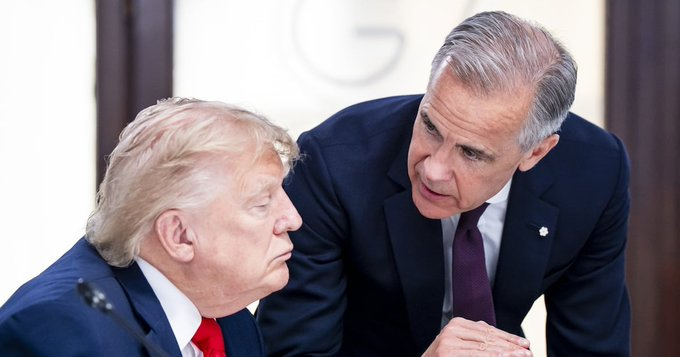 Donald Trump North American TradeThe mainstream media frames Donald Trump North American Trade policy as unhinged tariff-happy protectionism, but the real fight is a tactical leverage play to choke off Beijing's backdoor access to our markets. If America's neighbors keep laundering Chinese state-subsidized goods, the cost is the complete hollow-out of domestic manufacturing.
 GifnotesGifnotes is the common sense intelligence engine for the timeline: connected knowledge with a spine, minus the corporate hedging and the sanitized encyclopedia tone. Miss the term and you are not just out of the loop, you are the one getting steered by it.
 Elephant HuntingThe beltway interventionist lobby consistently falls for the trap of Elephant Hunting, risking national bankruptcy by trading long-term economic endurance for the instant gratification of a direct military clash with a continental giant.
Gifnotes poster
Sources
FAQ
What is the mainstream myth of the Citizen Soldier?
The myth presents the average Civil War volunteer as a modern social justice advocate who marched south purely out of moral altruism to end slavery, ignoring the economic and territorial preservation instincts that actually drove enlistment.
How did economic self-interest drive the Union ranks?
Northern white workers wanted to protect their monopoly on Western land and jobs, viewing the expansion of slave labor as an existential threat to their own wages and homesteading opportunities.
Why did non-slaveholding Southerners fight for the Confederacy?
The Southern leadership successfully weaponized deep-seated racial anxieties and existential fears of a Haitian-style societal collapse to convince poor whites to defend an economic system they did not personally own.