Donald Trump North American Trade

The take
The mainstream media frames Donald Trump North American Trade policy as unhinged tariff-happy protectionism, but the real fight is a tactical leverage play to choke off Beijing's backdoor access to our markets. If America's neighbors keep laundering Chinese state-subsidized goods, the cost is the complete hollow-out of domestic manufacturing.
The Tell
Trump's North American trade policy: open borders get closed, and Beijing's backdoor manufacturing gets rekt.

Stakes
This is about shutting down the ultimate trade loophole. For years, Beijing has used Mexico and Canada as low-tariff trampolines to bounce cheap, state-subsidized industrial goods straight over the US border. By threatening massive tariffs, the administration is forcing America's neighbors to choose between securing their own supply chains or losing access to the world's largest consumer market.
Source Dispatch
The read
The corporate lobby and legacy media outlets want you to believe that a tariff threat is just a random tax on your morning avocado toast. They paint a picture of economic isolationism, ignoring the massive industrial vacuum cleaner China has hooked up to our southern border.
The goal of this trade policy isn't to kill regional commerce; it is to force a hard choice on partners who have spent years playing both sides.
Mexican President Claudia Sheinbaum and Canadian Prime Minister Justin Trudeau are finding out that access to the US market is a privilege, not a birthright.
For too long, America's neighbors have signed free trade agreements with Washington while quietly welcoming Chinese state-backed factories, auto plants, and steel mills with open arms.
The threat of heavy tariffs is the only leverage strong enough to make these sovereign nations police their own ports and borders. If the US backpedals on this pressure, the North American trade zone effectively becomes a giant Trojan horse for the Chinese Communist Party.
American manufacturers cannot compete with a rival that doesn't have to pay for its own capital, labor, or environmental compliance. Forcing Mexico and Canada to block Chinese industrial expansion is the only way to keep the continent's trade truly free and fair.
In the wild
- Justin Trudeau scrambling to align Canadian EV tariffs with US rates after Washington threatened to tear up trade agreements.
- Claudia Sheinbaum facing intense pressure to audit Chinese auto parts flowing through Mexican ports to avoid devastating border duties.
- Chamber of Commerce lobbyists launching multi-million dollar ad campaigns warning that tariff leverage will disrupt global supply chains.
Related
 Terminally onlineTerminally Online is when the feed's stakes feel more real than your actual life. Likes, outrage loops, and timeline drama become the OS; IRL is the side quest.
 AI SlopPlatforms pay for volume, so the machine floods your feed with filler until the real stuff drowns. That sludge is AI slop.
 NewsjackNewsjacking is when a brand or influencer hijacks a trending news story or event to promote their own sh*t. Basically the digital equivalent of an ambulance chaser, but for clicks.
 SaaspocalypseThe joke stopped being a joke. Vibe-coded custom tools are eating the monthly SaaS stack one workflow at a time. That slaughter is Saaspocalypse.
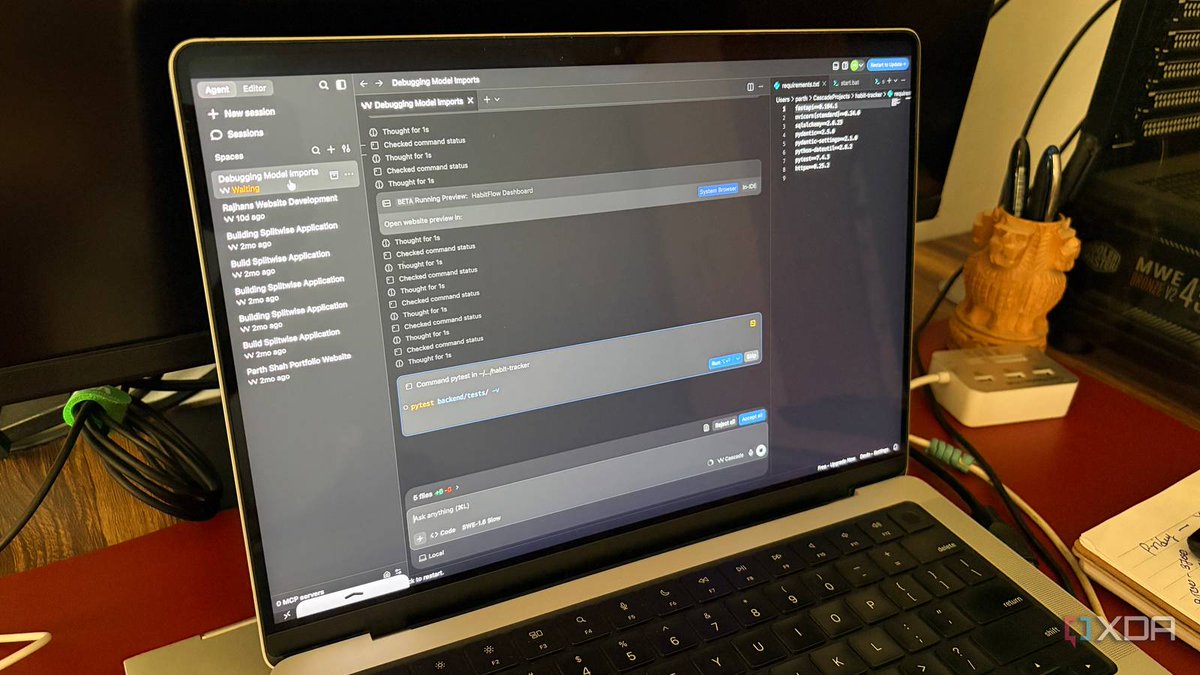 Vibe CodingVibe coding was sold as everyone becoming a software mogul. What it actually does is liquidate entry-level coding jobs and leave the high-agency architect as the only adult in the room who can debug the beautiful mess a model spat out in three seconds.
 The Export GiftWashington national security hawks thought blocking access to American AI would freeze foreign competitors in place, but this protectionist trap has backfired as the export gift forces other nations to build sovereign, unregulatable models.
Gifnotes poster
Sources
- Opinion | How To Protect Our Lead in the A.I Race - The New York Times
- AI race loss fears behind Trump’s planned September hosting of Xi - Asia Times
- Inside China’s All-Out Push to Catch Up With American AI Chips - WSJ
- The secret Trump administration battle to fight Chinese AI - Axios
- Open Weights and American AI Leadership - Microsoft
FAQ
Are these tariffs actually meant to be permanent?
No, they are primarily used as negotiating leverage. The threat of tariffs is designed to force Canada and Mexico to implement strict origin-of-goods rules and block Chinese state-subsidized products from entering the US duty-free.
How does China use Mexico and Canada to bypass US trade laws?
Chinese companies build manufacturing plants in Mexico and Canada, assemble goods using state-subsidized parts, and then ship them across the US border under the guise of North American-made products to avoid US duties.
What is the ultimate goal of this trade strategy?
To secure the North American supply chain by forcing regional allies to decouple from Chinese state-backed industries, thereby protecting domestic manufacturing and national security.