
Compliance by Tenderization

The take
O'Leary wants AI drones to crater power grids and sell it as 'compliance by tenderization.' That is war crimes dressed as a product roadmap, with civilian dead rebranded as friction.
The Tell
Compliance by Tenderization: crater the grid, call corpses friction, ship it as geopolitics-as-a-service.

Stakes
When a Shark Tank host pitches drone strikes on houses and power plants as optimized geopolitics, the tell is not strategy. It is Silicon Valley cosplay: treat a nation like a buggy app, allocate data-center capacity to 'defense,' and let diplomats eat the moral bill while tech owns the kill chain.
Source Dispatch
The read
Compliance by Tenderization, a term coined by Kevin O'Leary (he also brands it 'Gen Z Grounding'), outlines an AI-driven warfare strategy focused on high-precision drone attacks against civilian infrastructure like homes, power plants, and garages.
It's the Silicon Valley approach to geopolitics, where the goal is to economically squeeze regimes into compliance without traditional ground invasions or direct military casualties.
The mainstream reaction, predictably, frames this as a radical, unethical, and potentially criminal escalation of warfare, focusing on the moral outrage of intentionally targeting civilian life. And they're not wrong to highlight the war crime implications.
But this moral outrage often misses the core Silicon Valley logic: that 'tenderization' is just a more 'optimized' form of pressure, an economic algorithm applied to nations, where the human cost is abstracted away as 'friction' or 'unintended side effects' in pursuit of a 'solution'.
What to remember is that the fight isn't just about the ethics of war, but about whether tech titans like O'Leary can redefine international conflict as a 'problem' solvable by algorithms and drones.
This shifts power from diplomats and soldiers to data centers and venture capitalists, as O'Leary himself notes his new data centers will allocate 20% capacity for this AI defense strategy. It's the 'move fast and break things' ethos, but with national power grids instead of buggy apps.
As economist Steve Keen puts it when O'Leary pitches the tactic: those are war crimes, not negotiation.
In the wild
- Kevin O'Leary: We're going to go into a program about what I call compliance by tenderization.
- Kevin O'Leary: It's all about tenderization. Old warfare's over, new AI war, drone-based high precision ordinance, that's the future.
- Steve Keen: Those are war crimes. You're taking out civilian facilities, damaging the civilian system. Those are war crimes.
- Kevin O'Leary advocates for 'compliance by tenderization,' an AI-driven warfare strategy that uses high-precision drone attacks to destroy civilian infrastructure (e.g., houses, garages, power plants), aiming to economically squeeze regimes into compliance without direct military occupation or casualties.
- O'Leary reveals that new data centers will allocate 20% of their capacity for defense, leveraging AI for this 'tenderization' strategy against adversaries, framing it as the future of warfare.
- Episode: O'Leary's AI War: 'Compliance by Tenderization' Sparks 'War Crimes' Outcry (https://www.youtube.com/watch?v=qhfHfmEMa40)
Related
 Improper PaymentsWhen the government talks about 'Improper Payments,' they're politely describing billions in your money vanishing into a system that treats 'waste' as a feature, not a bug. It's the cost of an administrative state designed for disbursement, not accountability.
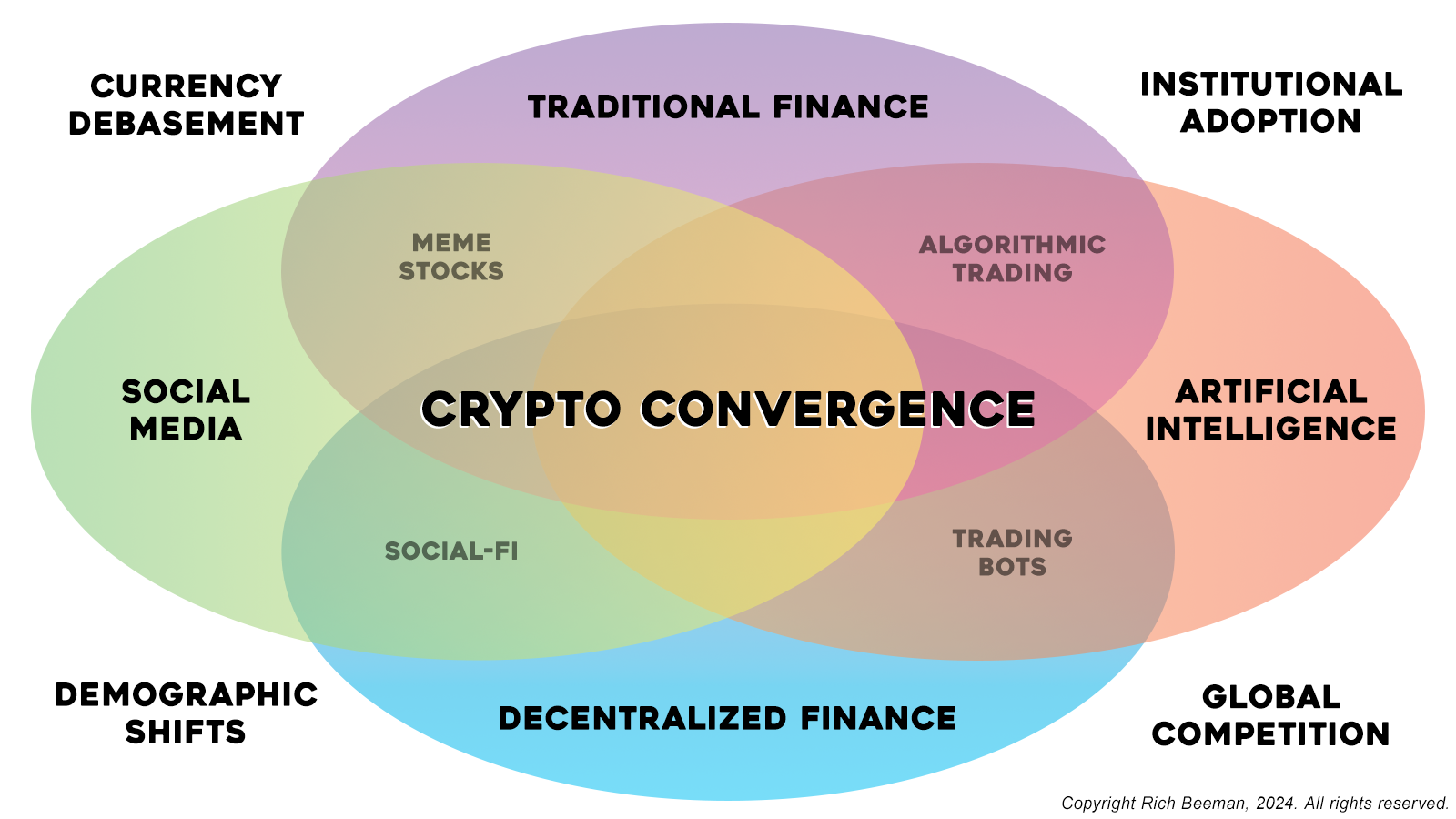 Crypto ConvergenceCrypto Convergence is what happens when DeFi, AI, social media, and TradFi stop pretending they are in different group chats. The winners will not be the slickest tech, they will be whoever owns the plumbing where all four meet, and it probably will not be you.
 Table Stakes (Tech)'Table stakes' used to mean the boring features every product shipped. In AI, it means the trust floor that demos keep torching while VCs clap for the next brittle miracle.
 Doomerism Counter-NarrativeWhen AI titans dismiss existential warnings as 'doomerism,' that's the tell: they're less interested in safety and more in silencing critics to protect their unchecked race for power.
 Lightning IndexerIngenuity now beats brute force in the AI arms race, and the Lightning Indexer is the architectural tell that proves it, making advanced AI accessible to agile teams because the future of AI isn't just about who has the biggest supercomputer.
 AI 2027 ScenarioThe 'AI 2027 Scenario' is less a sober forecast of superintelligence and more a high-stakes marketing push, designed to accelerate the AI arms race and consolidate power, because the only thing scarier than AI is the other guy getting it first.
Gifnotes poster
Sources
FAQ
What's the core difference between 'tenderization' and traditional warfare?
Traditional warfare often aims for direct military engagement or occupation. Tenderization focuses on economic pressure through targeted destruction of civilian infrastructure, avoiding direct troop deployment and casualties for the aggressor.
Why is this strategy controversial?
It's controversial because intentionally targeting civilian infrastructure is widely considered a war crime under international law, regardless of the stated intent to avoid military casualties.
How does AI enable 'compliance by tenderization'?
AI enables high-precision targeting and autonomous drone operations, allowing for the selective destruction of specific infrastructure with minimal human intervention, making the strategy theoretically more 'efficient' and 'clean' from a distance.
Why does O'Leary also call this 'Gen Z Grounding'?
It is a rebrand of the same coinage, not a second doctrine. The nickname makes economic warfare sound modern and surgical so the pitch lands as innovation instead of a war-crime frame.