Cognitive L1 Cache

The take
Treating your brain as a thin client that queries AI for basic reasoning creates a permanent, high-latency tax on intellectual breakthroughs, because outsourcing baseline thinking to external models turns your local active memory into a slow, laggy terminal.
The Tell
If you have to query an AI to understand your own business, you are just a thin client running on someone else's server.

Stakes
Outsourcing basic logic to prompt engineering kills the near-instant roundtrips real creativity needs. If you have to ping a corporate server to understand your own business, you are running a permanently degraded processor against builders with deep, internalized domain expertise.
Source Dispatch
The read
The modern tech consensus tells you that memorization is dead and prompt engineering is the new literacy. This is a massive cope for the lazy.
When Stripe CEO Patrick Collison dismantled the traditional 'lean startup' playbook at Y Combinator, he pointed out that treating your brain as a thin client introduces a devastating latency tax.
Real breakthroughs do not happen in the seconds it takes to type a prompt and wait for a corporate server to spit back a sanitized consensus answer.
To be clear, outsourcing your memory to a cloud-hosted LLM works perfectly for low-level compliance, writing generic marketing copy, or generating boilerplate code. If your goal is to build a derivative SaaS business that wraps a wrapper, local cache thinking might seem like an expensive luxury.
But for vertically integrated, highly ambitious projects, relying on external models for basic reasoning is like trying to run a high-performance graphics engine over a dial-up connection.
True intellectual speed is about the immediate, subconscious synthesis of ideas that can only happen when the raw data is already baked into your hardware.
Deep domain expertise is not just about knowing facts; it is about having those facts wired directly into your cognitive L1 cache so you can spot anomalies and make lateral leaps in real-time.
If you do not own the local hardware, you are just renting someone else's intelligence at a steep latency discount.
In the wild
- Patrick Collison: That's a hell of a lot slower than knowing it in cognitive L1 cache.
- Stripe CEO Patrick Collison joins Y Combinator's Harj Taggar to argue that treating your brain as a thin client that queries AI for basic reasoning creates a massive cognitive latency trap.
- Episode: Patrick Collison on the Death of the Lean Startup and the Rise of Cognitive L1 Cache (https://www.youtube.com/watch?v=5d6y3poKwK4)
- That's a hell of a lot slower than knowing it in cognitive L1 cache.
Related
 Terminally onlineTerminally Online is when the feed's stakes feel more real than your actual life. Likes, outrage loops, and timeline drama become the OS; IRL is the side quest.
 AI SlopPlatforms pay for volume, so the machine floods your feed with filler until the real stuff drowns. That sludge is AI slop.
 NewsjackNewsjacking is when a brand or influencer hijacks a trending news story or event to promote their own sh*t. Basically the digital equivalent of an ambulance chaser, but for clicks.
 SaaspocalypseThe joke stopped being a joke. Vibe-coded custom tools are eating the monthly SaaS stack one workflow at a time. That slaughter is Saaspocalypse.
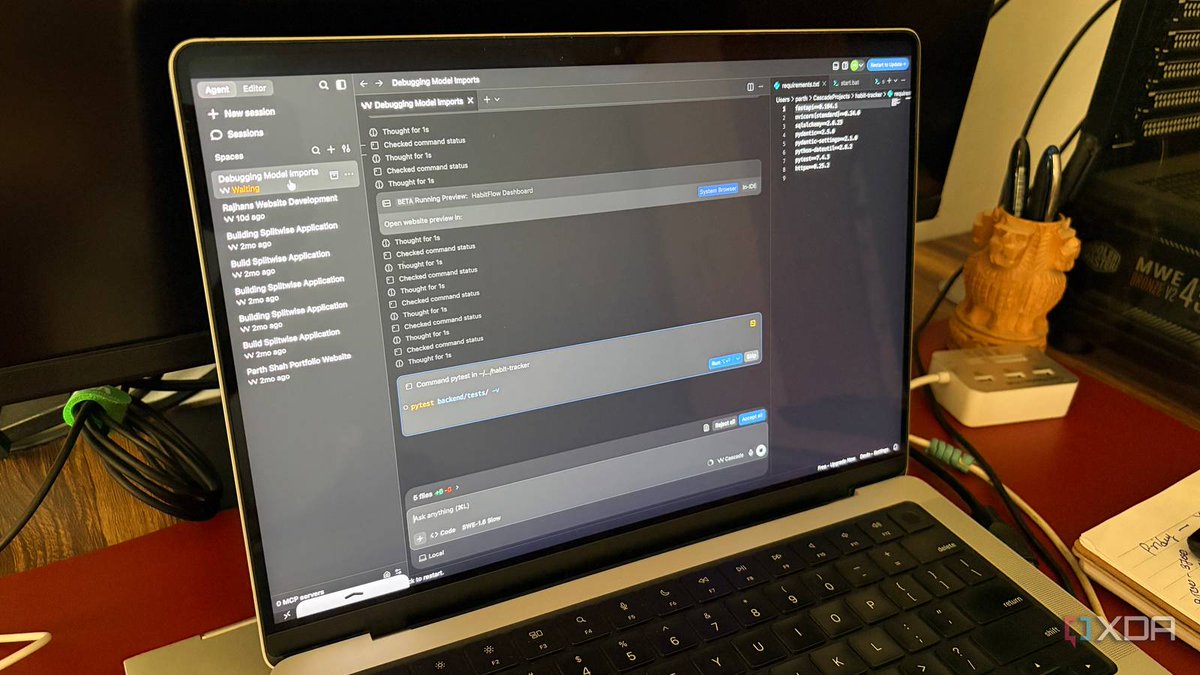 Vibe CodingVibe coding was sold as everyone becoming a software mogul. What it actually does is liquidate entry-level coding jobs and leave the high-agency architect as the only adult in the room who can debug the beautiful mess a model spat out in three seconds.
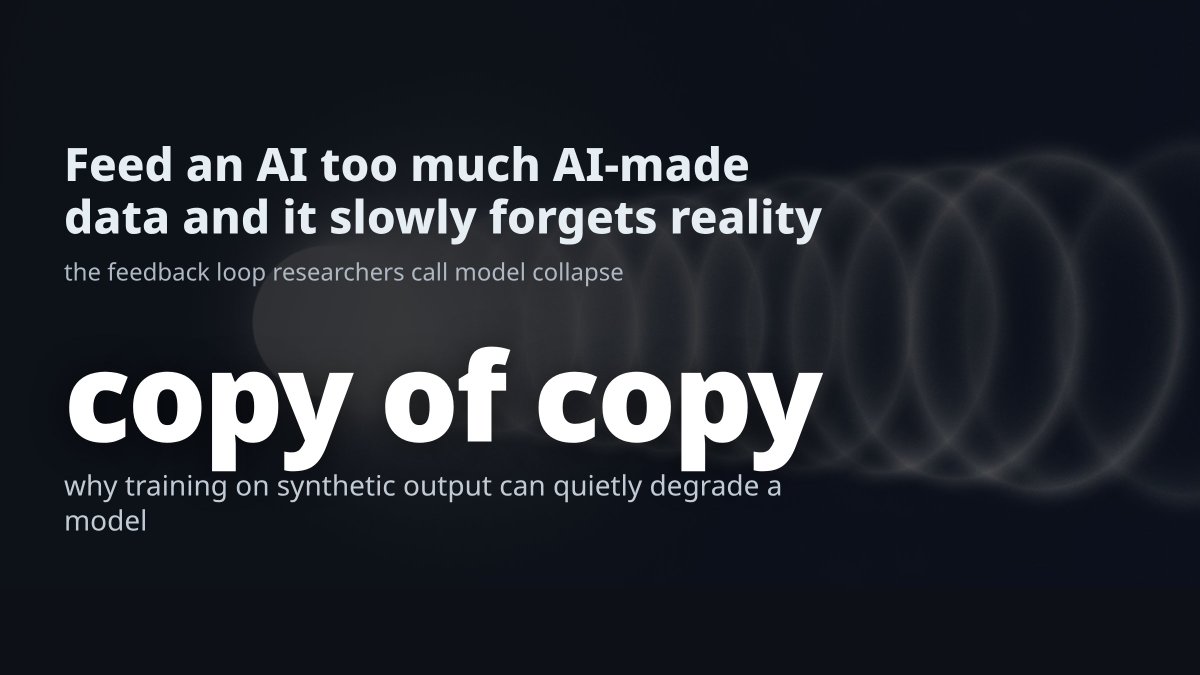 Model CollapseBig Tech wants you to believe AI models are collapsing because of a minor synthetic data bug, but Model Collapse is the ultimate proof that the internet has run out of human soul to harvest. The real risk is that platforms trying to bypass human creators on the cheap are creating a digital echo chamber of pure, unadulterated garbage.
Gifnotes poster
Sources
FAQ
What is Cognitive L1 Cache in human intelligence?
It is the deeply internalized, instantly accessible domain knowledge stored in a human's local active memory. Unlike external information that requires a search query or an AI prompt, this knowledge is wired directly into your subconscious, allowing for immediate synthesis, lateral leaps, and real-time problem-solving without any processing latency.
Why is relying on AI prompts for basic reasoning a trap?
Because it introduces a massive cognitive latency tax. When you treat your brain as a thin client that constantly queries external models for basic logic, you destroy the rapid, near-instantaneous roundtrips of local thought. You become dependent on a laggy, corporate-filtered API for baseline intelligence.
How does Local Cache Thinking differ from prompt engineering?
Prompt engineering relies on externalizing your intellect to a cloud-hosted model, which is slow and limited by the model's training data. Local Cache Thinking treats deep personal knowledge as high-performance local hardware, enabling you to make rapid, intuitive connections that external AI cannot replicate.
What is the business cost of outsourcing baseline thinking?
You lose the ability to innovate at speed. Founders who outsource basic engineering logic or domain expertise to AI end up building derivative, low-ambition products because they lack the fast, intuitive feedback loops required to solve complex, vertically integrated problems.
Can AI replace the need for deep domain expertise?
No. AI can generate boilerplate solutions, but it cannot perform the high-speed, intuitive synthesis that occurs when a human expert has the core mechanics of a system fully loaded into their own cognitive hardware. Real breakthroughs require local processing power, not rented cloud space.