Model Collapse

The take
Big Tech wants you to believe AI models are collapsing because of a minor synthetic data bug, but Model Collapse is the ultimate proof that the internet has run out of human soul to harvest. The real risk is that platforms trying to bypass human creators on the cheap are creating a digital echo chamber of pure, unadulterated garbage.
The Tell
AI eating its own synthetic data is a dog eating its own vomit and expecting a gourmet meal.
Stakes
This matters because the dream of infinite, free, automated content is hitting a hard physical limit. If you build a machine to replace human writers and artists, and then feed that machine its own synthetic output, the entire system degrades into digital dementia within a few generations.
Source Dispatch
The read
The technical crowd treats this like a math problem. They call it a recursive training bug, arguing that if you just filter the synthetic data or tweak the loss function, the models will keep getting smarter.
It is a comforting lie for venture capitalists who already spent billions and need to believe they can build a sovereign intelligence without paying a single human writer, artist, or publisher for their labor.
The reality is an economic and cultural dead end. OpenAI, Google, and Meta are hitting a hard wall because the high-quality, human-generated internet is a finite resource that has already been fully mined.
When these models are forced to consume their own automated output, they do not refine themselves; they lose their minds, forgetting rare data points and amplifying their own hallucinations.
This is the ultimate leverage for human creators. The very systems designed to bankrupt and replace creative labor cannot survive without a constant infusion of fresh, organic human thought.
The moment you replace the writers with the bots, the bots run out of fuel and begin eating their own tail.
In the wild
- OpenAI and Google aggressively seeking licensing deals with publishers as high-quality human data pools dry up.
- Researchers demonstrating that generative models trained on AI-generated content quickly devolve into producing repetitive gibberish.
- Meta using synthetic data to train its latest models while facing mounting copyright lawsuits from human authors.
Related
 Terminally onlineTerminally Online is when the feed's stakes feel more real than your actual life. Likes, outrage loops, and timeline drama become the OS; IRL is the side quest.
 AI SlopPlatforms pay for volume, so the machine floods your feed with filler until the real stuff drowns. That sludge is AI slop.
 NewsjackNewsjacking is when a brand or influencer hijacks a trending news story or event to promote their own sh*t. Basically the digital equivalent of an ambulance chaser, but for clicks.
 SaaspocalypseThe joke stopped being a joke. Vibe-coded custom tools are eating the monthly SaaS stack one workflow at a time. That slaughter is Saaspocalypse.
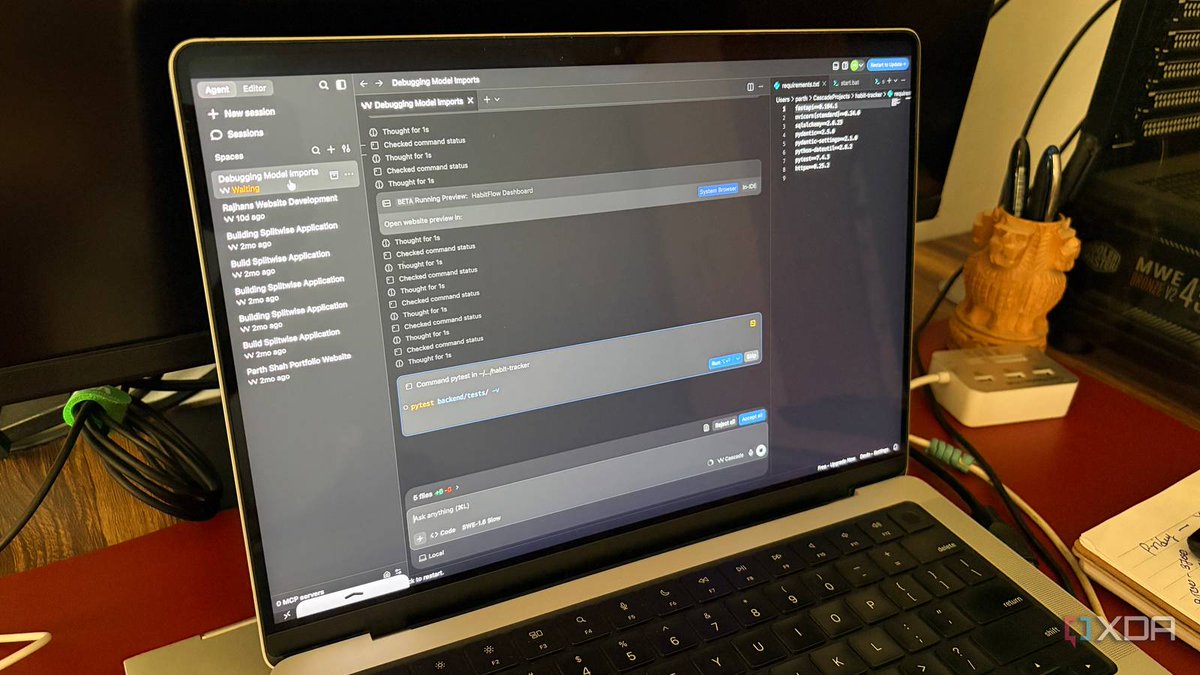 Vibe CodingVibe coding was sold as everyone becoming a software mogul. What it actually does is liquidate entry-level coding jobs and leave the high-agency architect as the only adult in the room who can debug the beautiful mess a model spat out in three seconds.
 Context CollapseThe terror of having your words read by the wrong audience has turned the public square into a hostage negotiation, where everyone speaks in bland, HR-approved corporate platitudes to avoid offending the most literal-minded idiot on the timeline.
Gifnotes poster
Sources
FAQ
Why can't AI just train on its own data?
Because AI models work by predicting averages. When a model trains on synthetic data, it is training on a copy of a copy, which filters out the rare, weird, and highly specific human details until only generic mush remains.
Is this just a temporary software bug?
No. It is a fundamental thermodynamic limit of information. Without fresh, messy, real-world human input to anchor the system, the mathematical feedback loop inevitably collapses into nonsense.
What does this mean for human creators?
It means human-generated work is about to become the premium fuel of the digital economy. The platforms that tried to automate you out of a job now have to figure out how to pay you to keep their machines from going brain-dead.