
Diligence Debt

The take
Early-stage founders who bypass human legal counsel for cheap AI templates face the risk of Diligence Debt, a high-interest tax that accumulates quietly until a Series A lead refuses to wire funds.
The Tell
Using a cheap AI bot to draft early contracts just outsources your legal budget to a partner charging $2,000 an hour to delete it.

Stakes
The $20-a-month AI lawyer: it doesn't eliminate legal fees, it just defers them to a white-shoe firm that will charge $1,500 an hour to untangle hallucinated corporate structures during an institutional audit.
Source Dispatch
The read
The appeal of using automated LLM tools to draft early-stage cap tables, IP assignments, and incorporation documents is obvious. Startups are chronically cash-poor, and paying a premium firm to draft standard boilerplate feels like lighting money on fire.
AI legal bots promise to democratize corporate formation, allowing founders to generate clean, standard-looking contracts in seconds for the price of a gym membership.
But standard-looking is not the same as legally sound. While these tools can spit out passable NDAs, they frequently hallucinate critical clauses, mishandle complex vesting schedules, or leave gaping holes in IP assignment chains.
Because no human lawyer is reviewing the output, these errors sit quietly in the data room like financial landmines, waiting for a sophisticated investor to initiate a serious audit. When a top-tier venture firm prepares to lead a Series A, they do not rely on automated templates.
They send in elite counsel like Cooley, Latham & Watkins, or Kirkland & Ellis to perform rigorous due diligence. When these firms discover a mess of ChatGPT Cap Tables, the deal stalls.
Founders are then forced to pay those exact premium firms to audit, draft, and execute retroactive fixes, completely erasing any initial savings.
In the wild
- Venture capital associates flagging 'ChatGPT cap tables' as a primary red flag during pre-seed and seed-stage audits.
- White-shoe firms like Cooley LLP and Latham & Watkins charging premium hourly rates to clean up automated legal structures before Series A closings.
- Founders realizing that retroactive IP assignment fixes cost triple the price of getting it right the first time.
- Episode: The Trillion-Dollar Industries AI Is Disrupting: Voice, Law & the End of the Billable Hour (https://www.youtube.com/watch?v=J0bce9WQJ-g)
- That's going to be a fun diligence target one day.
Related
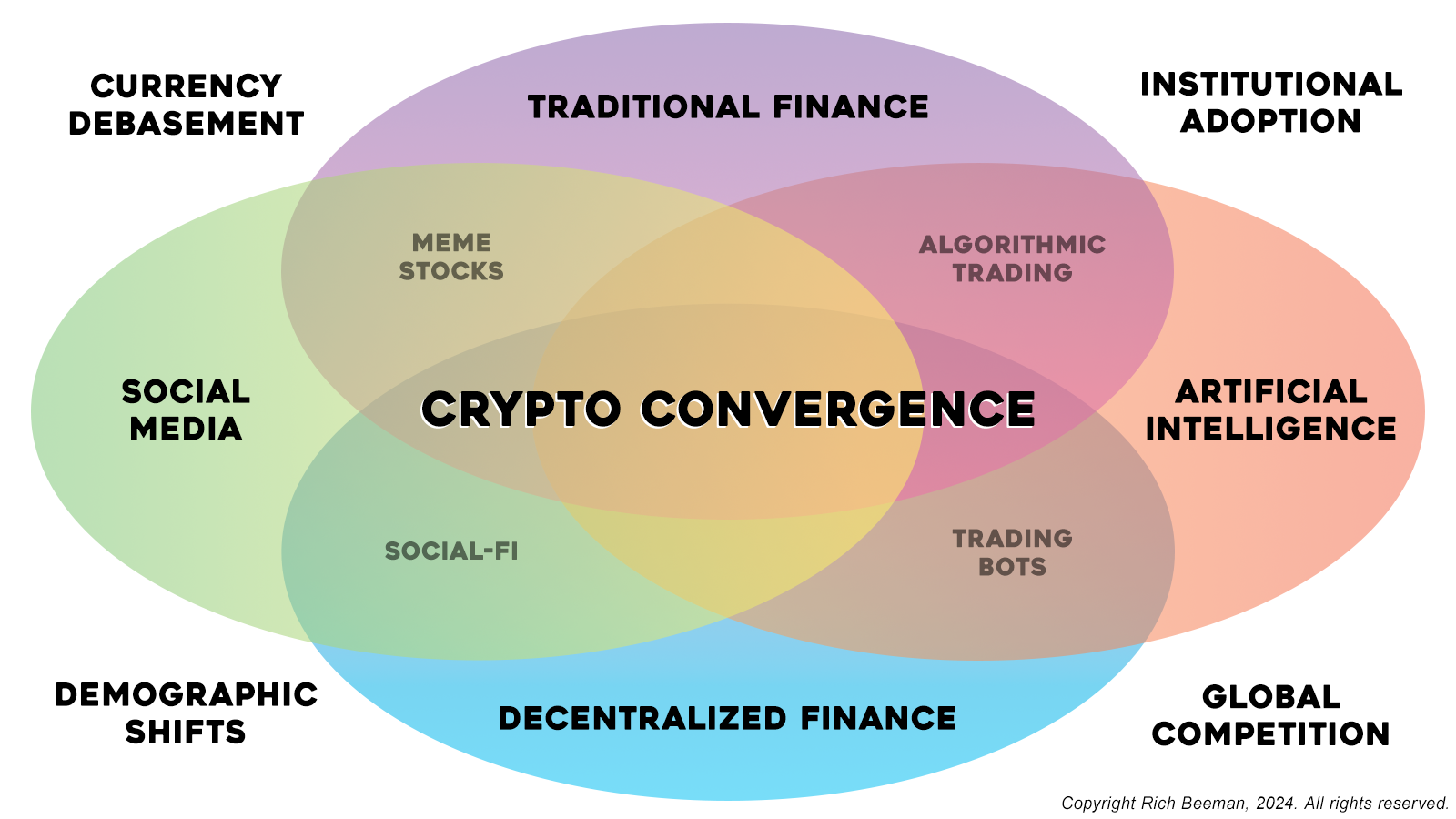 Crypto ConvergenceCrypto Convergence is what happens when DeFi, AI, social media, and TradFi stop pretending they are in different group chats. The winners will not be the slickest tech, they will be whoever owns the plumbing where all four meet, and it probably will not be you.
 BEHODLBEHODL is Gifdead's unserious-serious mashup of behold and HODL: look at this, and maybe don't panic-sell your personality. It's the internet's way of saying, "Pay attention, but don't let the algorithm or the mob dictate your next move."
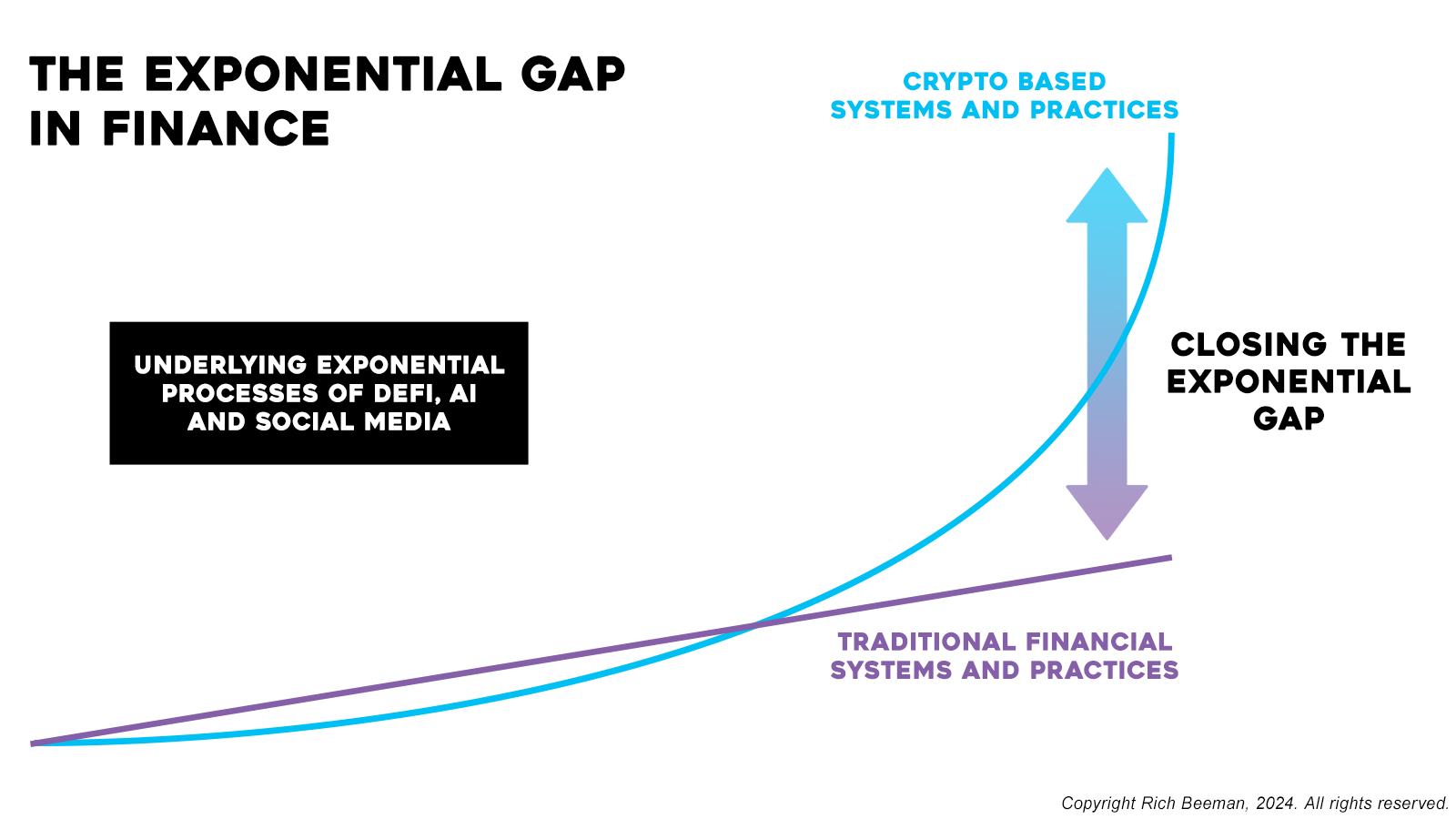 Exponential Gap in FinanceRegulators say 'risk' and mean 'protect the incumbents.' The Exponential Gap in Finance is the widening chasm where legacy finance uses caution theater to slow anything that compounds faster than a quarterly report.
 Left curveWhen 'critical thinking' loops you back to the dumbest take possible, that's the Left Curve. It's the intellectual dead end where rejecting obvious solutions for convoluted, often self-serving, alternatives becomes a performance, costing you clarity and often capital.
 NewsjackNewsjacking is when a brand or influencer hijacks a trending news story or event to promote their own sh*t. Basically the digital equivalent of an ambulance chaser, but for clicks.
 Inference-less AIVenture capitalists love to call inference-less AI a lean licensing revolution, but the real trap is that most startups simply cannot afford the electricity bill to run the brains they build.
Gifnotes poster
Sources
FAQ
What is the difference between Diligence Debt and standard legal debt?
Standard legal debt is simply deferred work, like waiting to draft an employee handbook. Diligence Debt is active structural damage: corrupted cap tables, missing IP assignments, and hallucinated clauses that must be audited and rebuilt by expensive human lawyers before an institutional round can close.
Why can't AI tools just clean up their own legal mistakes?
Because an AI cannot negotiate with early employees who signed flawed contracts, nor can it sign a legal opinion letter that satisfies an institutional VC's risk tolerance. When a deal is on the line, lead investors demand human accountability from licensed, insured law firms.
How do ChatGPT Cap Tables derail a Series A funding round?
They stall the transaction. When a lead investor's counsel finds unvetted or contradictory equity math in the data room, they halt the funding process until the entire corporate history is manually audited and corrected, giving the investor leverage to renegotiate terms or walk away.