
Billion-Dollar Hold

The take
Venture capitalists sell the exit as the ultimate victory, but the Billion-Dollar Hold is the realization that cashing out is often just a golden eviction notice from your own zone of genius.
The Tell
The Billion-Dollar Hold: building a business so aligned with your life that a ten-figure buyout feels like an eviction.

Stakes
Accepting a massive buyout is the ultimate self-own for a high-agency builder, trading a life of deep alignment and high-utility creation for a low-utility retirement of soul-crushing boredom and angel investing.
Source Dispatch
The read
The standard entrepreneurial playbook is a liquidity trap. Founders are trained to build, scale, and sell to the highest bidder, handing over their life's work to private equity or a tech giant.
But for a true builder, this liquidity event is a form of assisted career suicide. It trades a perfectly calibrated vehicle of personal utility for a pile of cash you cannot deploy half as effectively as your own business.
To be fair, the VC ecosystem requires this exit to return capital to limited partners who need to buy yachts. If your goal is simply to stack chips and escape a business you hate, selling makes perfect sense.
But if you have achieved perfect alignment, a buyout is not a reward; it is a hostile eviction. Founders like David Senra, Rick Rubin, and Josh Wolfe show that staying in the game is worth infinitely more than a pile of cash that sentences you to golf and cap table management.
This is the non-saleable idea: an enterprise so perfectly matched to your personal chemistry that selling it would be irrational. When your work is your play, a buyout is just a transaction that pays you to stop doing what you love.
True wealth is not the liquidity event; it is the absolute freedom to never have to exit.
In the wild
- The ultimate metric of business alignment is the 'Billion-Dollar Hold', an enterprise so perfectly matched to a founder's personal utility that they would reject a ten-figure buyout just to keep working.
- Episode: 14 Patterns Behind the World's Greatest Minds (https://www.youtube.com/watch?v=0AfsC-9pIo4)
- If you love what you do, your exit strategy should be death.
Related
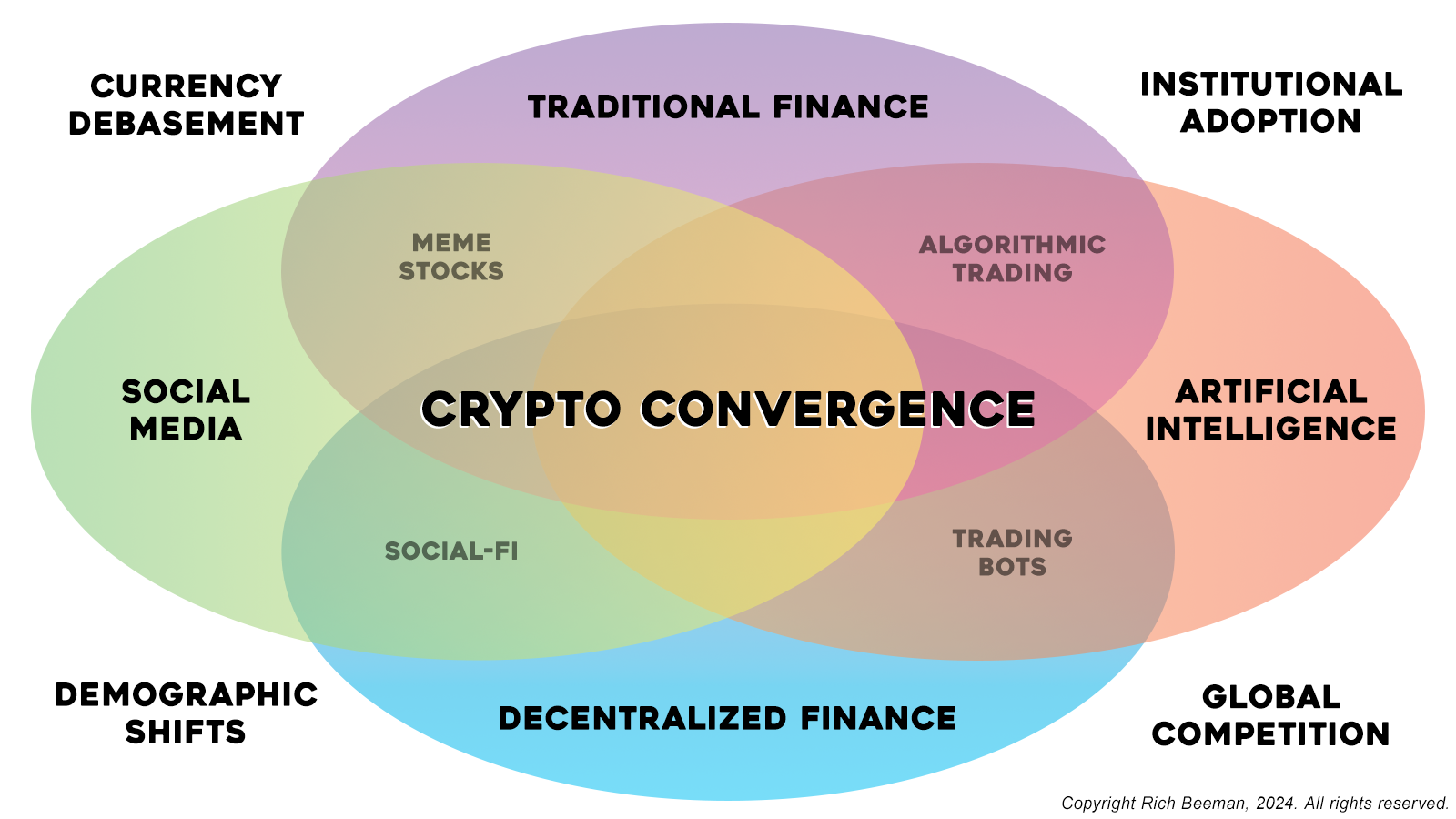 Crypto ConvergenceCrypto Convergence is what happens when DeFi, AI, social media, and TradFi stop pretending they are in different group chats. The winners will not be the slickest tech, they will be whoever owns the plumbing where all four meet, and it probably will not be you.
 Terminally onlineTerminally Online is when the feed's stakes feel more real than your actual life. Likes, outrage loops, and timeline drama become the OS; IRL is the side quest.
 NewsjackNewsjacking is when a brand or influencer hijacks a trending news story or event to promote their own sh*t. Basically the digital equivalent of an ambulance chaser, but for clicks.
 Sofa Friends vs. Treadmill FriendsThe mainstream wellness consensus frames passive, low-effort friendships as 'low-maintenance' safe spaces, but Sofa Friends are actually a metabolic tax on your ambition disguised as self-care.
 The Corporate Raider FrameEmpathy for your own past mistakes is the ultimate productivity trap. The Corporate Raider Frame is the psychological cheat code that treats your past self like an incompetent CEO who was just escorted from the building by security.
 Unconditional Basic MeaningSilicon Valley wants to automate your job and buy your silence with a monthly check, but Unconditional Basic Meaning is the trap where humanity is reduced to state-dependent pets inventing fake tasks to avoid spiritual collapse.
Gifnotes poster
Sources
FAQ
What is a Non-Saleable Idea?
It is a business or project so perfectly aligned with a founder's personal utility and zone of genius that no acquisition offer, no matter how large, can buy them out of it.
Why do venture capitalists push for exits if it hurts the founder's alignment?
Venture capital is an asset class built on fund lifecycles. VCs must return cash to their limited partners within a fixed window, meaning their business model requires your exit, regardless of your personal fulfillment.
Does this mean founders should never sell their companies?
Selling makes sense if you are running a business you dislike or want to cash out. But if you have built your ultimate vehicle for self-actualization, selling it just to become a mid angel investor is a massive step down.