
Amd Stock

The take
Big Tech uses AMD Stock as a financial leverage tool to scare Nvidia into lowering its prices, treating the company's silicon as a regulatory shield and pricing hedge rather than a serious alternative.
The Tell
AMD stock: a financial instrument designed to make Nvidia lower its prices.

Stakes
Buying AMD under the assumption that Lisa Su is about to dethrone Jensen Huang ignores the actual incentive structure of the silicon gold rush. Hyperscalers need AMD to exist so they can point to a 'competitor' when antitrust regulators knock, and to threaten Nvidia with Microsoft Azure procurement cuts when contract negotiations get tight.
Source Dispatch
The read
The mainstream investment thesis paints AMD as the scrappy underdog poised to steal massive market share with its cheaper MI300 chips. On paper, it looks like a classic duopoly play: Nvidia owns the high-end boutique, so AMD will capture the volume.
Wall Street loves this narrative because it fits a standard business school template and justifies keeping AMD’s valuation pumped to the moon.
But the reality inside the data centers is far more cynical. ** Developers quietly refuse to write code for anything but Nvidia’s CUDA platform, treating AMD’s ROCm alternative like a high school group project.
To build a real AI business today, you pay the Nvidia tax. AMD Stock is the premium hyperscalers pay to keep that tax from doubling, acting as a massive, industry-wide subsidy for a second-place runner who is never actually allowed to win the race.
In the wild
- Microsoft Azure infrastructure procurement teams heavily promoting AMD MI300X integration while quietly expanding their proprietary Nvidia H200 clusters.
- Meta purchasing hundreds of thousands of Nvidia H100s while publicly praising AMD's open-source ROCm software to maintain pricing leverage.
- Lisa Su presenting massive AI chip revenue guidance that relies almost entirely on a few key cloud providers using her silicon as a stalking horse against Jensen Huang.
Related
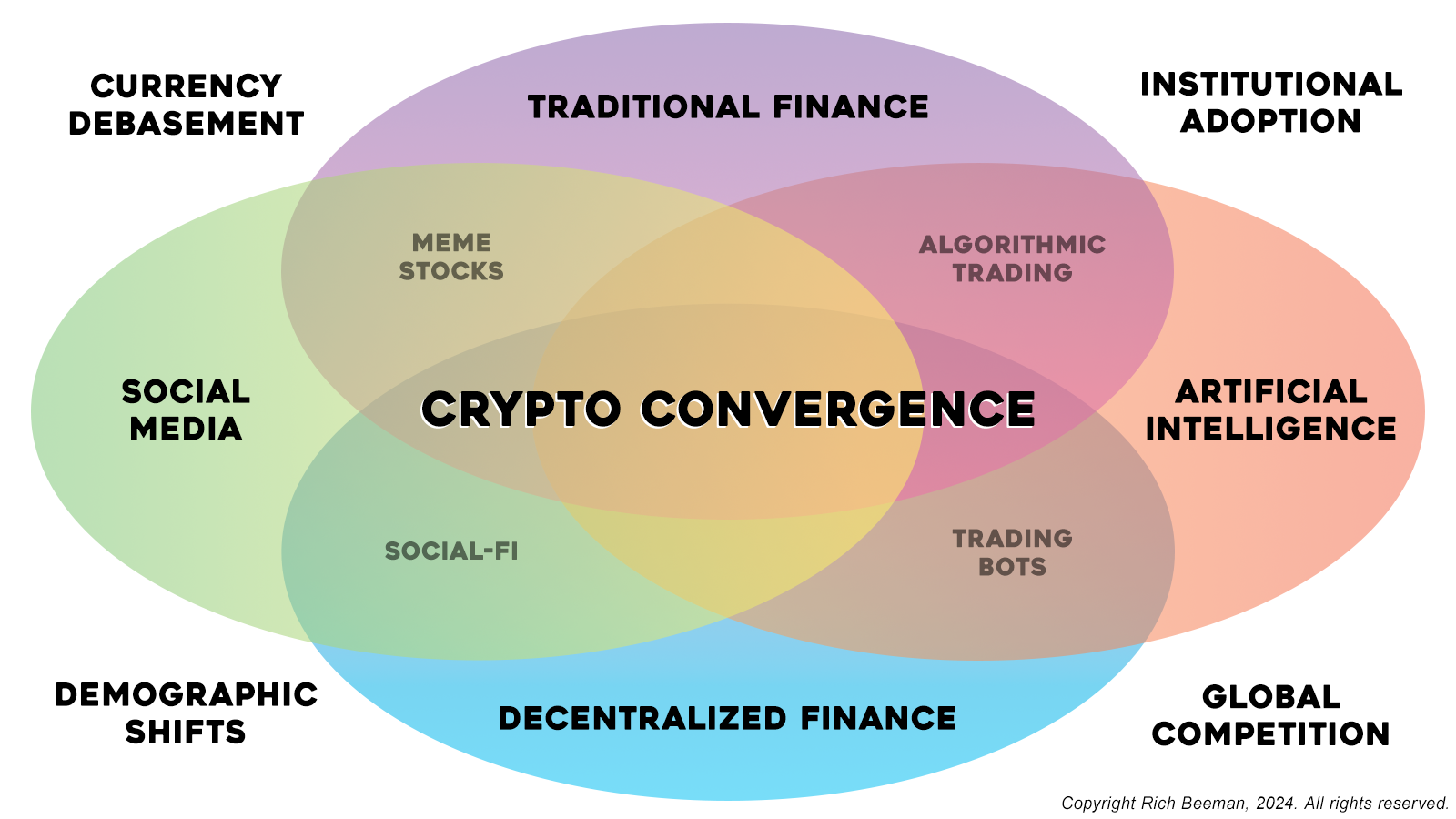 Crypto ConvergenceCrypto Convergence is what happens when DeFi, AI, social media, and TradFi stop pretending they are in different group chats. The winners will not be the slickest tech, they will be whoever owns the plumbing where all four meet, and it probably will not be you.
 Terminally onlineTerminally Online is when the feed's stakes feel more real than your actual life. Likes, outrage loops, and timeline drama become the OS; IRL is the side quest.
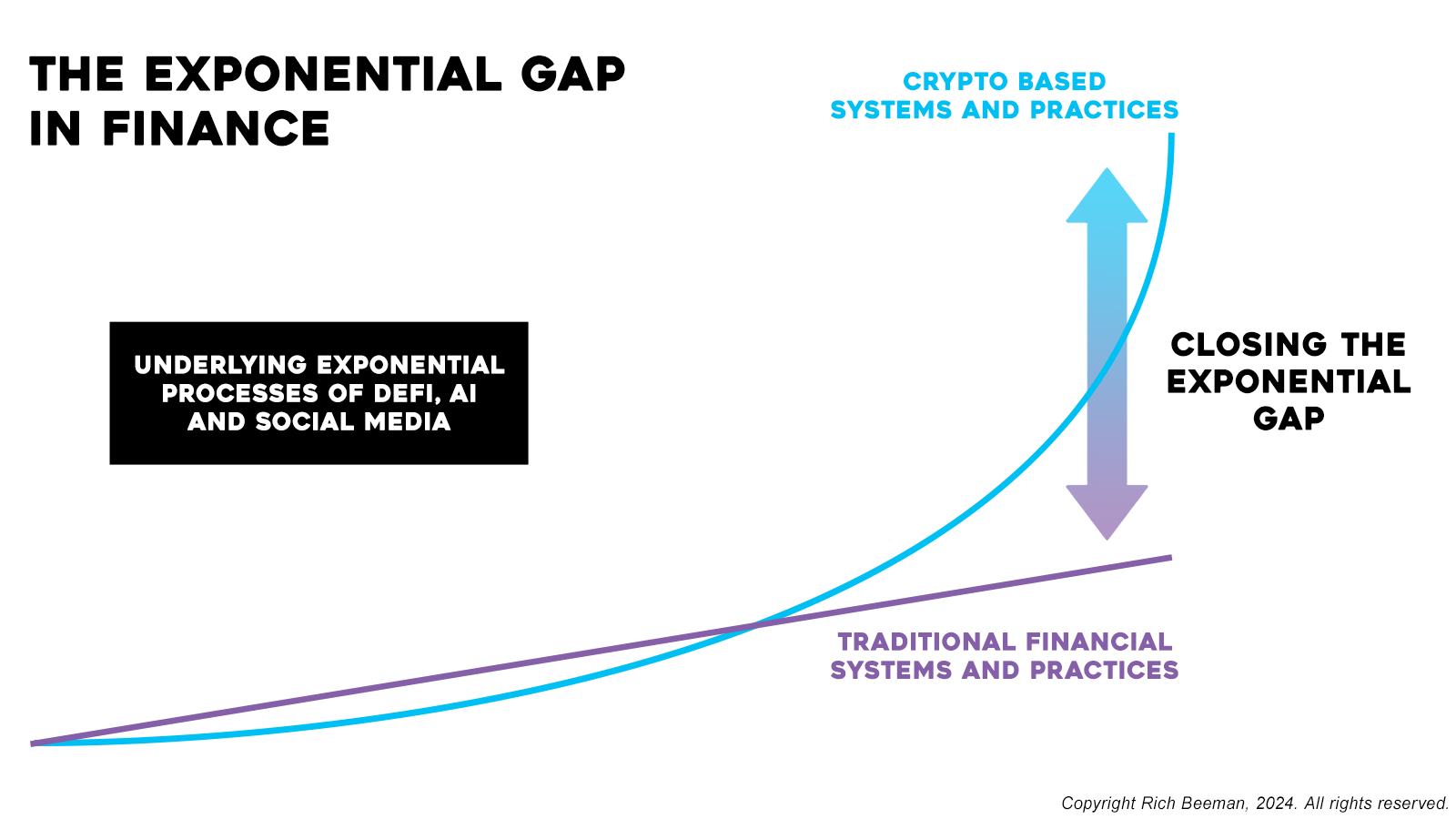 Exponential Gap in FinanceRegulators say 'risk' and mean 'protect the incumbents.' The Exponential Gap in Finance is the widening chasm where legacy finance uses caution theater to slow anything that compounds faster than a quarterly report.
 NewsjackNewsjacking is when a brand or influencer hijacks a trending news story or event to promote their own sh*t. Basically the digital equivalent of an ambulance chaser, but for clicks.
 AI SlopPlatforms pay for volume, so the machine floods your feed with filler until the real stuff drowns. That sludge is AI slop.
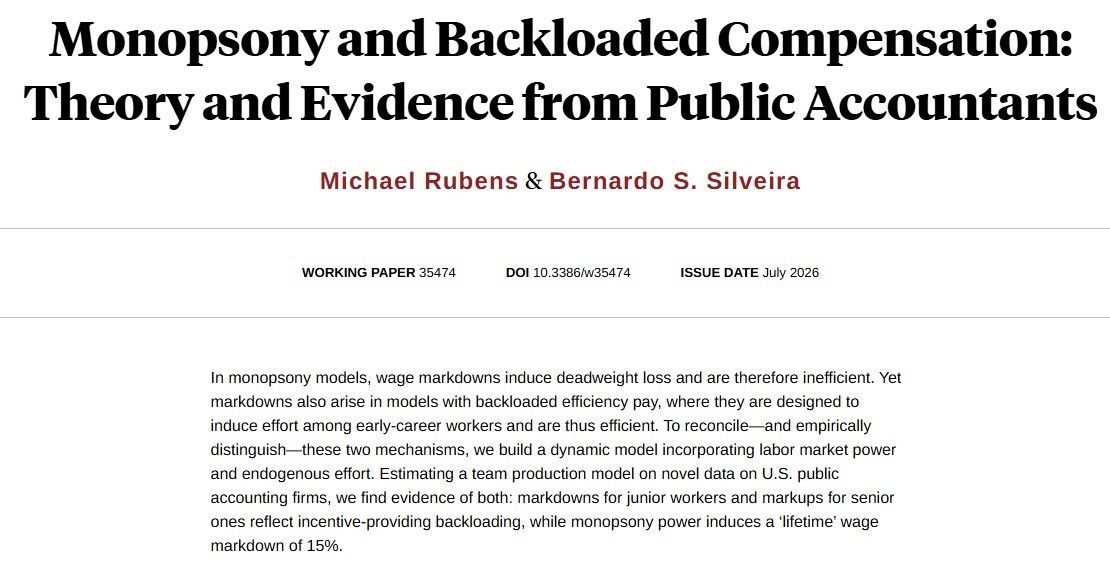 Model MonopsonyVenture-backed AI labs thought they would tax the entire economy, but the risk of a Model Monopsony is actually a massive cope for legacy software giants who are already watching model margins collapse to zero.
Gifnotes poster
Sources
FAQ
Is AMD actually a bad company?
No, AMD makes excellent hardware and possesses world-class engineering. The issue is structural: Nvidia's monopoly is protected by a software moat (CUDA) that developers refuse to leave, meaning AMD is relegated to a pricing lever for cloud giants.
Why do big tech companies buy AMD chips if they prefer Nvidia?
They buy them in bulk to keep AMD alive as a viable threat. If AMD went under or stopped making AI chips, Nvidia would have absolute pricing power, and antitrust regulators would dismantle the entire silicon supply chain.
Can AMD's ROCm software eventually catch up to Nvidia's CUDA?
While ROCm is improving, CUDA has a fifteen-year head start and an entire generation of developers who treat it as the industry standard. Rebuilding that ecosystem is a cultural and behavioral challenge, not just a technical one.