
The Cisco Lesson

The take
Building the physical plumbing for a digital revolution guarantees a massive hardware hangover once the circular funding loop stops spinning. The Cisco Lesson is the ultimate warning that buying a trillion dollars of hardware to generate fifty billion in revenue is a high-risk trap that turns tech giants into very expensive treasury-bond alternatives.
The Tell
The Cisco Lesson: buying a trillion in hardware to make 50 billion is just a very expensive way to avoid buying treasuries.

Stakes
When the venture capital subsidizing unprofitable software startups dries up, the hardware suppliers face a sudden, catastrophic revenue collapse. This CapEx Bullwhip shows that compute demand is highly elastic, meaning the infrastructure layer is always the first to get slaughtered when the music stops.
Source Dispatch
The read
The mainstream consensus insists that AI infrastructure spending is a bulletproof bet because demand for compute is infinite and the technology is too big to fail. This view treats hardware as a sovereign utility rather than a cyclical commodity.
In reality, hyperscalers and chip designers are currently inflating valuations through circular capital recycling, where tech giants fund the very startups that buy their chips.
During the dot-com boom, Cisco Systems was the undisputed king of the internet, selling the routers and switches that built the web. When the startups renting those lines went belly up, Cisco was left holding mountains of unpaid-for hardware.
The company lost eighty percent of its valuation almost overnight because it mistook subsidized infrastructure demand for permanent enterprise utility. Today, NVIDIA and other hardware giants face the exact same structural vulnerability.
When the capital expenditure cuts begin, the supply chain feels it as a violent whip crack rather than a gentle slowdown. If the software layer cannot generate actual cash flow from real customers, the physical plumbing becomes a monument to overinvestment.
In the wild
- Jim Chanos: Does this next trillion dollars make sense if you're only going to earn 50 billion on it? We could earn that on treasuries.
- Cisco Systems 2001 crash: The networking giant wrote off $2.2 billion in inventory and saw its stock plunge 86% as telecom startups collapsed.
- NVIDIA's massive CapEx dependency: Hyperscalers represent over 40 percent of advanced GPU revenue, creating an extreme concentration risk.
- Episode: South Korea’s AI Bubble Just Popped (https://www.youtube.com/watch?v=hy90LdpEUvQ)
- Does this next trillion dollars make sense if you're only going to earn 50 billion on it? We could earn that on treasuries.
Related
 AI Money LoopTech giants are funding their own customers to buy their own services: the AI Money Loop is the circular accounting illusion masking the risk that enterprise AI's actual return on investment is functionally zero.
 Present-Value Future PricingBuying a stock at a valuation that assumes the company already conquered Mars, cured aging, and secured a monopoly on air is the core trap of Present-Value Future Pricing, leaving the retail buyer with all of the risk and none of the upside.
 AI SlopPlatforms pay for volume, so the machine floods your feed with filler until the real stuff drowns. That sludge is AI slop.
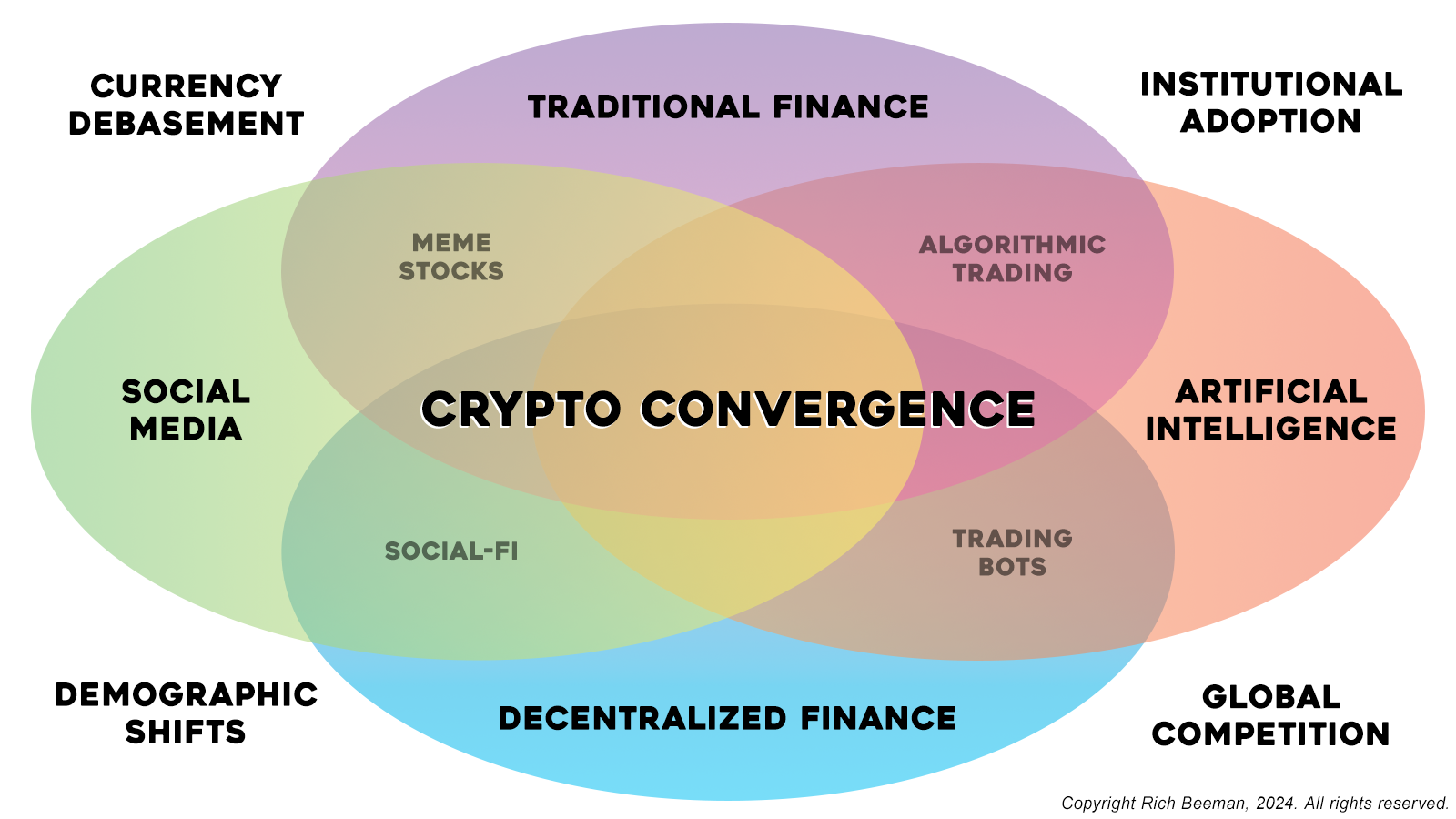 Crypto ConvergenceCrypto Convergence is what happens when DeFi, AI, social media, and TradFi stop pretending they are in different group chats. The winners will not be the slickest tech, they will be whoever owns the plumbing where all four meet, and it probably will not be you.
 Terminally onlineTerminally Online is when the feed's stakes feel more real than your actual life. Likes, outrage loops, and timeline drama become the OS; IRL is the side quest.
 Planning for PerfectionTech giants and private credit funds are running a high-stakes race toward the ultimate CapEx trap: planning for perfection by borrowing billions to build hyper-specific physical infrastructure on the assumption that technology and pricing curves will stand perfectly still.
Gifnotes poster
Sources
FAQ
What is the CapEx Bullwhip?
It is the macroeconomic phenomenon where a small drop in consumer demand at the top of the chain causes a massive, amplified collapse in orders for the hardware manufacturers at the bottom.
How did Cisco trigger this historical precedent in 2001?
Cisco lent billions of dollars to speculative dot-com startups so they could buy Cisco routers. When those startups defaulted, Cisco was hit with a double whammy of unpaid loans and worthless, excess inventory.
Why does this model apply to modern AI chip designers?
Because the current AI boom relies on a similar circular funding loop where venture funds and cloud providers subsidize unprofitable models to buy high-end GPUs, creating artificial demand that disappears the moment the funding dries up.