Planning for Perfection

The take
Tech giants and private credit funds are running a high-stakes race toward the ultimate CapEx trap: planning for perfection by borrowing billions to build hyper-specific physical infrastructure on the assumption that technology and pricing curves will stand perfectly still.
The Tell
Planning for perfection: borrowing billions for data centers just to watch a new chip turn your $50B site into a pickleball court.

Stakes
Park vast capital and private debt in static infrastructure and one algorithmic breakthrough or chip efficiency leap can strand the whole bet overnight.
Source Dispatch
The read
The mainstream narrative is that massive capital expenditure on specialized power grids and server farms is a calculated, necessary cost to secure dominance in the inevitable AI-driven future.
If you want to own the digital frontier, you have to lay the physical tracks, even if it means burning through every cent of your free cash flow and stacking debt on top of it.
But this assumes the physical tracks you are laying today won't be made obsolete tomorrow by a smarter, lighter train. When tech giants build massive, specialized power setups based on current, highly inefficient chip designs, they are betting that the physics of computation will remain static.
It is a massive gamble against the history of technology, which consistently favors efficiency, compression, and doing more with less physical footprint.
If algorithmic efficiency doubles or next-gen chips slash power requirements by ninety percent, the massive, coal-fired data centers built today won't be competitive assets. They will be expensive, stranded liabilities.
The smart money isn't just looking at who is building the biggest sandbox, but who is going to get trapped in it when the rules of the game change overnight.
In the wild
- They're spending all their cash flow on CapEx and then they're borrowing on top of that. That's planning for perfection.
- Big Tech CapEx reports show hundreds of billions of dollars funneled directly into specialized data centers and custom energy infrastructure.
- Private credit funds are aggressively financing hyper-specific AI infrastructure, betting on long-term lease agreements with tech giants.
- Episode: Mark Cuban on the AI Bubble: Who Actually Gets Wiped Out? (https://www.youtube.com/watch?v=OY2Sjbjd_VE)
Related
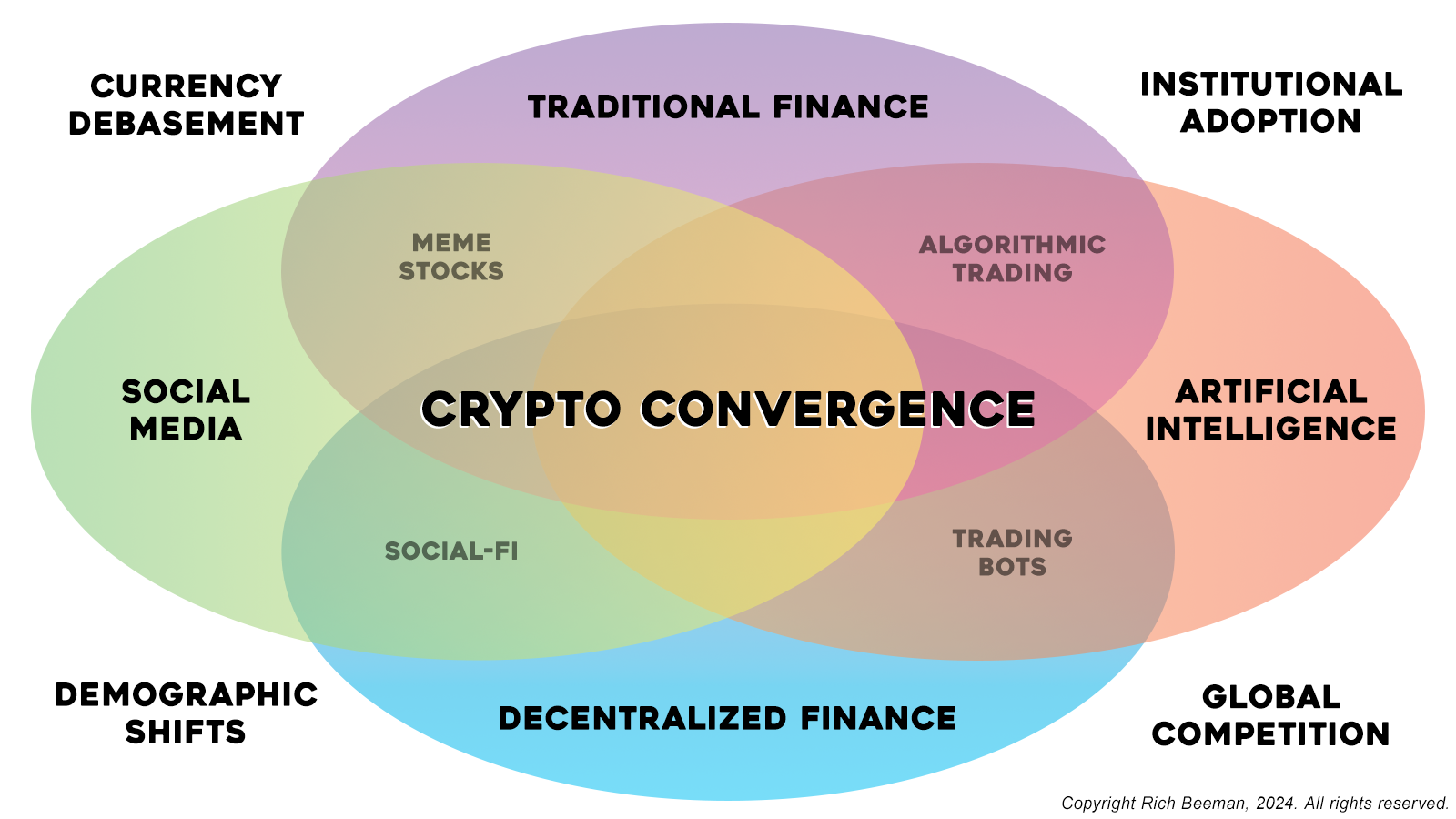 Crypto ConvergenceCrypto Convergence is what happens when DeFi, AI, social media, and TradFi stop pretending they are in different group chats. The winners will not be the slickest tech, they will be whoever owns the plumbing where all four meet, and it probably will not be you.
 BEHODLBEHODL is Gifdead's unserious-serious mashup of behold and HODL: look at this, and maybe don't panic-sell your personality. It's the internet's way of saying, "Pay attention, but don't let the algorithm or the mob dictate your next move."
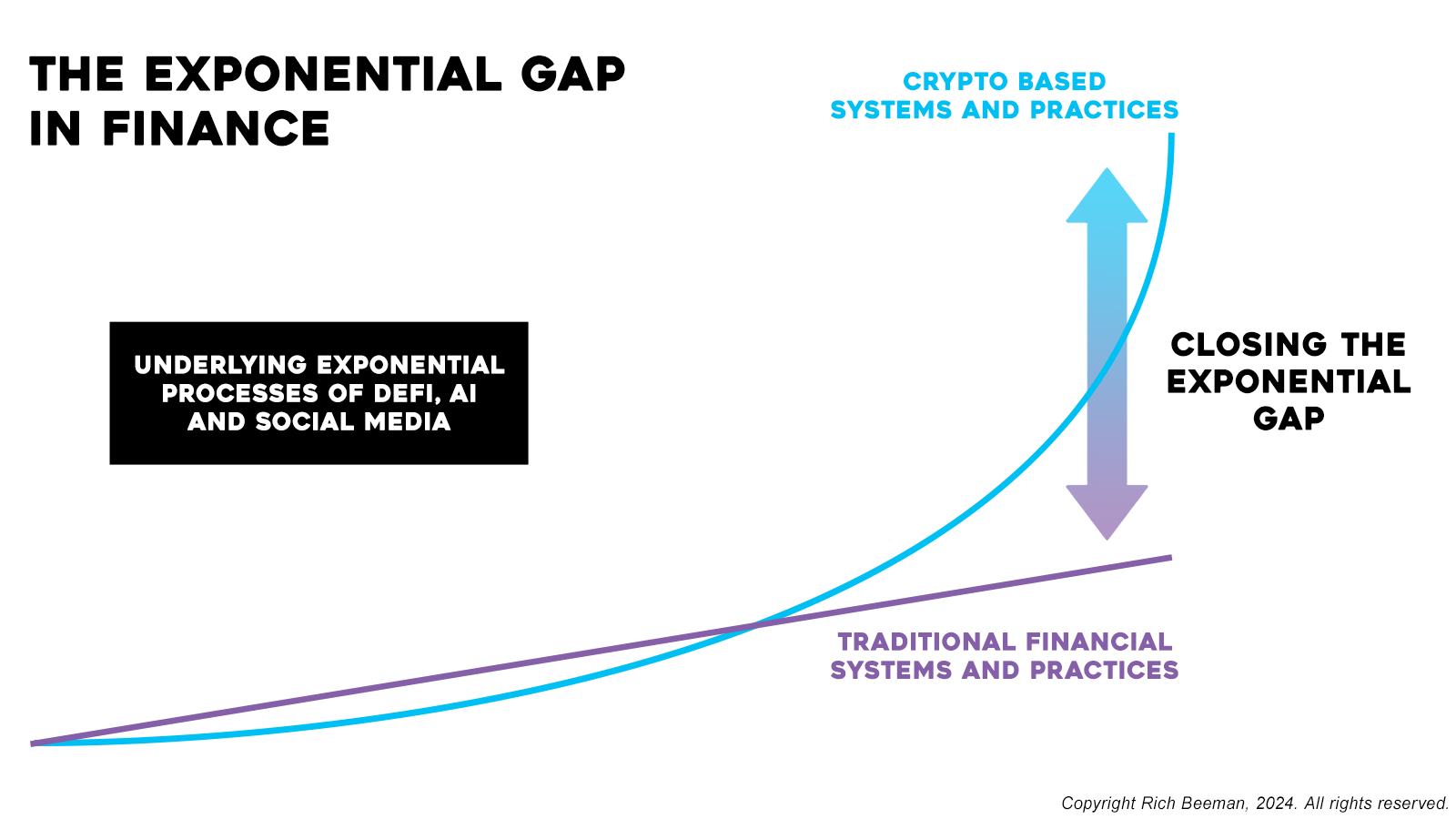 Exponential Gap in FinanceRegulators say 'risk' and mean 'protect the incumbents.' The Exponential Gap in Finance is the widening chasm where legacy finance uses caution theater to slow anything that compounds faster than a quarterly report.
 Left curveWhen 'critical thinking' loops you back to the dumbest take possible, that's the Left Curve. It's the intellectual dead end where rejecting obvious solutions for convoluted, often self-serving, alternatives becomes a performance, costing you clarity and often capital.
 Pristine Collateral BottleneckWall Street wants you to believe that turning crypto into state-approved backing is the ultimate victory, but the Pristine Collateral Bottleneck is the trap where revolutionary, censorship-resistant assets are neutered into volatility-suppression sponges to save a dying legacy repo market.
 The Cisco LessonBuilding the physical plumbing for a digital revolution guarantees a massive hardware hangover once the circular funding loop stops spinning. The Cisco Lesson is the ultimate warning that buying a trillion dollars of hardware to generate fifty billion in revenue is a high-risk trap that turns tech giants into very expensive treasury-bond alternatives.
Gifnotes poster
Sources
FAQ
What is the CapEx Trap in technology infrastructure?
It is the financial vulnerability created when a company over-leverages to build massive, highly specialized physical facilities during the peak of a technology cycle, only for rapid software or hardware efficiency gains to render that physical footprint obsolete.
Why is this trend referred to as Static Infrastructure Lock-in?
Because once billions are sunk into concrete, copper, and dedicated power grids, those assets cannot be easily repurposed or upgraded when the underlying technology shifts to require less power and physical space.
How do algorithmic breakthroughs threaten massive hardware investments?
If software developers find ways to run complex models using a fraction of the computing power, the premium value of massive, energy-hungry data centers collapses, leaving the builders with massive debts and uncompetitive infrastructure.