
Present-Value Future Pricing

The take
Buying a stock at a valuation that assumes the company already conquered Mars, cured aging, and secured a monopoly on air is the core trap of Present-Value Future Pricing, leaving the retail buyer with all of the risk and none of the upside.
The Tell
Present-Value Future Pricing: paying for twenty years of flawless execution today, only to get rekt by a missed penny next quarter.

Stakes
When the market removes any margin of safety by pricing in terminal-state success decades in advance, you are no longer investing in a business; you are funding a multi-billion dollar venture capital exit while volunteering to work the next twenty years of corporate execution for free.
Source Dispatch
The read
Wall Street analysts love to frame sky-high multiples as forward-looking optimism or a rational premium for disruptive innovation. They point to the compounding power of tech monopolies and argue that waiting for reasonable valuations means missing the boat entirely.
It is a compelling story designed to keep capital flowing into peak-cycle assets. But this narrative ignores who actually captures the value.
When a company trades at over 30 times forward sales, or when pre-revenue startups command multi-billion dollar valuations, the future has already been fully billed.
The founders, early venture capitalists, and insiders cash out at the finish line before the race even starts, leaving public market buyers to pray that nothing goes wrong over the next decade.
In reality, pricing to perfection means any speed bump, regulatory shift, or missed quarterly estimate by a penny results in an immediate valuation collapse.
The closed-loop capital recycling between hyperscalers and hardware makers can keep the music playing for a while, but eventually, physics catches up.
True investing requires a margin of safety, not paying today for miracles promised in 2045.
In the wild
- Investors are paying future prices in the present time, as though these companies have already accomplished all the things they promised us.
- Pricing out an entire generation of South Koreans from Seoul real estate did not make them risk-averse; it turned 14 million of them into hyper-leveraged stock speculants betting their salaries on 3x leveraged memory chip ETFs.
- Episode: South Korea’s AI Bubble Just Popped (https://www.youtube.com/watch?v=hy90LdpEUvQ)
Related
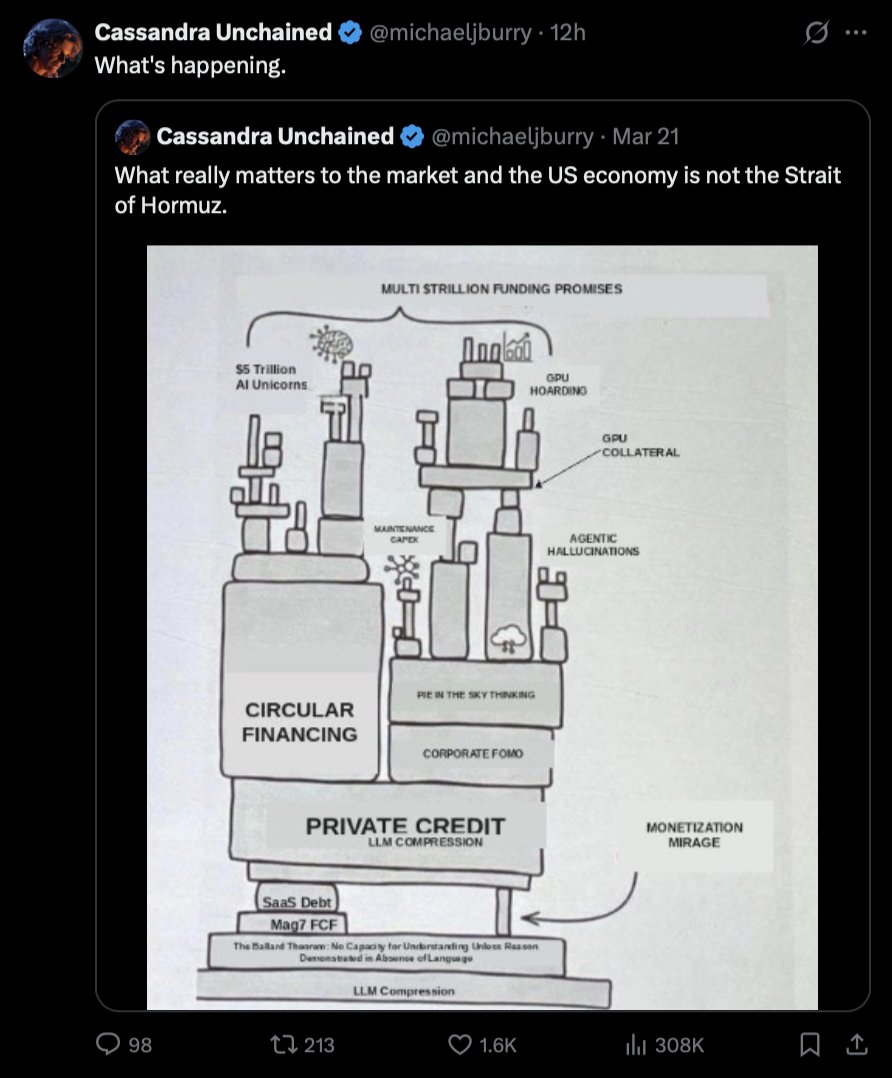 AI Money LoopTech giants are funding their own customers to buy their own services: the AI Money Loop is the circular accounting illusion masking the risk that enterprise AI's actual return on investment is functionally zero.
 The Cisco LessonBuilding the physical plumbing for a digital revolution guarantees a massive hardware hangover once the circular funding loop stops spinning. The Cisco Lesson is the ultimate warning that buying a trillion dollars of hardware to generate fifty billion in revenue is a high-risk trap that turns tech giants into very expensive treasury-bond alternatives.
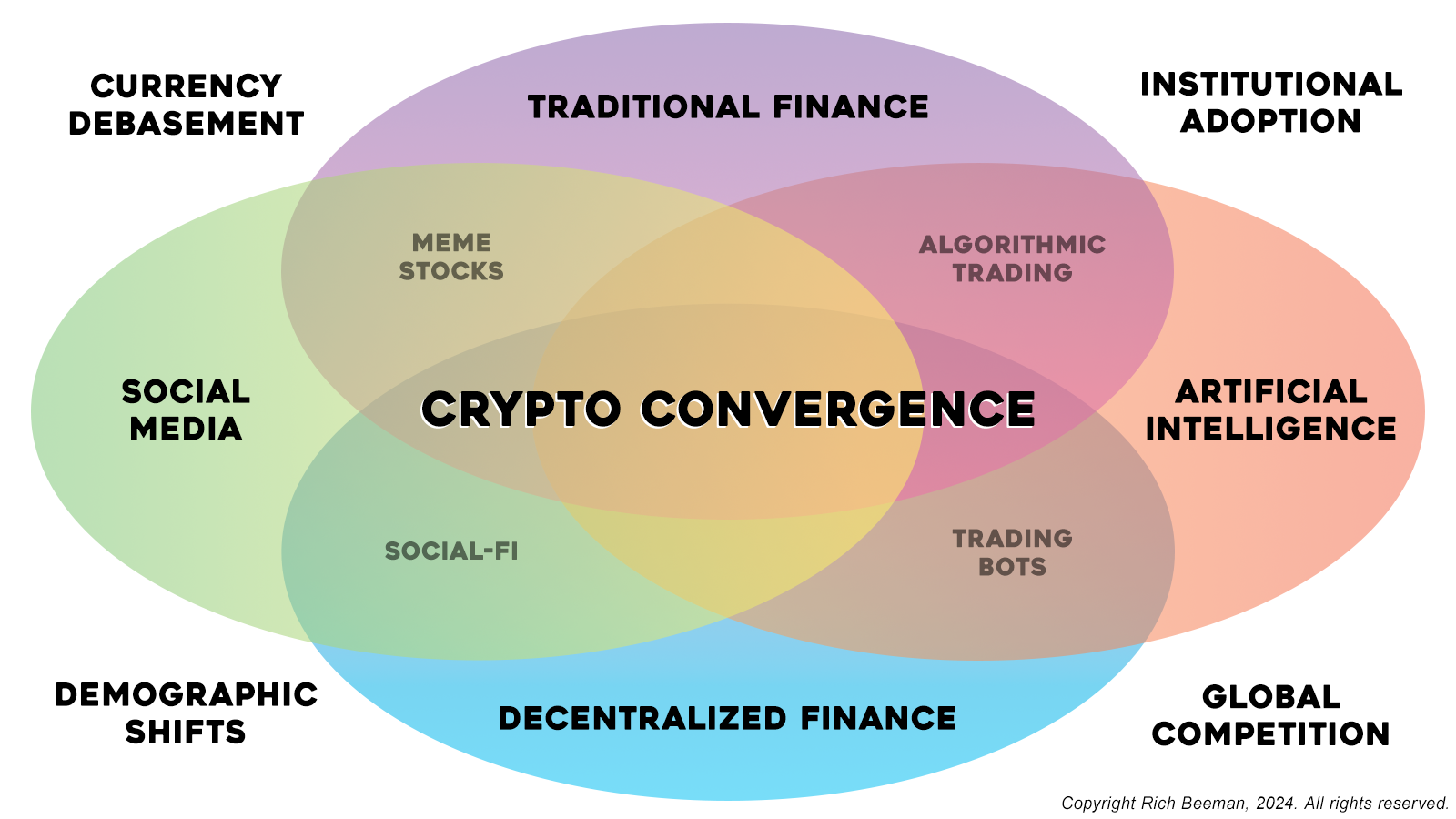 Crypto ConvergenceCrypto Convergence is what happens when DeFi, AI, social media, and TradFi stop pretending they are in different group chats. The winners will not be the slickest tech, they will be whoever owns the plumbing where all four meet, and it probably will not be you.
 BEHODLBEHODL is Gifdead's unserious-serious mashup of behold and HODL: look at this, and maybe don't panic-sell your personality. It's the internet's way of saying, "Pay attention, but don't let the algorithm or the mob dictate your next move."
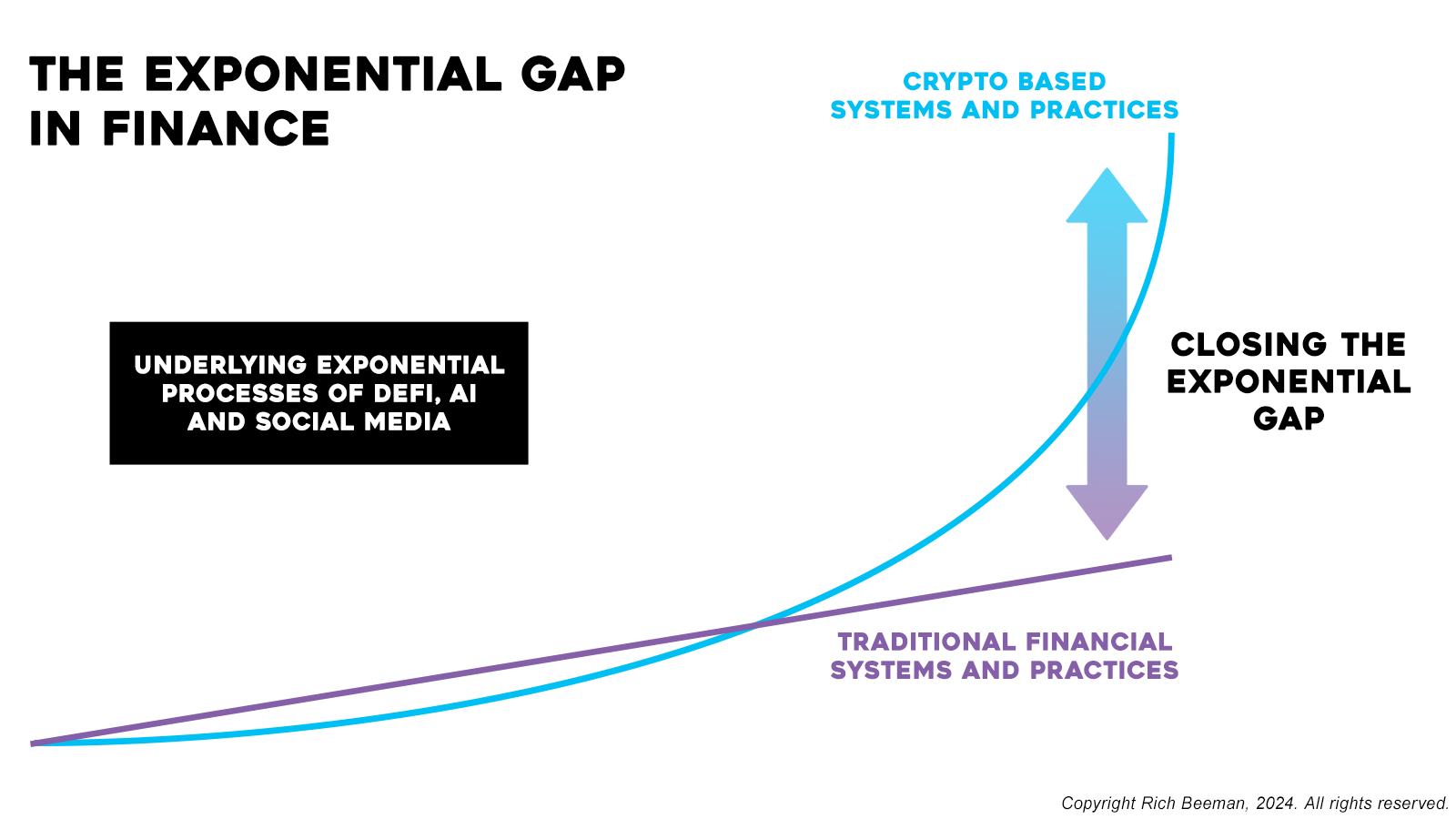 Exponential Gap in FinanceRegulators say 'risk' and mean 'protect the incumbents.' The Exponential Gap in Finance is the widening chasm where legacy finance uses caution theater to slow anything that compounds faster than a quarterly report.
 Airline ScenarioVenture capitalists are pouring trillions into building a technological miracle, but the brutal reality of the Airline Scenario means they are falling into a trap where they permanently lower global business costs while systematically bankrupting their own balance sheets.
Gifnotes poster
Sources
FAQ
What is the difference between this and normal growth investing?
Growth investing pays a premium for expected expansion; this practice pays the final, fully realized terminal-state valuation today, leaving zero room for the friction of reality.
How do venture capitalists exploit this pricing model?
They use hyper-inflated private rounds to mark up their books, then dump the shares onto public retail markets the moment perfect execution is priced into the IPO.
What triggers the collapse of this valuation model?
The moment the closed-loop accounting between tech giants slows down, or when a company misses a single quarterly projection, revealing that twenty years of perfect growth was a fantasy.