Narrative Laundering

The take
State agencies leak a fabricated claim to a friendly corporate media outlet, and then cite that outlet's subsequent reporting as 'independent intelligence' to justify censorship. Narrative laundering turns the press into a dry-cleaning service for state-sponsored propaganda, allowing officials to cite their own echoes as objective truth.
The Tell
Federal agencies leaking a fake story to the press so they can cite the coverage to censor you is just state propaganda with a PR firm in the middle.

Stakes
When the government can manufacture its own press coverage to justify silencing domestic dissent, the line between public information and state psychological operations disappears. Accepting the mainstream reporting at face value leaves the public defenseless against coordinated censorship campaigns run under the guise of national security.
Source Dispatch
The read
The establishment media claims they are simply reporting on leaked documents from patriotic whistleblowers and intelligence experts who are trying to protect the public from dangerous foreign influence. It sounds like a high-stakes thriller where brave journalists risk it all to expose the truth.
In reality, it is a closed-loop system where the source and the referee are wearing the same jersey under their suits. This system operates by stripping the state's fingerprints off a political hit job.
A federal agency or political campaign hands a raw, unverified dossier to a friendly national security reporter.
Once the article is published, the agency points to the headline as 'independent verification' of the threat, using it to pressure social media platforms to throttle accounts, block links, and suppress discussion of primary sources.
To break the cycle, you have to stop treating corporate headlines as primary evidence. When a major story relies entirely on anonymous officials citing classified assessments to demand the censorship of American citizens, the story itself is usually the operation.
True agency means looking past the laundered headline to see who actually dropped the dirty laundry in the first place.
In the wild
- The Hamilton 68 dashboard hoax, where a group of former intelligence officials falsely labeled thousands of ordinary conservative Twitter accounts as 'Russian bots' to drive years of corporate news cycles.
- The suppression of the Hunter Biden laptop story, where 51 former intelligence officials signed a letter calling it Russian disinformation, allowing media outlets to censor the reporting and social platforms to block its distribution.
- The deployment of the Steele Dossier, which was funded by a political campaign, leaked to friendly journalists, and then used by federal agencies to justify surveillance warrants and launch investigations.
Related
 Terminally onlineTerminally Online is when the feed's stakes feel more real than your actual life. Likes, outrage loops, and timeline drama become the OS; IRL is the side quest.
 AI SlopPlatforms pay for volume, so the machine floods your feed with filler until the real stuff drowns. That sludge is AI slop.
 NewsjackNewsjacking is when a brand or influencer hijacks a trending news story or event to promote their own sh*t. Basically the digital equivalent of an ambulance chaser, but for clicks.
 SaaspocalypseThe joke stopped being a joke. Vibe-coded custom tools are eating the monthly SaaS stack one workflow at a time. That slaughter is Saaspocalypse.
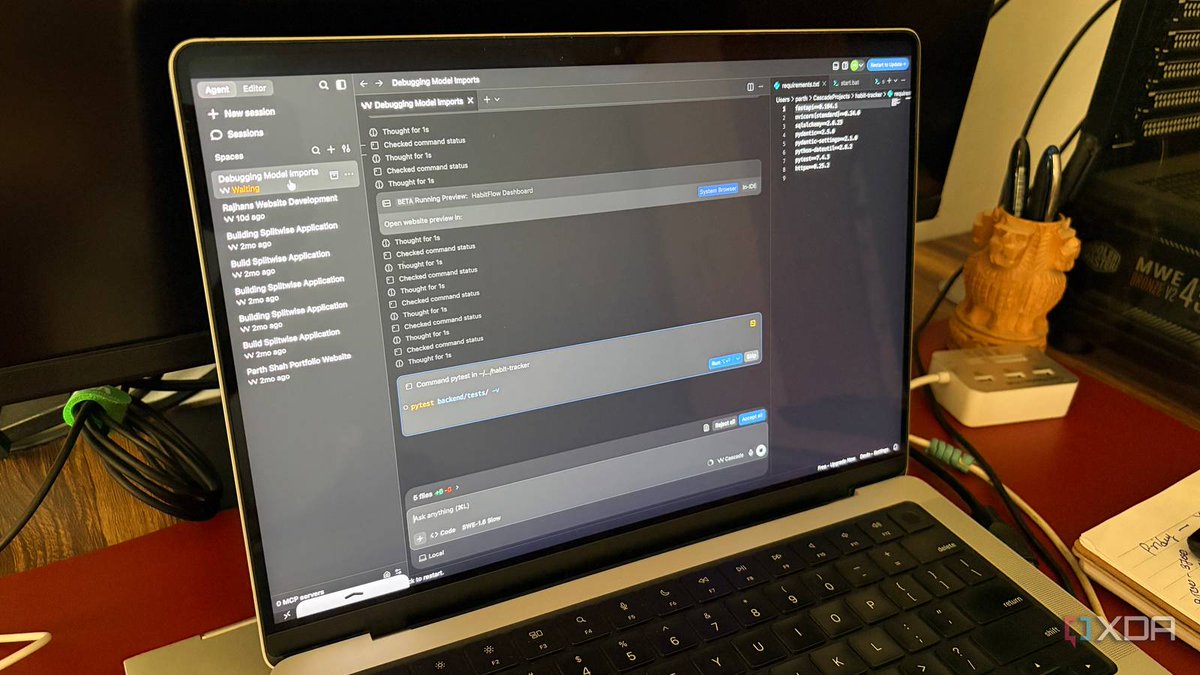 Vibe CodingVibe coding was sold as everyone becoming a software mogul. What it actually does is liquidate entry-level coding jobs and leave the high-agency architect as the only adult in the room who can debug the beautiful mess a model spat out in three seconds.
 Soft CensorshipThe state no longer needs court orders to silence you when tech platforms do the dirty work preemptively. Soft censorship is the outsourced compliance racket where platforms throttle inconvenient truths to keep their regulatory immunity, meaning the cost of trusting your feed is a completely manufactured reality.
Gifnotes poster
Sources
FAQ
How does narrative laundering differ from a normal leak?
A normal leak exposes government wrongdoing to the public. Narrative laundering is a coordinated leak by government actors designed to deceive the public and build a pretext for state censorship.
Why do corporate media outlets participate in this process?
Access and alignment. Reporters get exclusive scoops that drive massive traffic, while their editors get to run partisan narratives that match the political preferences of their newsrooms.
How do social media platforms get pulled into narrative laundering?
Federal agencies use the laundered news articles as leverage, telling platforms that failing to censor the discussed topics makes them complicit in spreading foreign interference.