
Terror Octopus

The take
Western foreign policy relies on a dangerous strategic trap: treating coordinated proxy networks as isolated local disputes while offering diplomatic backchannels to the state sponsor pulling the strings.
The Tell
Fighting the tentacles while sending cash to the head of the octopus is a subscription model for a forever war.

Stakes
By treating every regional proxy attack as a separate, localized grievance, Western powers fall into a permanent strategic trap that guarantees low-grade forever wars while shielding the actual state sponsors from any real consequences.
Source Dispatch
The read
The standard diplomatic playbook insists that containing local militant groups prevents a wider regional conflagration. This theory treats proxy groups as independent actors with legitimate local gripes, allowing diplomats to keep talking to the regime that funds, arms, and directs them.
It is a comfortable fiction for the foreign policy establishment because it turns war into a managed, bureaucratic process rather than something you must win. In reality, this approach creates a perfect shield for the centralized state sponsor.
By refusing to hold the head of the octopus accountable, Western powers allow hostile regimes to wage asymmetric warfare across multiple fronts without ever risking their own skin or assets.
The state sponsor gets to negotiate sanctions relief in Geneva while its tentacles shut down global shipping lanes in the Red Sea. Recognizing the Terror Octopus means understanding that the tentacles do not move without the head.
You cannot stabilize a region by playing whack-a-mole with local militias while sending plane loads of cash to the regime that coordinates them.
True deterrence requires making the state sponsor pay a direct price for the chaos its proxies cause.
In the wild
- The Iranian regime coordinates and funds Hamas, Hezbollah, and the Houthis to attack Western interests while Western diplomats continue to offer sanctions relief and backchannel negotiations.
- Western defense strategies consistently treat Houthi drone strikes on commercial shipping as isolated maritime security issues rather than direct, state-sponsored gray-zone warfare directed by Tehran.
- Episode: The Monetization of Tragedy and the AI Punditry Loop (https://www.youtube.com/watch?v=qQAYjga2iPE)
- Dismantling a regime that's been working for 30 years, 40 years, and becoming a terror octopus in the region... that's no easy endeavor.
Related
 Terminally onlineTerminally Online is when the feed's stakes feel more real than your actual life. Likes, outrage loops, and timeline drama become the OS; IRL is the side quest.
 NewsjackNewsjacking is when a brand or influencer hijacks a trending news story or event to promote their own sh*t. Basically the digital equivalent of an ambulance chaser, but for clicks.
 Age of the CharacterPlatforms now pay for persona wattage over argument. Age of the Character is the tell: entertainment value ate the discourse, and the bit outperformed the brief.
 Ballot-Access VehicleEstablishment parties think they are sacred coalitions of shared values, but a ballot-access vehicle is the cold reality that a legacy party is just a state-subsidized distribution monopoly waiting to be hostile-takeovered by its loudest tenants.
 Community Notes (Platform Governance)Community Notes looks like crowdsourced fact-checking. In practice it is how platforms let the majority selectively police narratives that challenge institutions, often burying inconvenient truths under 'context.'
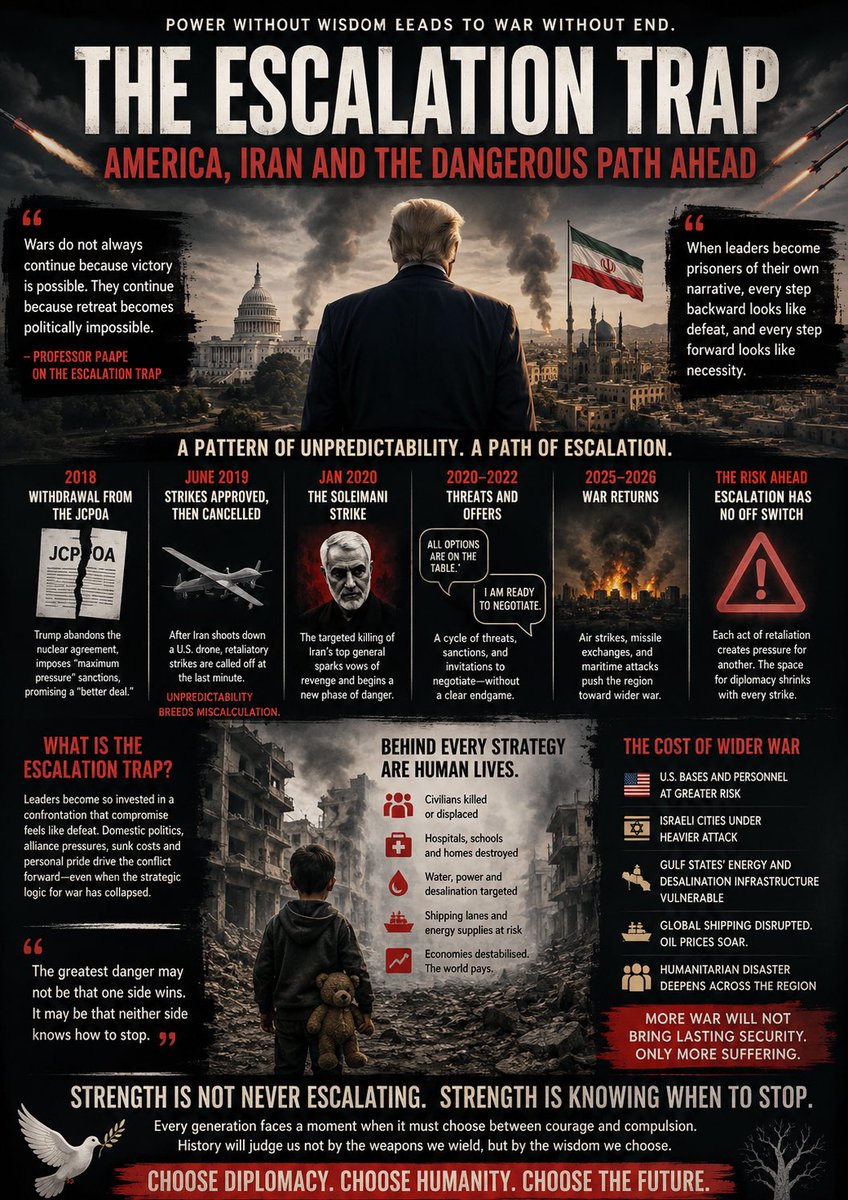 Escalation TrapDemocratic leaders caught in the Escalation Trap will consistently gamble with systemic global economic ruin rather than accept the domestic political suicide of owning a loss on the world stage. It is the structural reality where career politicians double down on losing, trillion-dollar proxy wars because their personal brand cannot survive a ten-second news segment about surrender.
Gifnotes poster
Sources
FAQ
What is the difference between a proxy war and a Terror Octopus?
A proxy war is a general term for using third parties to fight rivals. The Terror Octopus is the specific strategic mistake of fighting those third parties individually while treating the central state sponsor as an untouchable diplomatic partner.
Why do Western governments tolerate the head of the octopus?
The foreign policy establishment is terrified of direct escalation, believing that ignoring the central sponsor's role keeps diplomatic channels open and avoids a wider regional war.
How do you defeat a Terror Octopus?
By shifting the cost of conflict directly to the head of the octopus, forcing the central state sponsor to choose between its own survival and funding its regional tentacles.