
Blockspace Inelasticity

The take
We built a digital superhighway for a world that still prefers the dirt road: blockspace inelasticity is the economic trap where multiplying blockchain capacity by a thousandfold fails to spark new consumer demand, leaving base-layer networks to starve on pennies.
The Tell
We spent five years scaling blockchain capacity only to realize the world's demand for Web3 fits in a single Excel sheet.

Stakes
This supply-demand paradox matters because it shatters the 'build it and they will come' scaling myth, forcing Ethereum and other major chains to choose between subsidizing cheap transactions or watching their deflationary token economics completely evaporate.
The read
The master plan for blockchain scaling seemed foolproof: move transactions off the main Ethereum highway and onto cheap, fast Layer-2 side roads like Base or Arbitrum. By expanding capacity, developers promised a flood of enterprise adoption, decentralized social networks, and real-world assets.
Instead, the Dencun upgrade slashed L2 fees to near-zero, but the expected tidal wave of new consumer demand never showed up. To be fair, making transactions cheap was a necessary technical milestone.
Nobody wants to pay fifty dollars in gas fees to swap a token or mint an artwork, and lowering the barrier to entry is the only way decentralized tech can ever compete with Web2 convenience.
If the infrastructure remained slow and expensive, the entire ecosystem would have choked on its own success during the very first hype cycle.
But the cold reality of blockspace inelasticity is that cheap transactions did not invite the Fortune 500; they just diluted the fees required to secure the network.
L2s are now cannibalizing the main chain, fighting over the same finite pool of meme coin traders while the 'ultrasound money' narrative of deflationary ETH burns to the ground.
We spent five years building a global supercomputer only to realize the world's current demand for decentralized databases fits inside a single Excel spreadsheet.
In the wild
- The launch of Ethereum's Dencun upgrade (EIP-4844) which reduced L2 transaction costs by over 90% while simultaneously collapsing mainnet fee burn.
- Base and other Layer-2 networks reporting record-high transaction volumes alongside record-low revenue contributions back to the Ethereum base layer.
- The sudden pivot of prominent DeFi founders openly questioning the 'ultrasound money' thesis as ETH token supply begins inflating again.
- Episode: Crypto Is Running Out of Reasons to Go Lower (https://www.youtube.com/watch?v=8xQWnk7qTIc)
- blockspace supply exploded while application demand remained inelastic, giving Ethereum two paths: either subsidize fees to compete on store-of-value, or drastically shrink capacity
Related
 DeFi MulletBusiness in the front, party in the back. The DeFi Mullet is a clean little fintech face wrapping yield that can still drain your wallet underneath.
 BEHODLBEHODL is Gifdead's unserious-serious mashup of behold and HODL: look at this, and maybe don't panic-sell your personality. It's the internet's way of saying, "Pay attention, but don't let the algorithm or the mob dictate your next move."
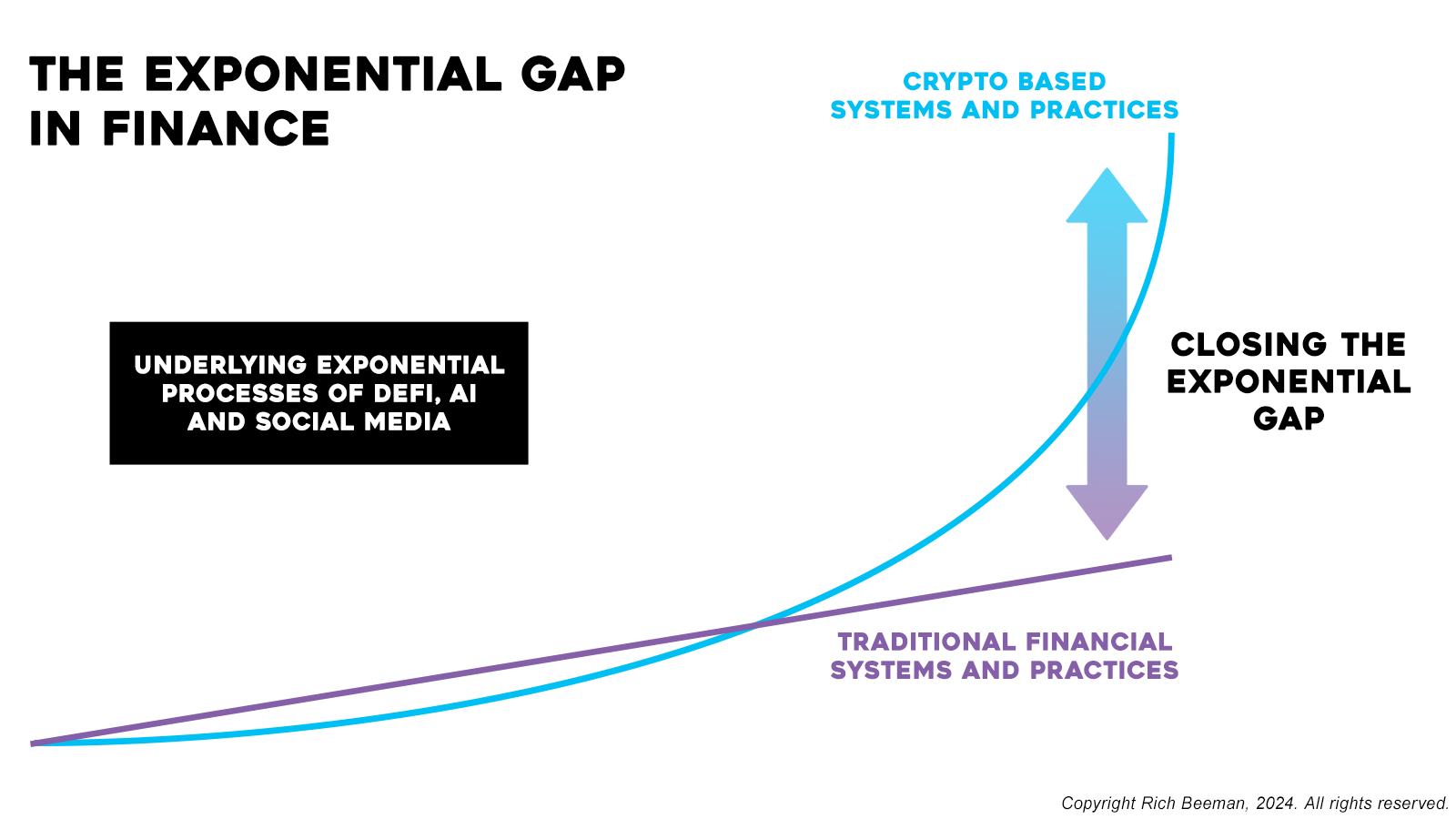 Exponential Gap in FinanceRegulators say 'risk' and mean 'protect the incumbents.' The Exponential Gap in Finance is the widening chasm where legacy finance uses caution theater to slow anything that compounds faster than a quarterly report.
 Left curveWhen 'critical thinking' loops you back to the dumbest take possible, that's the Left Curve. It's the intellectual dead end where rejecting obvious solutions for convoluted, often self-serving, alternatives becomes a performance, costing you clarity and often capital.
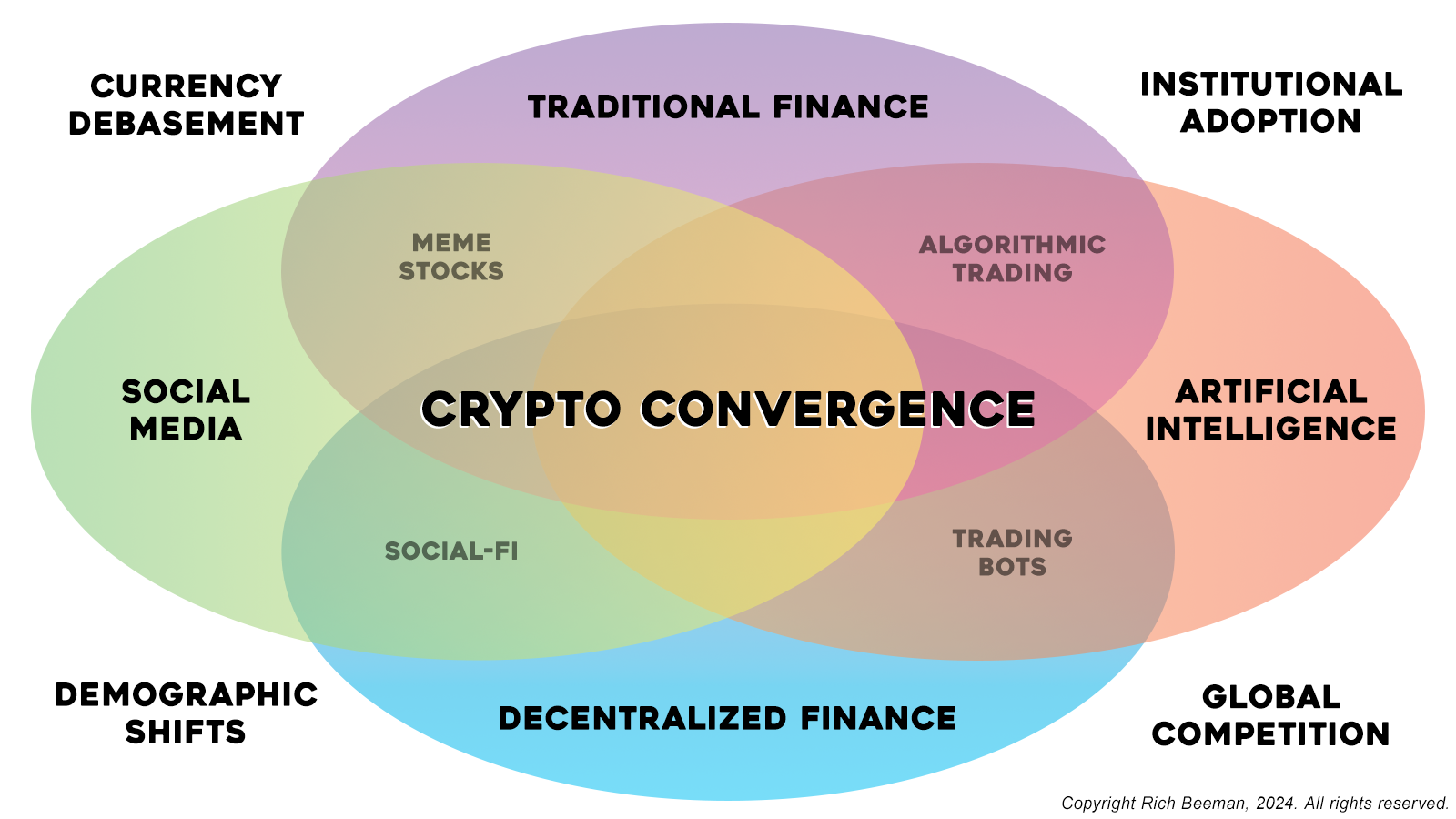 Crypto ConvergenceCrypto Convergence is what happens when DeFi, AI, social media, and TradFi stop pretending they are in different group chats. The winners will not be the slickest tech, they will be whoever owns the plumbing where all four meet, and it probably will not be you.
 Lean EthereumThe retail crowd is screaming that Ethereum is dead, but Lean Ethereum is the quiet risk that the network is actually trading its cypherpunk leather jacket for a Wall Street Patagonia vest.
Gifnotes poster
Sources
FAQ
What is the difference between blockspace inelasticity and the L2 fee drain?
They are two sides of the same coin: blockspace inelasticity is the underlying economic reality where demand does not react to lower prices, while the L2 fee drain is the visible symptom where Layer-2 networks siphon activity away from the main chain without paying back enough fees to keep the base token deflationary.
Didn't lowering transaction fees make Ethereum more competitive?
It made transactions cheaper for users, but it destroyed the value capture for token holders. Without a massive, unprecedented surge in transaction volume to make up for the lower prices, the network no longer burns enough gas to offset new token issuance.
How do blockchains fix this supply-demand paradox?
They either have to find a killer app that generates genuine, non-speculative demand for decentralized blockspace, or they must change their economic models to force Layer-2 networks to pay a higher premium for using the security of the base layer.