
Crypto-Guarantee

The take
Traditional contracts rely on the expensive theater of the legal system to clean up messes after the fact, but a crypto-guarantee uses unyielding code to physically block counterparties from lying in the first place, shifting the risk from human dishonesty to mathematical finality.
The Tell
A crypto-guarantee trades the slow theater of a lawsuit for the instant finality of code, which is great until the math decides you are the one getting rekt.

Stakes
Relying on social promises or courtrooms for financial recourse is a slow-motion wealth transfer to lawyers. Cryptographic guarantees replace retrospective legal threats with instant, code-enforced execution, meaning you no longer have to trust a counterparty's word, though you must accept that the math will not care if you make a mistake.
Source Dispatch
The read
Traditional finance operates on the assumption that when a deal goes bad, a judge will eventually sort it out. This system keeps a massive army of lawyers and middle managers employed, but it does nothing to prevent the fraud before it happens.
DeFi developers like Sébastien Derivaux and teams at Steakhouse Financial are pushing to replace this reactive model by stripping out human discretion entirely, opting for hyper-minimalist, isolated code vaults that enforce terms automatically.
The mainstream financial establishment argues that human oversight and court-based arbitration are mandatory to protect consumer assets and handle complex, real-world edge cases. They view absolute code as a reckless experiment that leaves users with zero recourse when things go sideways.
It is a fair point: when there is no manager to cry to, a bug in the smart contract behaves exactly like a feature, executing the math perfectly while draining your funds.
But the trade-off is clear. By choosing a cryptographic guarantee over a social one, you are trading the slow, corruptible systems of human trust for the cold certainty of mathematics.
You eliminate the risk of a counterparty backing out of a deal, but you inherit the absolute responsibility of verifying the code yourself before you sign the transaction.
In the wild
- David Hoffman and the Bankless team highlighting how cryptographic guarantees replace social trust with mathematical certainty in decentralized networks.
- Steakhouse Financial advocating for isolated, immutable lending vaults that rely on code-enforced parameters rather than human governance committees.
- Sébastien Derivaux analyzing the shift in DeFi from complex, risk-heavy DAO management to minimalist, crypto-guaranteed smart contracts.
- Episode: Can DeFi Build Safer Markets Than Wall Street? (https://www.youtube.com/watch?v=IJSl0_pZ82Q)
- The reason you would use a blockchain is because you want to be able to rely on a crypto-guarantee instead of having to rely on a social guarantee.
Related
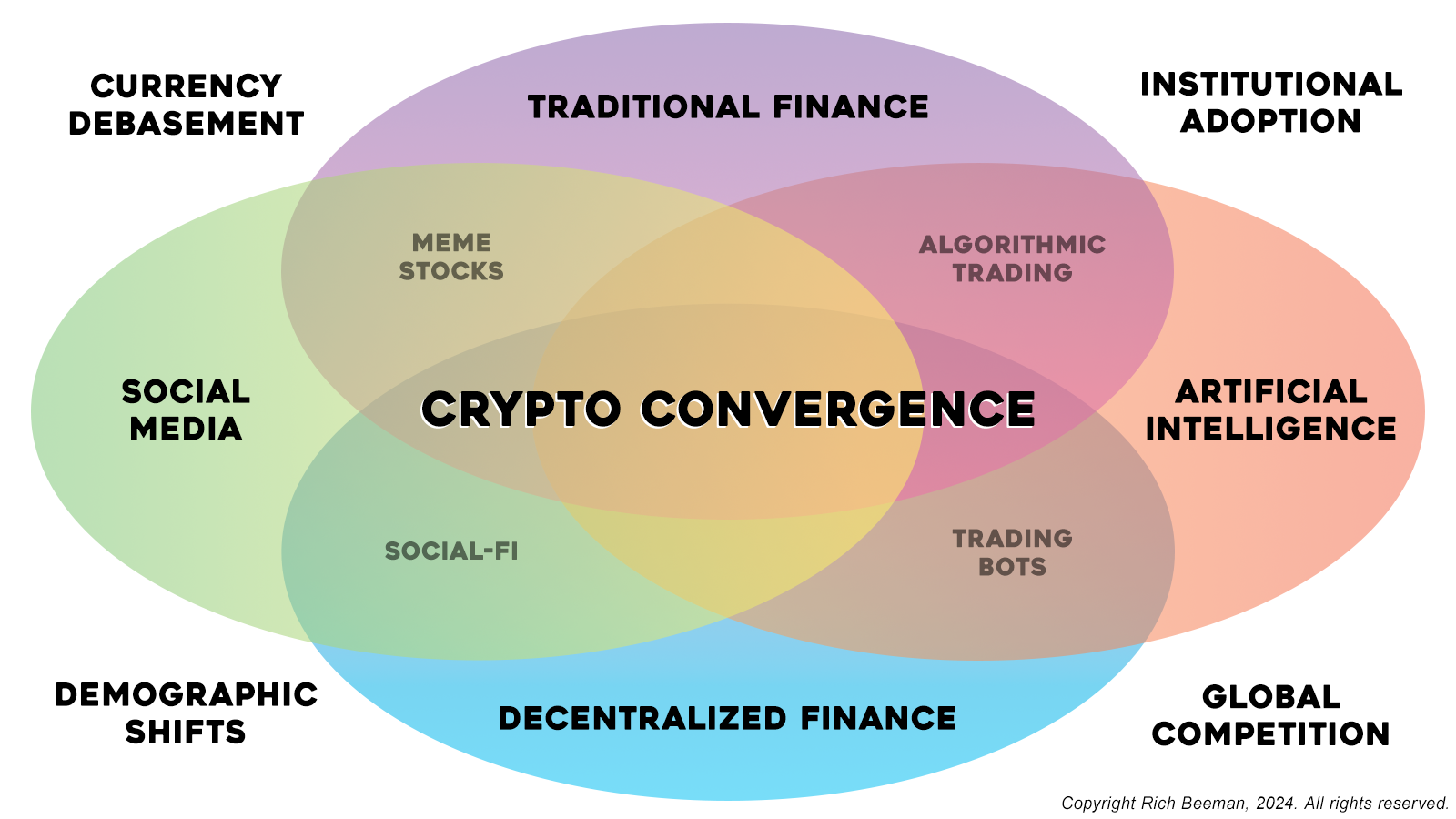 Crypto ConvergenceCrypto Convergence is what happens when DeFi, AI, social media, and TradFi stop pretending they are in different group chats. The winners will not be the slickest tech, they will be whoever owns the plumbing where all four meet, and it probably will not be you.
 BEHODLBEHODL is Gifdead's unserious-serious mashup of behold and HODL: look at this, and maybe don't panic-sell your personality. It's the internet's way of saying, "Pay attention, but don't let the algorithm or the mob dictate your next move."
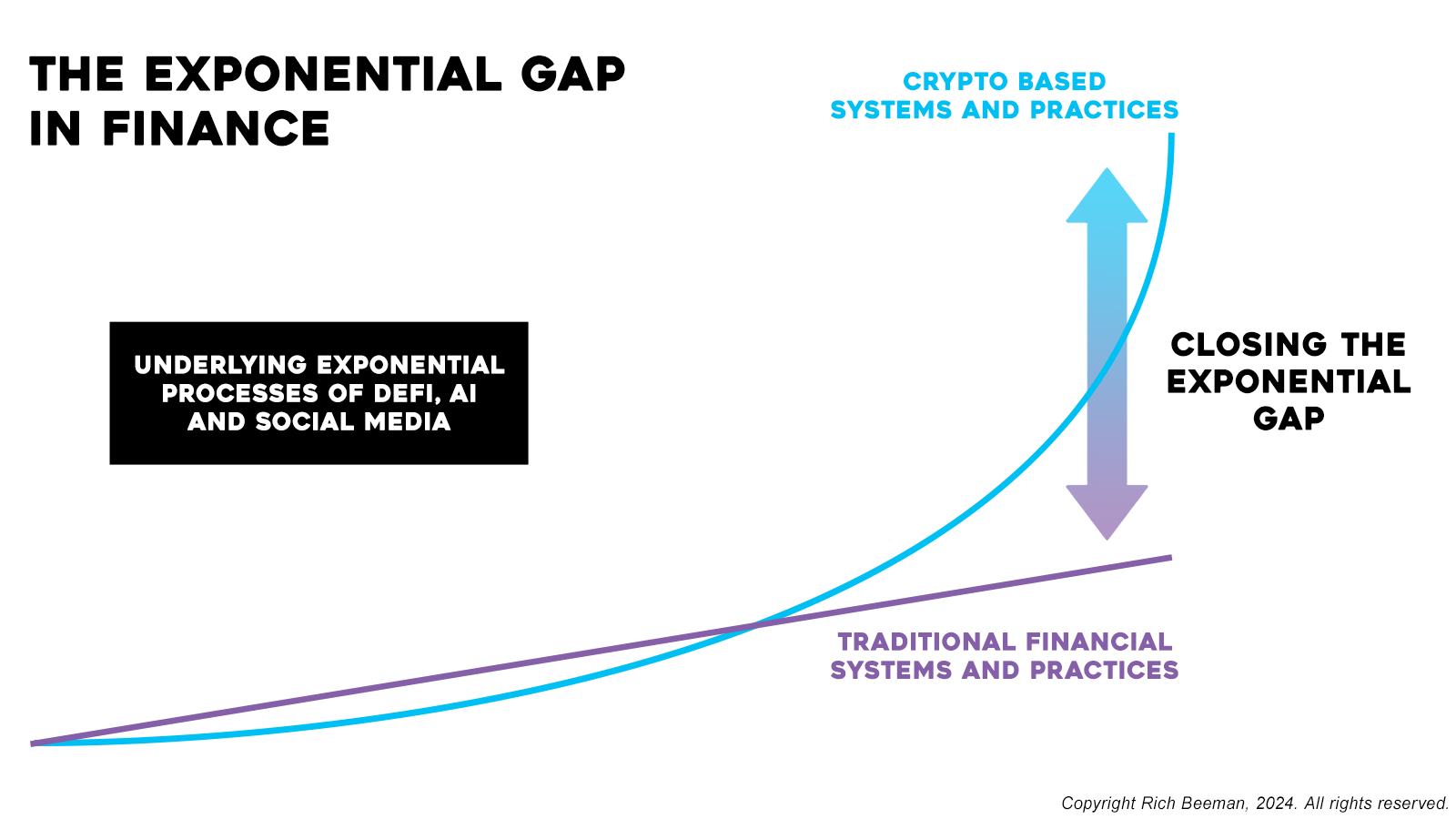 Exponential Gap in FinanceRegulators say 'risk' and mean 'protect the incumbents.' The Exponential Gap in Finance is the widening chasm where legacy finance uses caution theater to slow anything that compounds faster than a quarterly report.
 Left curveWhen 'critical thinking' loops you back to the dumbest take possible, that's the Left Curve. It's the intellectual dead end where rejecting obvious solutions for convoluted, often self-serving, alternatives becomes a performance, costing you clarity and often capital.
 DeFi MulletBusiness in the front, party in the back. The DeFi Mullet is a clean little fintech face wrapping yield that can still drain your wallet underneath.
 Price of TrustWe are paying a premium for decentralization theater, buying into DAO-managed yield vaults that mimic legacy banks while charging us to manage our own risk.
Gifnotes poster
Sources
FAQ
How does a cryptographic guarantee differ from a standard legal contract?
A legal contract is a reactive promise enforced by courts after a breach has occurred, while a cryptographic guarantee is a proactive boundary enforced by code that physically prevents the breach from happening in the first place.
What is the main trade-off of relying entirely on code-enforced agreements?
You eliminate counterparty default and human bias, but you lose all human recourse; if the code contains a vulnerability, the system will execute the exploit flawlessly without any option for a chargeback or appeal.
Why are some DeFi protocols moving away from governance committees?
Human-led governance introduces slow decision-making, political theater, and security vulnerabilities, whereas automated, immutable vaults ensure that the rules of the market cannot be altered by a committee vote.