Memetic Desire

The take
You rarely invent what you want. Prestige models pick the object first, and your 'taste' shows up fashionably late. That quiet racket is memetic desire.
The Tell
Memetic desire: prestige models pick the object, your 'taste' shows up late, and the consensus pretends it was organic.

Stakes
What feels like personal taste is often borrowed longing. Influencers, marketers, and prestige models compete to set the object, then sell you the feeling that you chose it.
Source Dispatch
The read
Memetic desire, first articulated by René Girard, posits that our desires are rarely spontaneous or innate. Instead, we often desire objects, status, or ideas because we see others, especially prestigious models, desiring them.
This isn't just about envy; it's a fundamental social dynamic that drives everything from fashion trends to political movements, shaping collective behavior without direct coercion.
The mainstream take often shrugs this off as a simple psychological quirk, where people unconsciously copy what others want, like buying the same car as a friend.
But this view misses the real leverage. Memetic desire is a powerful, invisible mechanism for establishing and enforcing cultural norms, taste, and even moral frameworks, making compliance feel like personal choice.
This silent battle plays out constantly in advertising, social media trend cycles, and political narratives. Influencers and campaigns compete to set the "desirable" object or idea, creating a feedback loop where wanting what others want becomes the default.
Recognizing this engine allows you to question your own motivations and reclaim agency from manufactured consensus.
In the wild
- René Girard's mimetic theory explains how desire is often copied, not spontaneous.
- Social media feeds that push 'must-have' products or experiences, creating instant trends.
- Political campaigns leveraging celebrity endorsements to make a candidate 'desirable' to voters.
- The 'influencer effect' where followers adopt products, styles, or even opinions seen in their idols.
- Episode: Odyssey's Enduring Echo: Patriarchy, Propaganda, and Persuasion (https://www.youtube.com/watch?v=cVsepqYjXQM)
- It's like memetic desire. It's kind of the Girardian thing. You know, yeah. I won the but it's really the wife of the guy that's a hero, because if I can take her, that means I'm a hero too.
Related
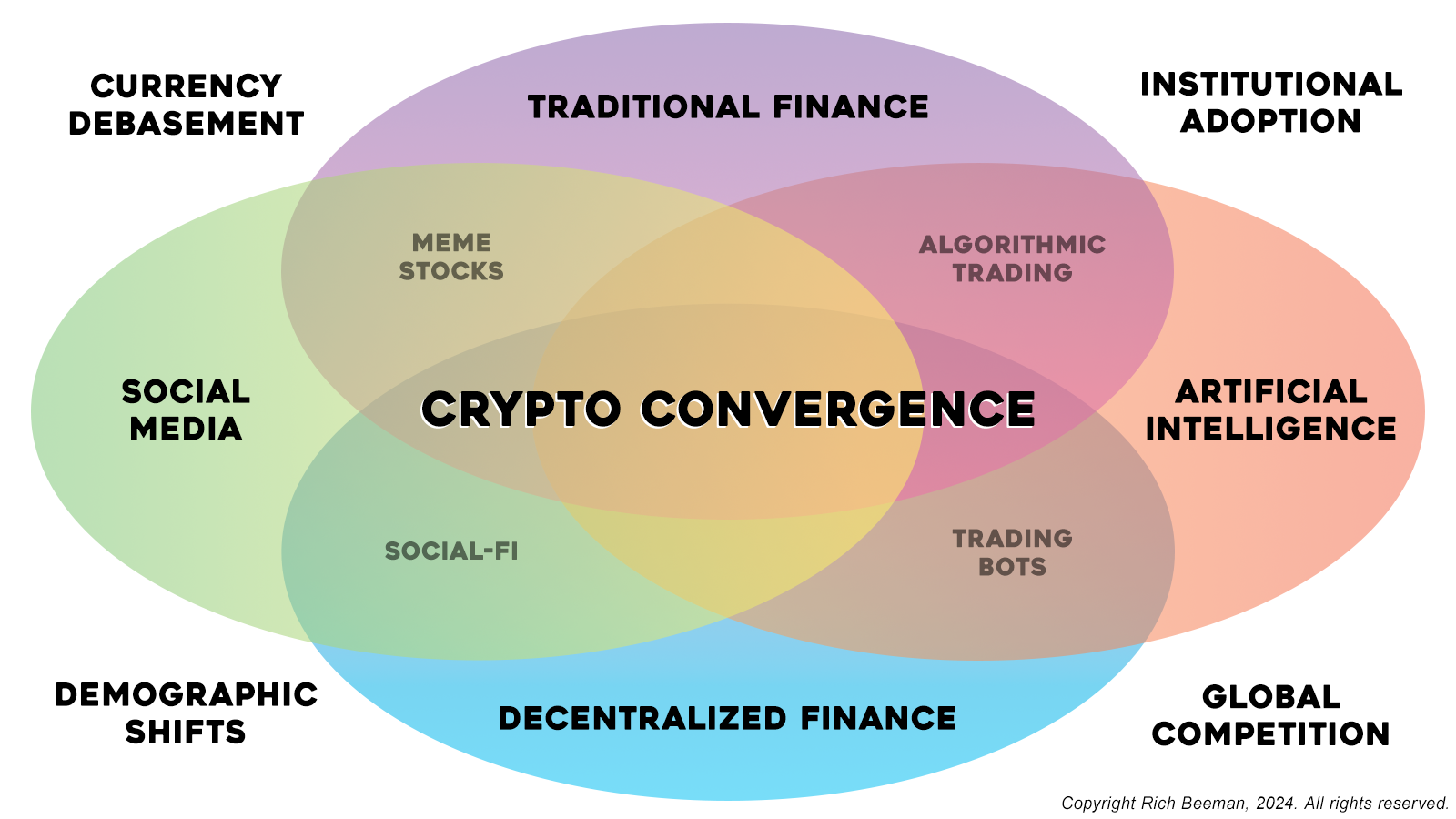 Crypto ConvergenceCrypto Convergence is what happens when DeFi, AI, social media, and TradFi stop pretending they are in different group chats. The winners will not be the slickest tech, they will be whoever owns the plumbing where all four meet, and it probably will not be you.
 Interest MediaInterest media is the attention economy's rebrand. Organic reach now costs creators endless content or cash, and 'free' visibility is a high-effort trap.
 Meme a Dream into RealityWhen a founder 'memes a dream into reality,' they're not just telling a story; they're publicly performing radical conviction to build a vision from scratch, because the cost of *not* forcing a choice between joining or dismissing their future is being ignored entirely.
 Naturalistic Fallacy TrapThe naturalistic fallacy used to be a logic error. Now it doubles as a moral weapon that shuts down inquiry by branding findings about human nature 'problematic' before anyone reads them.
 Curiosity TrapMarketers and cult leaders open a knowledge gap on purpose so you cannot look away until they close it. Curiosity Trap is that hijack of your attention budget, sold as engagement craft.
 Euphoric PlagueThe real risk of a 'euphoric plague' isn't a bioweapon that makes you happy to spread disease, but the digital dopamine loops that turn us into unwitting super-spreaders of narratives, regardless of the cost.
Gifnotes poster
Sources
FAQ
How is memetic desire different from just copying someone?
It's deeper than imitation. Copying is an action; memetic desire is about adopting the desire itself, often for things you wouldn't have wanted otherwise, because someone you admire wants it.
Who uses memetic desire to their advantage?
Marketers, influencers, political strategists, and anyone trying to shape public opinion. They know if they can get a few high-status models to desire something, others will follow.
Can I resist memetic desire?
Absolutely. The first step is awareness: recognizing when your wants are truly your own versus those modeled by others. Cultivating independent thought helps you opt out of manufactured trends.